

Essential Eligibility Criteria Cannot Be Substituted By Higher Academic Degree Or Purported Relaxation: Supreme Court
The Court held that preferential M.Tech qualifications do not override mandatory work experience requirements in public recruitment processes.

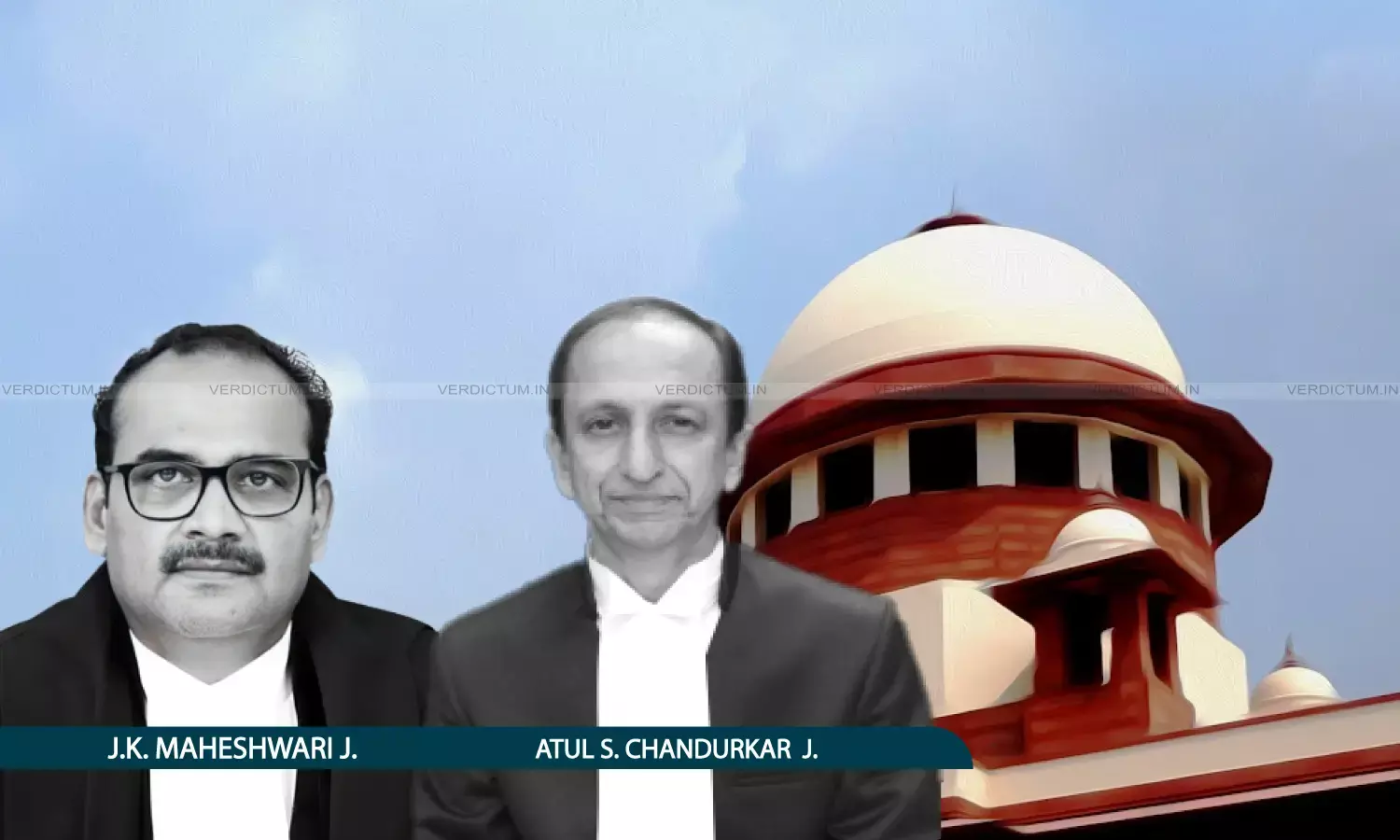
The Supreme Court has held that a candidate must fulfil the minimum essential eligibility criteria prescribed in recruitment rules before any preferential higher qualification can be considered. The Court clarified that while a higher degree such as an MTech may provide an advantage among otherwise eligible candidates, it cannot substitute for a lack of mandatory work experience.
The Bench noted that allowing superior academic credentials to override primary eligibility requirements would effectively rewrite selection terms after the commencement of the process, introducing impermissible subjectivity into public employment.
Justice J.K. Maheshwari and Justice Atul S. Chandurkar in the appeals arising from a recruitment dispute at the Himachal Pradesh Board of School Education, observed, “…The mere possession of such a higher academic degree does not, by itself, render a candidate ‘otherwise eligible or well qualified’ without meeting the requirement of experience within the meaning of the R&P Rules, particularly when the basic eligibility criteria itself remains unfulfilled. Any such approach would amount to substituting the minimum qualification with a preferential one, which is impermissible…”.
Senior Advocate P.S. Patwalia appeared for the appellant and Senior Advocate M.C. Dhingra appeared for the respondent.
The litigation began following a 2016 advertisement for the post of Computer Hardware Engineer under the specific Recruitment and Promotion Rules (R&P) of the Himachal Pradesh Board of School Education, which required a B.E./B.Tech and five years of experience in computer manufacturing or maintenance. The selected candidate, Himakshi, possessed an M.Tech but only one year of experience.
Conversely, the unsuccessful candidate, Rahul, claimed six years of experience but was ranked lower in the merit list. The Board appointed Himakshi, prompting Rahul to challenge the selection on the grounds that she did not meet the mandatory experience threshold.
The High Court initially set aside the appointment ex-parte, only to have a Single Judge restore it upon review, citing the Board’s power to relax rules for well-qualified candidates. However, a Division Bench later reversed this, invalidating the appointment because no formal relaxation had been recorded. Both the selected and unsuccessful candidates moved the Supreme Court, with Himakshi seeking to protect her job and Rahul seeking a direction for his own appointment.
The Court observed that Himakshi’s experience as a Vocational Trainer did not meet the specialised nature of the requirement. Furthermore, the Court rejected the Board's defense of relaxation, noting that the records were silent on any such deliberation. The Court further established that statutory powers of relaxation must be exercised through a conscious, reasoned, and demonstrable process recorded in writing. Merely possessing the power to relax age or experience criteria does not imply its automatic application.
While the appellant sought relief on equitable grounds due to her long service and regularisation in 2019, the Court held that equity cannot place itself above Recruitment and Promotion Rules when a defect goes to the root of eligibility.
“In matters of public employment, the Court must be circumspect in issuing positive directions for appointment unless the entitlement is clear, unambiguous, and flows directly from the applicable rules. Where the selection process itself is found to be flawed, the appropriate course would ordinarily be to set aside the selection rather than to direct appointment of a particular candidate”, the Bench noted.
“…Any such approach would amount to substituting the minimum qualification with a preferential one, which is impermissible. The selection of the appellant on such basis, therefore, reflects a clear non-application of mind to the distinction between essential and preferential qualifications and renders any purported relaxation fundamentally flawed”, the Bench further noted.
The Court dismissed both appeals, upholding the Division Bench's judgment and declined to direct Rahul’s appointment, finding that the entire selection process was vitiated as the eligibility of all candidates had been poorly scrutinised. The Board has been granted liberty to issue a fresh advertisement to fill the post strictly in accordance with the rules.
Cause Title: Himakshi v. Rahul Verma & Ors. (Neutral Citation: 2026 INSC 391)
Appearances:
Appellants: P.S. Patwalia, Senior Advocate.
Respondent: M.C. Dhingra, Senior Advocate, Varinder Kumar Sharma, Advocate.