

Drawing Of Adverse Inference Justified: Supreme Court On Non-Examination Of Material Witness Having Knowledge Of Family Finances In Partition Suit
The Bench also held that selective suit for partition covering only two of six properties creates doubt on bona fides of plaintiffs' claim.

The Supreme Court has held that the failure of plaintiffs in a partition suit to examine a witness who was the most material person possessing knowledge of the family's financial affairs justified the drawing of an adverse inference against them. The Court found that where the wife of the deceased karta was best placed to speak to the circumstances of an alienation, her non-examination was fatal to the plaintiffs' case impugning the sale.
The Court further held that instituting a suit for partition selectively in respect of only two out of six properties received by the deceased in a family partition, while leaving out the remaining four admittedly sold to a family member, is a circumstance of "utmost relevance" casting serious doubt on the bona fides of the claim.
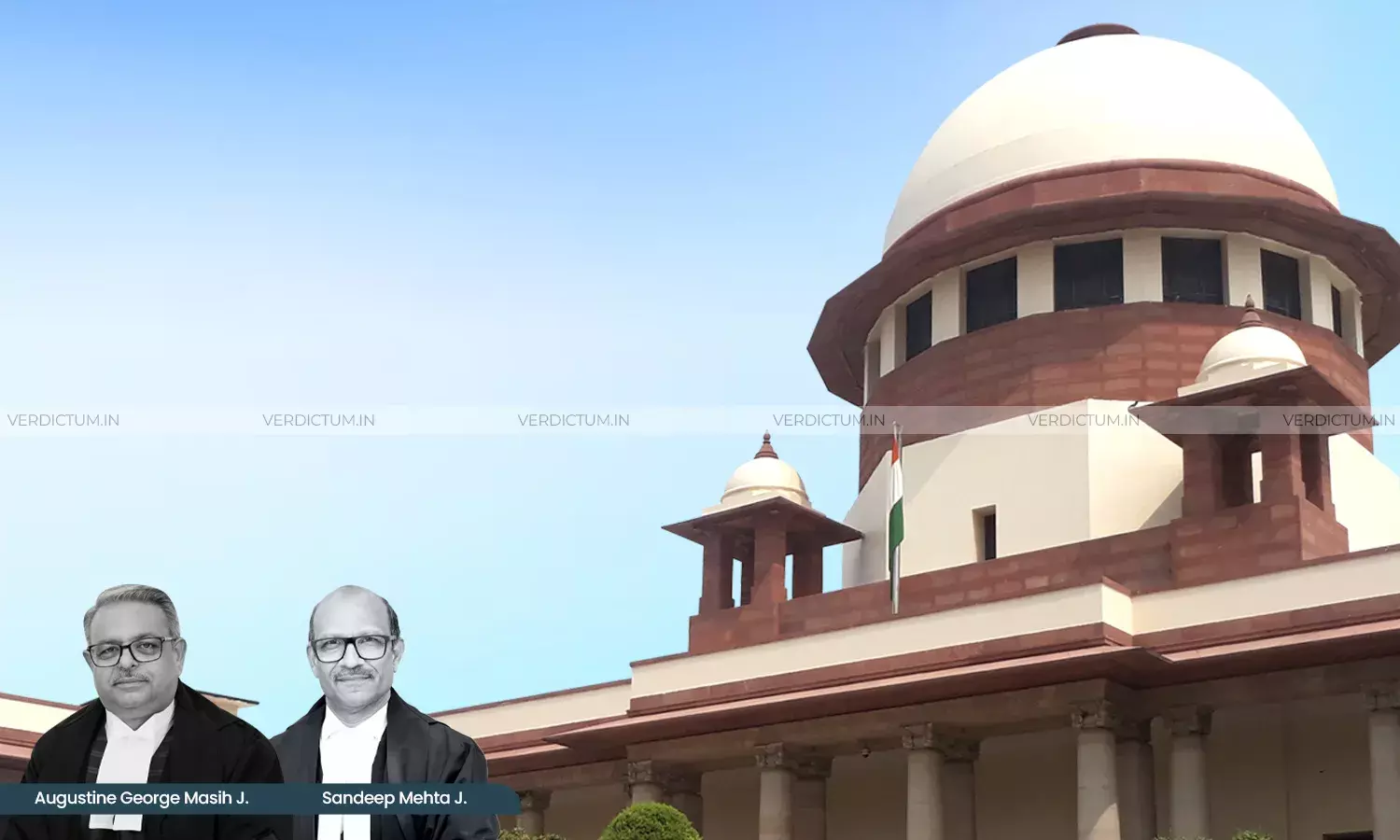
A Bench of Justice Augustine George Masih and Justice Sandeep Mehta observed, “…If respondent Nos. 1-3/plaintiffs intended to controvert this specific assertion, respondent/plaintiff No. 3, being the wife of Renukaiah and the person presumably having knowledge of the family affairs/finances, was the most material witness to establish to the contrary. Her non-examination, in the facts and circumstances of the present case, justified the drawing of an adverse inference against respondent Nos. 1- 3/plaintiffs”.
“…At the time of the sale, respondent/plaintiff No. 1 (PW-1) was admittedly a minor and had no personal knowledge regarding the manner in which the family finances were being managed. The precise knowledge in this regard would naturally have been with respondent/plaintiff No. 3, wife of Renukaiah and would be expected to be aware of the family affairs. Her non-examination assumes significance, particularly when the sale deed itself contains a clear recital that Renukaiah was in financial difficulty and was unable to look after and improve the properties”, the Bench noted further.
Advocate Girish Ananthamurthy appeared for the appellant and Advocate Abdul Azeem Kalebudde appeared for the respondent.
Renukaiah had received six items of ancestral land in a 1983 family partition. In 1993, he sold two of these properties by a registered sale deed, reciting financial difficulty and inability to manage lands situated away from his residence in Bengaluru. The purchaser subsequently sold the land to another party, from whom the appellant acquired it during the pendency of litigation. Following Renukaiah's death in a road accident in 1995, his wife and two sons filed a suit for partition of only the two alienated properties, contending the sale lacked legal necessity, while the remaining four properties, admittedly sold to Renukaiah's elder brother, were left out of the suit.
The trial court dismissed the suit, holding the sale proceeds had been used to discharge a loan raised for constructing a house in Bengaluru. The High Court, in appeal, reversed this finding primarily relying on the son's testimony that Renukaiah was addicted to gambling and alcohol, holding the alienation was not for legal necessity.
The Supreme Court found this allegation of vices to be an improvement beyond the pleadings and an unsubstantiated bald assertion, noting that the son himself admitted his mother was aware of these habits, yet the plaintiffs chose not to examine her.
The Court also noted the plaintiffs' claim of gross undervaluation remained based on hearsay, unsupported by any government record or official witness, and that they had failed to explain the selective exclusion of four properties sold to their uncle, at whose instance the son admitted the suit had been filed.
Holding that the trial court's view was a plausible and reasoned appreciation of the evidence, the Court set aside the High Court's judgment and restored the trial court's dismissal of the suit.
Cause Title: H.G. Pattabi v. K.R. Suraj and Others (Neutral Citation: 2026 INSC 1041)
Appearances:
Appellant: Girish Ananthamurthy, Advocate Vaijayanthi Girish, AOR.
Respondent: Abdul Azeem Kalebudde, Advocate P. R. Ramasesh, AOR.