

Trap Officer's Hearsay Account Cannot Establish Demand & Acceptance Of Bribe Where Shadow Witness Did Not Testify: Supreme Court Acquits Tehsildar In Corruption Case
The Court said that the mere recovery of tainted currency notes, absent proof of demand, cannot sustain conviction, and drawing a presumption under Section 20 without it was impermissible.

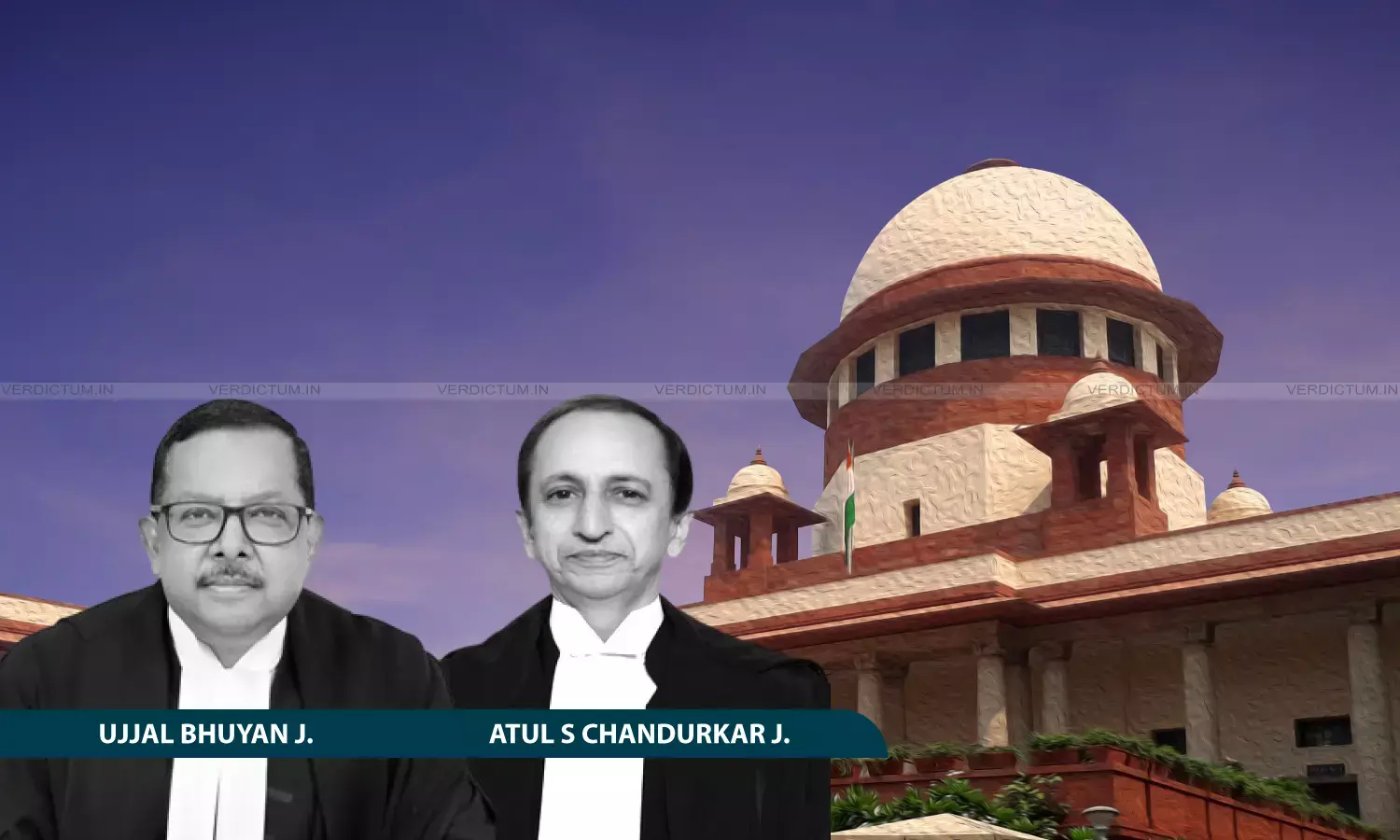
The Supreme Court has held that, where the panch (shadow) witness did not testify, the trap officer’s account of what the panch witness told him is hearsay. It is inadmissible and cannot establish the fact in issue, namely the demand for and voluntary acceptance of illegal gratification. Setting aside the corruption conviction of a Delhi Tehsildar, the Court noted that the complainant and the panch witness had died before their evidence could be recorded.
The Court explained that, in the absence of any primary evidence of demand, the prosecution was obliged to prove circumstances leading to an irresistible inference of guilt, and that mere recovery of tainted currency notes, absent proof of demand, cannot sustain a conviction under Sections 7 and 13(1)(d) of the Prevention of Corruption Act, 1988. It held that the presumption under Section 20 was impermissible because demand and acceptance were not proved, and that official records showing the cheques had already been dispatched contradicted the alleged demand.
A Division Bench of Justice Ujjal Bhuyan and Justice Atul S. Chandurkar observed, “Notwithstanding the right hand left hand discrepancy, it is evident that the above statement of PW-10 regarding what was narrated to him by the panch witness is nothing but hearsay evidence. PW-10 himself had not seen or heard any demand for illegal bribe being made by the appellant or acceptance of the same. It was entirety relayed to him by the panch witness. In the absence of the panch (shadow) witness testifying as to the correctness of the said statement, such hearsay statement of PW-10 would be inadmissible in evidence and cannot establish the fact in issue viz. the demand for and voluntary acceptance of illegal gratification by the appellant”.
Senior Advocate Parthiv K. Goswami appeared for the appellant and Senior Advocate Dr. Nachiketa Joshi appeared for the respondent.
The appellant, Har Parsad Gaur, was Tehsildar, Kotwali, the complainant had won a Labour Court award of ₹41,425 against his former employer and the recovery was marked to the appellant. The complainant alleged a bribe demand of ₹3,000, paid earlier, and a further ₹1,000. In a trap laid on January 6, 2003 outside an SBI branch at Tis Hazari, two treated ₹500 notes were recovered from the appellant’s coat pocket, and the hand and pocket washes turned pink. The complainant and the panch witness died before trial testimony could be recorded.
The Special Judge, Delhi convicted the appellant on August 28, 2008 under Sections 7 and 13(1)(d) read with 13(2) of the PC Act, relying on the presumption under Section 20. He was sentenced to two years’ rigorous imprisonment on each count. The Delhi High Court on December 19, 2014 upheld the conviction but reduced the sentence to one year each. The Supreme Court granted leave and suspended the sentence on April 6, 2015.
The Court relied on Neeraj Dutta (2023) (Constitution Bench) to hold that demand and acceptance are a sine qua non, though they can be proved by circumstantial evidence if the complainant dies. It found no direct evidence of the earlier demands, the telephone call, or the transaction at the spot. The prosecution case rested on the trap officer (PW-10), whose account was relayed by the panch witness and also contained a right-hand and left-hand discrepancy.
On the circumstances, the Court held that official records showed the two cheques were dispatched on December 28, 2002 and received on January 1, 2003. The complainant collected them on January 7, 2003, so no official work was pending on January 6. The Court held that the appellant’s explanation, that the complainant tried to thrust the notes in his pocket in gratitude, was plausible on preponderance of probabilities.
The Court allowed the appeal, set aside the High Court and trial court judgments and acquitted the appellant. His bail bonds stand discharged.
Cause Title: Har Parsad Gaur v. State (NCT of Delhi) (Neutral Citation: 2026 INSC 1230)
Click here to read/download the Judgment