

Law Doesn’t Permit Use Of ‘Unsatisfactory Performance’ As Disguise To Bypass Formal Disciplinary Proceedings: Supreme Court
The Supreme Court was considering an appeal directed against the impugned final judgment of the Calcutta High Court.

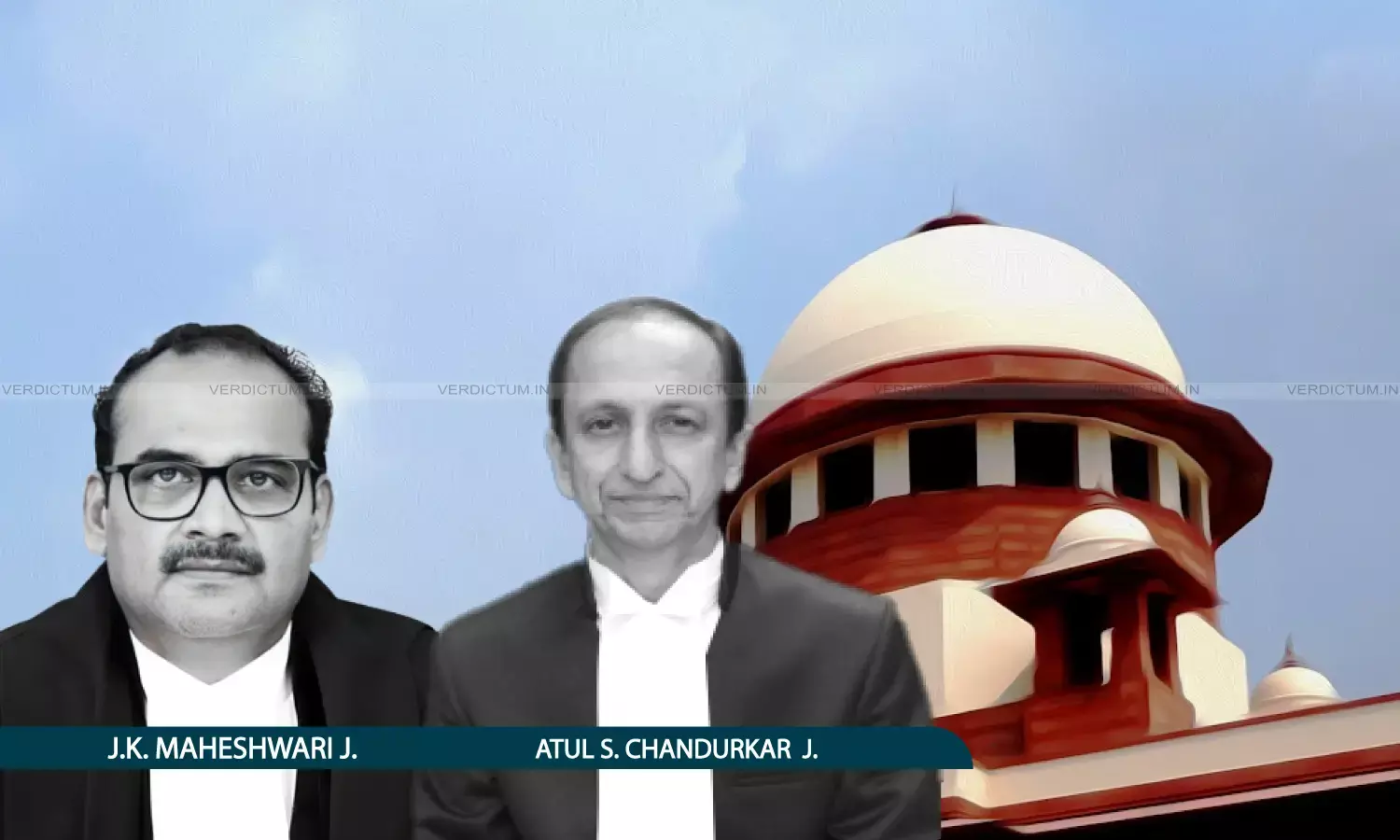
While terming a termination order passed against a Bank employee as bad in law, the Supreme Court has held that while an employer retains the right to terminate services for genuine inefficiency, the law does not permit the use of ‘unsatisfactory performance’ as a disguise to bypass formal disciplinary proceedings.
The Apex Court was considering an appeal directed against the impugned final judgment of the Calcutta High Court dismissing the appeal preferred by the Appellant – Bank of Baroda against the order quashing the order of termination of the employee, noting that it was vitiated on account of irrelevant considerations.
The Division Bench of Justice J.K. Maheshwari and Justice Atul S. Chandurkar held, “As discussed in the analysis above, these memos lack the requisite evidentiary value to establish that Respondent No. 1’s performance was genuinely unsatisfactory. Furthermore, the Bank’s office note dated 05.11.2005 reveals that the alleged misconduct was the primary issue of variance and basis of removal at the first instance. While an employer undoubtedly retains the right to terminate services for genuine inefficiency, the law does not permit the use of ‘unsatisfactory performance’ as a disguise to bypass formal disciplinary proceeding. It is a settled proposition of law that what cannot be directly cannot be done indirectly.”
AOR Rajesh Kumar Gautam represented the Appellant, while Senior Advocate P.S. Patwalia represented the Respondent.
Factual Background
The First Respondent was appointed to the post of Assistant General Manager (AGM), Networking on probation for a period of one year from the date of joining the Bank, which was extendable by a maximum period of one year. The confirmation of the Respondent in the service was subject to satisfactory performance and conduct. The Respondent joined the Bank, and after the expiry of one year of service, he was not confirmed. Thereafter, he was placed under suspension with immediate effect on the allegation of making an attempt to take away four boxes of files containing highly confidential tender documents from his office cabin unauthorizedly through his driver. He was further directed not to enter the premises of the Bank without the written permission of the concerned authority, except for the purpose of receiving monthly allowances.
Later, the respondent rejoined the duty, but his probation was further extended for a period of 6 months, citing unsatisfactory performance. The Respondent’s services were terminated by the Bank under Regulation 16(3)(a) of Vijaya Bank (Officers’) Regulations, 1982, on the ground that his services during the entire period of probation were not satisfactory. Aggrieved, the first Respondent filed the writ petition challenging the termination order, which was allowed. Dissatisfied, the Bank assailed the order of the Single Judge before the Division Bench, but the appeal came to be dismissed. It was in such circumstances that the appeal came to be filed before the Apex Court.
Reasoning
The Bench, at the outset, noted that the discord between the parties was over the termination of services of the Respondent during his probation period citing unsatisfactory performance, in exercise of power under Regulation 16(3)(a) of the 1982 Regulations. Referring to Clause 16(3)(a), the Bench stated that the Competent Authority retained the discretion to assess a direct appointee’s suitability for confirmation at any time during the initial or extended probation period. “If the Authority is of the opinion that the officer is not fit for confirmation, it may dispense the services of the probationer either by serving one-month notice, or by tendering one month’s salary in lieu of such notice. However, the question that arises is, whether such discretion is absolute and unqualified? The clear and unambiguous answer is no”, it added.
The Bench also explained, “If the employer’s decision is founded on allegations of misconduct or severe deficiency, the termination is stigmatic. It cannot stand in absence of compliance of due process, and the probationer should be afforded an opportunity of hearing or to defend his case. Furthermore, such discretion should not contain a whisper of arbitrary exercise of power or mala-fide. If a discharged probationer can demonstrate that the termination was driven by personal bias, vindictiveness, or an ulterior motive of a superior rather than a genuine assessment of their work, such termination, even during probation, is liable to be set-aside. In other words, while the Regulation appears to vest the Competent Authority with the discretion to terminate a probationer based on its satisfaction, it remains strictly bound by the established principles of administrative law.”
On a perusal of the facts of the case, the Bench noted that the termination order was primarily predicated upon the ‘misconduct’ alleged against the Respondent. As per the Bench, it couldnot be said that the Respondent was terminated from services because his work was found to be simply unsuitable. “Upon consideration of the material placed on record, it is evident that the alleged misconduct was for all intent and purposes, the motive as well as foundation for the termination, even though the formal order ostensibly cites unsatisfactory performance”, the Bench stated.
It was further noticed that the Respondent was put under suspension on the allegation of removing confidential documents from the Bank premises. The Bank revoked his suspension ‘without prejudice’ and rather than initiating a formal inquiry, extended his probation twice, transferred him, and issued three performance memos before terminating him. “This sequence clearly demonstrates a calculated intent on part of the Bank to retain Respondent No. 1 to gather adverse material and orchestrate a pretextual termination”, it stated while also adding, “In the present case, the Bank suspended Respondent No. 1 for misconduct, an action that necessitates a formal departmental enquiry. By consciously choosing to forego this enquiry and instead terminating Respondent No. 1 on unsubstantiated grounds of poor performance, the Bank rendered its termination order legally unsustainable for reasons recorded above.”
Thus, without interfering with the orders passed by the Single Bench and the Division Bench and holding that the termination order was bad in law, the Bench directed that the Respondent would be entitled to 50% backwages from the date of his termination up to the date of his superannuation including all consequential benefits notionally. “We make it clear that since the Vijaya Bank stands amalgamated with the Bank of Baroda as indicated in paragraph 9, these directions shall be complied by the substituted Appellant Bank of Baroda”, it clarified.
Cause Title: General Manager, Bank of Baroda v. Ashok Kumar Singh (Neutral Citation: 2026 INSC 589)
Appearance
Appellant: AOR Rajesh Kumar Gautam, Advocates Anant Gautam, Vibhu Sharma, Likivi K Jakhalu, Aman Gahlot, Rishi Chauhan, Azal Aekram
Respondent: Senior Advocate P.S. Patwalia, AOR Gopal Jha, Deveshi Chand, Shireesha Sharma, Sawan Datta, Nimish Arjaria, Umesh Kumar Yadav, Tilak Vij, Arpita Mishra, Ratna Priya Pradhan, M/S. Mitter & Mitter Co.