

There Will Be No End To Disputes Between States: Supreme Court Refuses To Entertain Fresh Plea Regarding Allocation Of Cauvery River Water

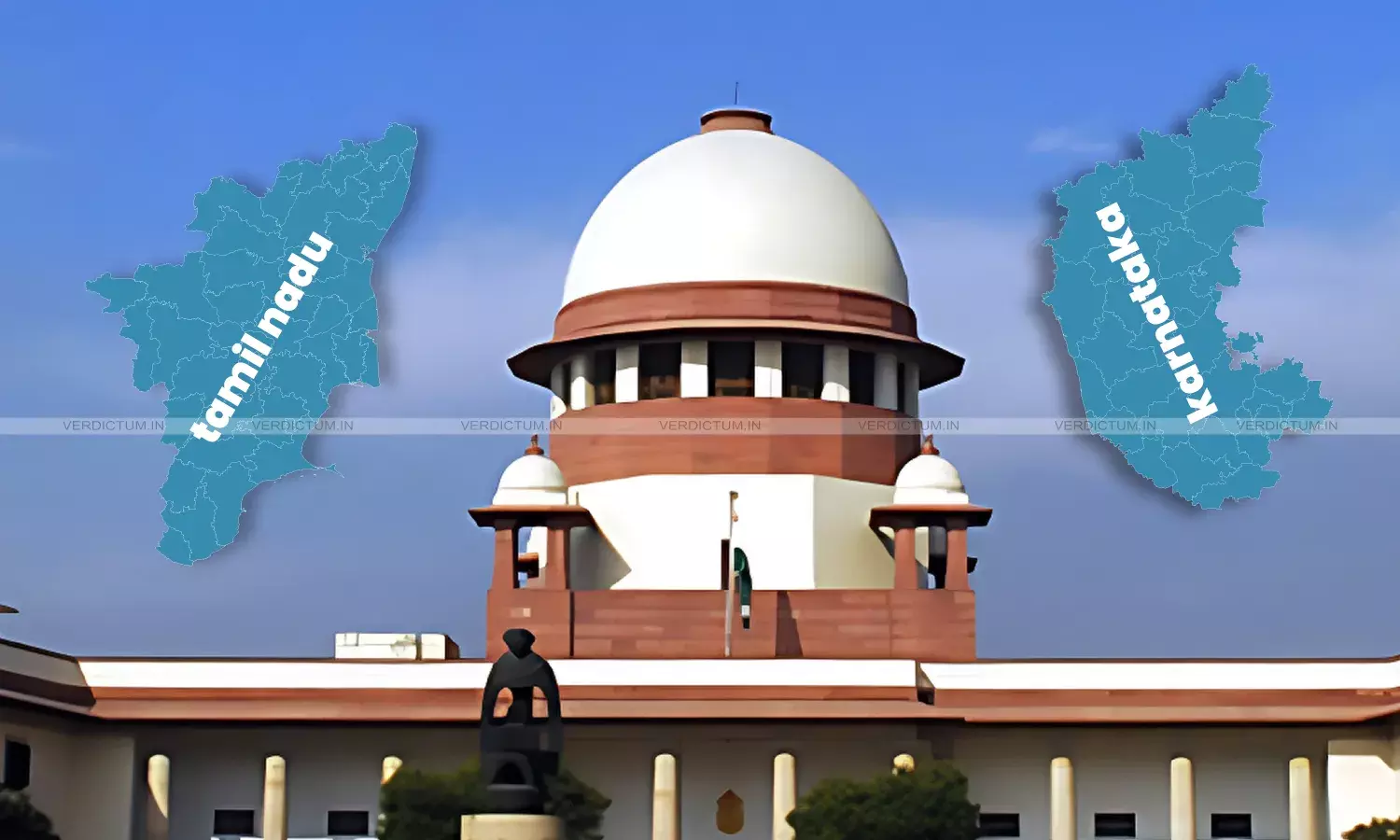
The Supreme Court today refused to entertain a fresh plea concerning allocation of Cauvery river water, saying it was a dispute between the states of Tamil Nadu and Karnataka and they are already contesting the matter.
"If we start entertaining petitions of societies in a dispute between two states, which are already contesting the matter, then there will be no end to it," a bench of Justice Vikram Nath and Justice Sandeep Mehta observed.
The bench refused to entertain the petition which, besides several other prayers, sought re-allocation of 70 TMC of Cauvery river water to Karnataka from the share of Tamil Nadu.
The Karnataka government had told the Apex Court that it had released excess water to Tamil Nadu as of August 31 and the state was complying with the direction of the Cauvery Water Management Authority (CWMA) to ensure a flow of 9,000 cusecs.
On August 25, the CWMA upheld the Cauvery Water Regulation Committee's (CWRC) recommendation directing Karnataka to ensure a flow of 9,000 cusecs of water to Tamil Nadu for 15 days.
The Tamil Nadu government had told the Apex Court that they had informed the authority about the backlog of water but no direction was passed in this regard.
The Apex Court was then hearing the Tamil Nadu government's plea seeking directions to the Karnataka government for immediate release of water to it.
On August 17, the Apex Court had asked Karnataka to ensure compliance of the CWMA direction on the release of Cauvery water to Tamil Nadu.
The Tamil Nadu government had earlier said the state was not getting its due share of Cauvery water in a rain-deficient year.
The Joseph Vijay-led state government on August 3 approached the Apex Court seeking directions to the Karnataka government for immediate release of water.
The state government, in its plea, claimed the quantum allocated to it by the CWRC as well as that released by its neighbour Karnataka was very less.
With PTI Inputs