

Every Entry In ACR Has To Be Communicated To Public Servant: Supreme Court Holds Retired IRMS Medical Officer Entitled To Promotional Pensionary Benefits
The issue raised before the Supreme Court related to the issue of promotion to the post of Chief Medical Director in the Indian Railway Medical Service.

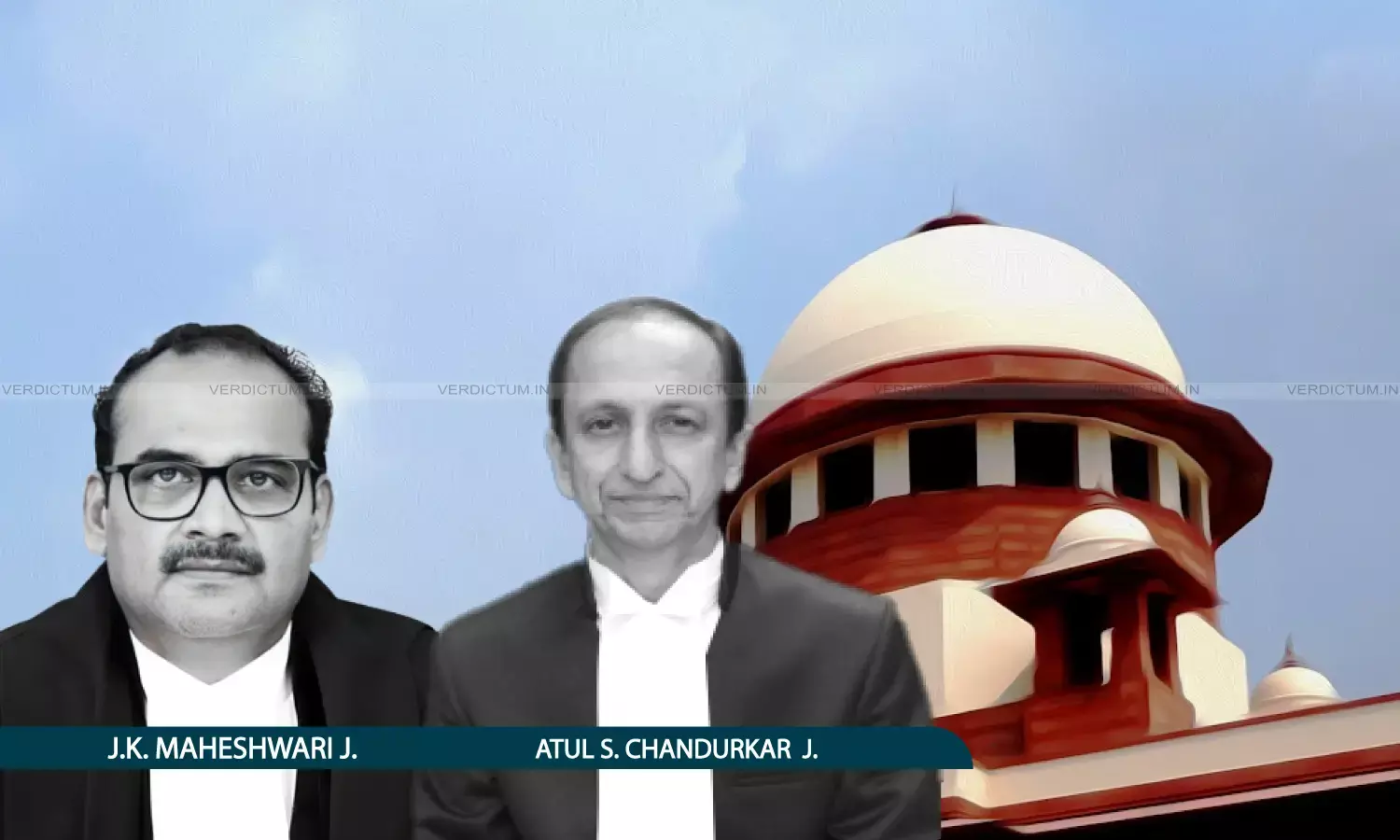
While observing that prejudice had been shown to have been caused to a retired Assistant Medical Officer due to the non-communication of her ACRs (Annual Confidential Reports), the Supreme Court has held that every entry in the ACR of a public servant has to be communicated to him/her.
The issue raised before the Apex Court related to the entitlement of the appellant to promotion to the post of Chief Medical Director (Higher Administrative Grade) in the Indian Railway Medical Service. The claim of the appellant was turned down by the Central Administrative Tribunal, and this decision was upheld by the Delhi High Court in 2009.
The Division Bench of Justice J. K. Maheshwari and Justice Atul S. Chandurkar held, “The respondents seek to rely upon the communication dated 16.09.1998 issued by the Secretary, Railway Board wherein it is stated that all unfavourable remarks recorded in an ACR should be communicated to the officer within a month of finalisation of the report by the Accepting Authority. This is to enable the officer to make a representation against such remarks. In Dev Dutt (supra), it has been held that the nomenclature of an entry is not relevant but its effect is determinative whether the entry is adverse or not. It was observed that a ‘good’ entry would be of no satisfaction to an incumbent if such entry makes him ineligible for promotion or has an adverse effect on his chances. Thus, every entry in the ACR of a public servant has to be communicated to him. A three Judge Bench in Sukhdev Singh (supra) has approved the aforesaid view.”
Senior Advocate Jaideep Gupta represented the Appellant while Additional Solicitor General Vikramjit Banerjee represented the Respondent.
Factual Background
As per the appellant, after obtaining the requisite qualification for being recruited at the IRMS, she was appointed as an Assistant Medical Officer. During the course of service, the appellant was eligible to be considered for further promotion. The Railway Board published two lists with regard to promotion and posting of various officers from Senior Administrative Grade 4 as Chief Medical Director in Higher Administrative Grade. According to the appellant, despite being entitled to be promoted in HAG, she was deprived of the same, and an officer junior to her came to be promoted. The appellant, therefore, approached the Tribunal raising a challenge to the promotion of the private respondents and further sought relief of promotion as CMD. On the ground that the appellant did not secure the grading of ‘Very Good +’, the Tribunal held that the criteria required to be satisfied for being considered for promotion were not satisfied. Accordingly, the Original Application was dismissed.
The appellant approached the High Court challenging the judgment of the Tribunal. The High Court held that the appellant, having failed to secure the grading of VG+ coupled with the fact that she was awarded 19.5 marks, the assessment undertaken by the Selection Committee (SC) could not be faulted. By observing that the competence of SC was not liable to be questioned, the writ petition was dismissed. Being aggrieved, the appellant approached the Apex Court.
Arguments
The appellant’s challenge to her non-promotion was principally based on the premise that adverse entries in her ACRs were not communicated to her, thus causing prejudice, that a wrong benchmark was applied while considering the her case for promotion and that by weeding out her service records despite pendency of the present proceedings, an adverse inference was liable to be drawn against the respondents.
Reasoning
On a perusal of the facts of the case, the Bench noted that the appellant had been demanding copies of her confidential reports and the same was evident from the communication dated December 28, 2005, issued by her. This request was pursued by the appellant before the Tribunal, and the grievance in this regard was also made before the High Court. The Bench further found that the appellant’s confidential reports were not supplied to her despite being demanded. “This aspect would definitely have material bearing when considered cumulatively alongwith non-communication of the appellant’s ACRs”, it added.
The Bench took note of the communication dated September 16, 1998, issued by the Secretary, Railway Board wherein it was stated that all unfavourable remarks recorded in an ACR should be communicated to the officer within a month of finalisation of the report by the Accepting Authority. It was also reiterated that every entry in the ACR of a public servant has to be communicated to him.
The Bench was of the view that the appellant was entitled to receive her ACRs notwithstanding the ‘Very Good’ entries, as she was not considered suitable for empanelment despite such grading. The Bench also noticed the weeding out of the appellant’s ACRs despite the pendency of her judicial proceedings. The Bench noticed the affidavit filed on behalf of the respondents accepting the position that confidential reports of an officer were required to be retained till any judicial process was concluded. It was, however, stated that the appellant’s service records came to be inadvertently destroyed in 2013 after five years of her superannuation.
The Bench thus concluded that the appellant was not supplied with the various entries made in her ACRs despite her request made before her assessment by the SC. The service records of the appellant were weeded out despite the pendency of judicial proceedings initiated by her on the same subject matter, and the award of points was done in a fraction when no such enabling provision was brought on record.
“Taking these aspects together, in our view, prejudice has been shown to have been caused to the appellant by the noncommunication of her ACRs”, the Bench further held while also adding, “...it is clear that the appellant has been prejudiced by the non-supply of her ACRs, destruction of her service records and award of points in fraction. Though the appellant was assessed under the prevailing promotion policy of the Railways, we find sufficient material on record to hold that she was not treated fairly in the matter.”
Thus, allowing the appeal and setting aside the judgment of the Tribunal as well as the judgment of the High Court, the Bench held the appellant entitled to notional promotion in HAG grade ₹22,400-24,500 and to receive pensionary benefits in that grade along with other benefits admissible in that regard. “The arrears be accordingly paid to the appellant within a period of two months from today”, it ordered.
Cause Title: Dr. Indira Saranath Appellant v. Union of India and Another (Neutral Citation: 2026 INSC 553)
Appearance
Appellant: Senior Advocate Jaideep Gupta, Advocate Radha Rangaswamy, AOR Prateek K Chadha, Advocates Racheeta Chawla, Sreekar Aechuri, Pragya Ganjoo, Surbhi Soni, Aniket Chauhaan
Respondent: Additional Solicitor General Vikramjit Banerjee, Advocates Rekha Pandey, Suyash Pande, Priya Mishra, Padmesh Mishra, AOR Amrish Kumar