

Subsequent Breach Of Promise By Donee Is Not Fraud To Extend Limitation For Setting Aside Gift: Supreme Court
The Court dismissed a daughter’s 1997 suit challenging a 1974 gift deed in favour of her father, holding that limitation ran from her knowledge of the deed’s true nature and not from when he stopped sharing the produce.

The Supreme Court has held that a mere subsequent breach of promise by a donee does not amount to fraud so as to postpone the commencement of limitation for setting aside a gift deed. Referring to Reliance Salt Ltd. v. Cosmos Enterprises & Another (2006), it held that fraud vitiating a transaction must have a nexus with the acts of the parties prior to entering into it.
The Court held that under Article 59 of the Limitation Act, 1963, limitation for setting aside an instrument executed under undue influence runs from the date the executant became aware of its true nature, and not from the date she came out of the influence. It found that the discontinuance of gifts by a father to his daughter in 1995 could not generate a cause of action to set aside a gift made in 1974, and set aside the concurrent decrees of the courts below.
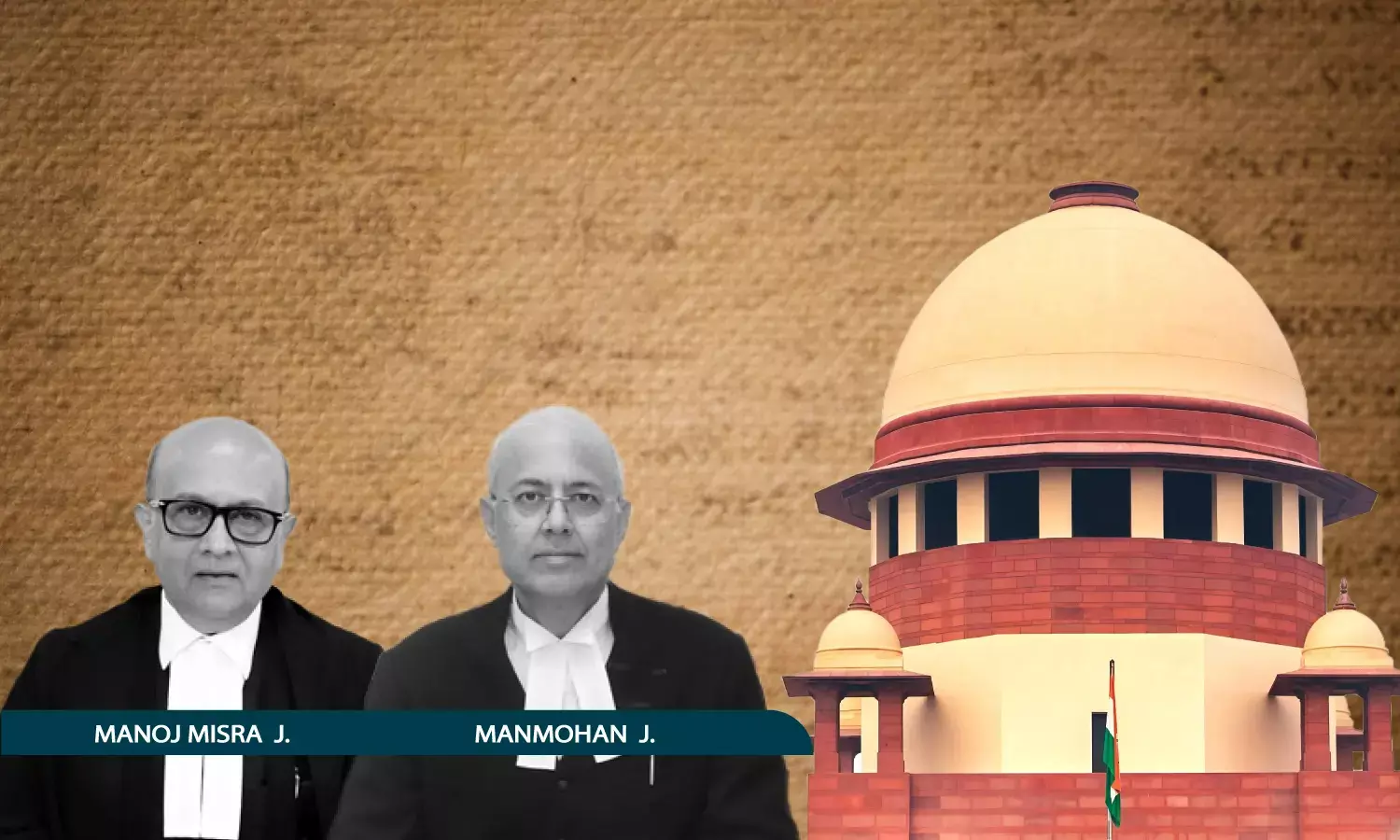
A Bench of Justice Manoj Misra and Justice Manmohan observed, “Insofar as the allegation of fraud is concerned, firstly, there is no specific pleading that the defendant suppressed any material fact at the time the gift was made, and, secondly, even assuming that he promised not to marry again, mere subsequent breach of promise does not indicate fraud…Insofar as sharing of gifts are concerned, sharing of gifts by a father with his daughter is not indicative of any kind of legal obligation because it is quite normal for a father to share his income with his children; therefore, if such gifts were stopped in 1995, that by itself would not generate a cause of action to sue, particularly, for setting aside a Gift made in 1974. Hence, in our view, the courts below committed manifest error in holding that the period of limitation for instituting the suit to rescind the Gift would commence from the date when the defendant stopped sharing the profits. In our view, the suit was clearly barred by limitation and was liable to be dismissed as such”.
Senior Advocate V. Giri appeared for the appellant and Advocate Ananga Bhattacharyya appeared for the respondent.
“…even if the plaint case is accepted, the Gift would be voidable and not void, therefore, unless the Gift is set aside, relief of possession cannot be granted. Hence, the limitation period for the suit seeking setting aside of the Gift would be governed by Article 59 of the Limitation Act”, the Bench had also noted.
The respondent had acquired the suit properties through inheritance from her mother and through gifts from her sisters. On December 19, 1974, while pursuing her graduation and under her father’s care, she executed a gift deed in his favour. She alleged that it was executed under undue influence on his assurance that he would safeguard the properties and not remarry, while he later remarried.
She claimed that till 1995 he maintained cordial relations and shared the produce, after which his attitude changed. She issued a notice on February 27, 1997 and instituted the suit on August 30, 1997.
The trial court decreed the suit, finding undue influence and holding the suit within time from 1995. The first appellate court affirmed, noting that the father did not enter the witness box. The High Court of Andhra Pradesh dismissed the second appeal on April 8, 2026.
The Bench rejected the contention that the gift created a trust attracting Section 10 of the Limitation Act, noting that the recitals conferred absolute title on the donee without any obligation to safeguard the property or share its usufruct. It held that Article 65 did not apply since a gift obtained by undue influence is voidable and not void, and that the suit was governed by Article 59.
Referring to Ningawwa v. Byrappa Shiddappa Hireknrabar & Ors. 1968 SCC OnLine SC 206, it found that the plaint itself showed the respondent was conscious of her father’s influence and aware of the instrument’s nature, and that she came out of his influence on her marriage in 1975.
On fraud, the Court found no specific pleading that any material fact was suppressed at the time of the gift. It noted that the deed imposed no condition against remarriage or restriction on transfer, and that nothing indicated fraudulent intention from the beginning. It observed that it is quite normal for a father to share his income with his children, which is not indicative of any legal obligation.
Cause Title: D. Kalidasreddy & Anr. v. Chennamma (K. Bharathi) (Neutral Citation: 2026 INSC 1209)
Appearances:
Appellants: Senior Advocate V. Giri, AOR Ankita Gupta, Advocates Kushagra Pandey, Ved P. Singh and Aishwarya Mishra.
Respondent: AOR M/s Veritas Legis, Advocates Ananga Bhattacharyya, Krishanu Barua and Devahuti Tamuli.