

Plaint Can Be Rejected Prior To Its Registration; Such Rejection Ought To Be Duly Recorded In Register Maintained As Per Order IV Rule 2 Of CPC: Supreme Court
The Apex Court was considering an appeal challenging the correctness of the order passed by the Trial Court rejecting the plaint under Order VII Rule 11 of the Code of Civil Procedure.

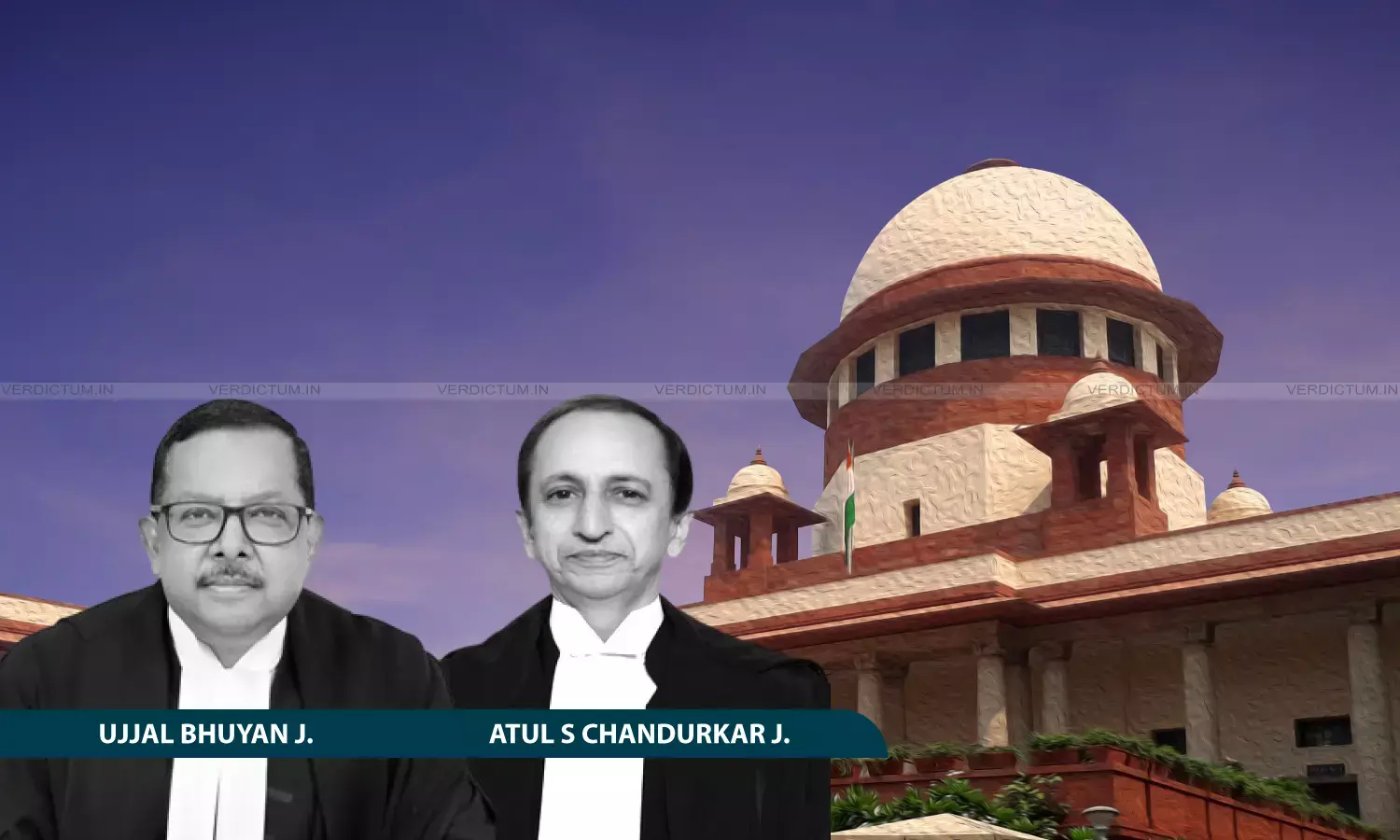
While restoring a plaint in a civil suit, the Supreme Court has held that a plaint could be rejected even prior to its registration and whenever the Trial Court rejects a plaint in such manner in exercise of power under Order VII Rule 11 of the Code Of Civil Procedure (CPC), the fact that such plaint stands rejected must be duly recorded in a register maintained for such purpose.
The Apex Court was considering an appeal challenging the correctness of the order passed by the Trial Court and upheld by the High Court rejecting the plaint in exercise of power under Order VII Rule 11 of the Code of Civil Procedure, 1908 prior to registration of the civil suit.
The Division Bench of Justice Ujjal Bhuyan and Justice Atul S. Chandurkar held, “Having found that in a given case, a plaint could be rejected even prior to its registration, it would be in the interest of administration of justice that such rejection of a plaint at a stage prior to its registration also ought to be duly recorded. Rejection of a plaint has the character of a ‘decree’ as defined by Section 2(2) of the Code and, therefore, permitting rejection of a plaint in an unregistered or unnumbered proceeding to go unnoticed without any record has its own disadvantages. The record of an unregistered or unnumbered plaint would be necessary in case an order rejecting a plaint is questioned in appeal and the record of the trial Court is summoned. In other words, a record of plaints that are rejected prior to their registration also ought to be maintained. This would facilitate the availability of some record of proceedings initiated by a plaintiff at an earlier point of time.”
“We deem it necessary to direct that whenever the trial Court rejects a plaint in exercise of power under Order VII Rule 11 of the Code prior to registration of the plaint, the fact that such plaint stands rejected shall be duly recorded in a register maintained for such purpose under Order IV Rule 2 of the Code. In case such provision has not been made in the concerned Civil Manual or the applicable Rules, the High Courts may in exercise of its power conferred by Section 122 of the Code take appropriate steps in that regard”, it added.
Senior Advocate Shoeb Alam represented the Appellant while AOR G. Indira represented the Respondent.
Factual Background
The appellant-plaintiff claimed to be the owner of the suit property. It was alleged that pursuant to a registered Settlement Deed, the suit property was settled in favour of the plaintiff by his son. The plaintiff borrowed an amount of ₹25,00,000 from the husband of the respondent-defendant at an interest rate of 24% per month. It was the case of the plaintiff that on the insistence of the defendant’s husband, a sale deed of the suit property was registered in the name of the defendant. Despite the aforesaid, the possession of the suit property continued with the plaintiff. Subsequently, the plaintiff offered to repay the loan amount of ₹25,00,000 with interest. However, the defendant avoided executing a sale deed in the plaintiff’s favour.
It was alleged that the defendant also attempted to take forcible possession of the suit property. On this cause of action, the plaintiff filed the suit seeking a decree for declaration of his title to the suit property and for permanent injunction restraining the defendant from disturbing the plaintiff’s peaceful possession. The Principal District Judge rejected the plaint and directed the refund of court fees. The plaintiff, being aggrieved by the rejection of the plaint, preferred an appeal before the Division Bench. It held that since the suit was not numbered and the plaintiff was held entitled to refund of the court fees, similar concession was extended to the plaintiff in the appeal. Being aggrieved, the plaintiff challenged the aforesaid judgment before the Apex Court.
Reasoning
Referring to a catena of decisions, the Bench held that the power to reject a plaint under Order VII Rule 11 of the Code can be exercised at any stage of the proceedings commencing from presentation of a plaint followed by its registration and any stage thereafter. “In a given case, such power may be exercised even prior to registration of the plaint. Even otherwise, we may observe that formal registration of a plaint by itself would not clothe the plaint with a shield of invincibility as its maintainability can always be questioned at any stage in exercise of power under Order VII Rule 11 of the Code. Hence, the contention of the plaintiff that the power to reject a plaint could be exercised only after registration of the suit cannot be accepted”, it added.
On a perusal of the facts of the case, the Bench noted that the Trial Court had not indicated any specific clause of Rule 11 under which the plaint was being rejected. The order of the Trial Court did not indicate as to whether the plaint was rejected on the ground that it did not disclose a cause of action or that the suit appeared from a statement in the plaint to be barred by any law.
The Bench further found that the plaint disclosed a cause of action and the suit did not appear from any statement made in the plaint that it was barred by law. It was further noticed that along with the prayer for redemption of the mortgage deed styled as sale deed, the plaintiff had also sought the relief of permanent injunction so as to restrain the defendant, her agents and servants from disturbing his peaceful possession and enjoyment of the suit property.
The Bench held that the Trial Court failed to notice the various prayers made by the plaintiff in the plaint. It merely proceeded on the basis that the suit as filed was simpliciter for redemption of the mortgage deed styled as a sale deed. According to the Bench, it was not permissible for the Trial Court to ignore material averments made in the plaint nor could it refuse to read the plaint as a whole. “In the wake of specific pleadings made in the plaint disclosing a cause of action for filing the suit and seeking various reliefs, the plaint was not liable to be rejected in a summary manner by the trial Court”, it added.
Considering that, without considering the plaint as a whole and without its meaningful reading, the Courts had rejected the plaint, the Bench stated, “Likelihood of a suit being dismissed after trial does not furnish a ground for the Court to reject the plaint prior to the trial. If a plaint discloses a cause of action, which it does in the present case, and the suit does not appear to be barred by any law in view of statements made in the plaint, it has to go for trial.”
Thus, allowing the appeal and setting aside the judgment of the Division Bench of the High Court, the Bench ordered, “The plaint is restored for being duly registered. The suit thereafter shall be decided in accordance with law. It is clarified that any observations made hereinabove shall not be Civil Appeal No.13154 of 2026 treated as an expression on the merits of the case and the suit shall be decided uninfluenced by the same.”
Cause Title: G. Pazhanivel v. S. Thilagavathy (Neutral Citation: 2026 INSC 1197)
Appearance
Appellant: Senior Advocate Shoeb Alam, AOR Tushar Giri, Advocates D. Ravichander, Sivagnanam Karthikeyan, Aravind Raj, Charita Singh, Lakshay Singh
Respondent: AOR G. Indira, Advocates K V Jagdishvaran, P Gandepan, Anjali Singh, Joseph Manavalan, G Senthamizh, A Abinesh Gandhi