Sanction U/S 197 CrPC Not Required For Forgery By Public Servant: Supreme Court Restores Case Against City Survey Officer Over Land Record Manipulation
The Court restored two criminal proceedings holding that the Maharashtra safeguard governing investigations against public servants did not apply to the alleged fabrication and manipulation of land records.
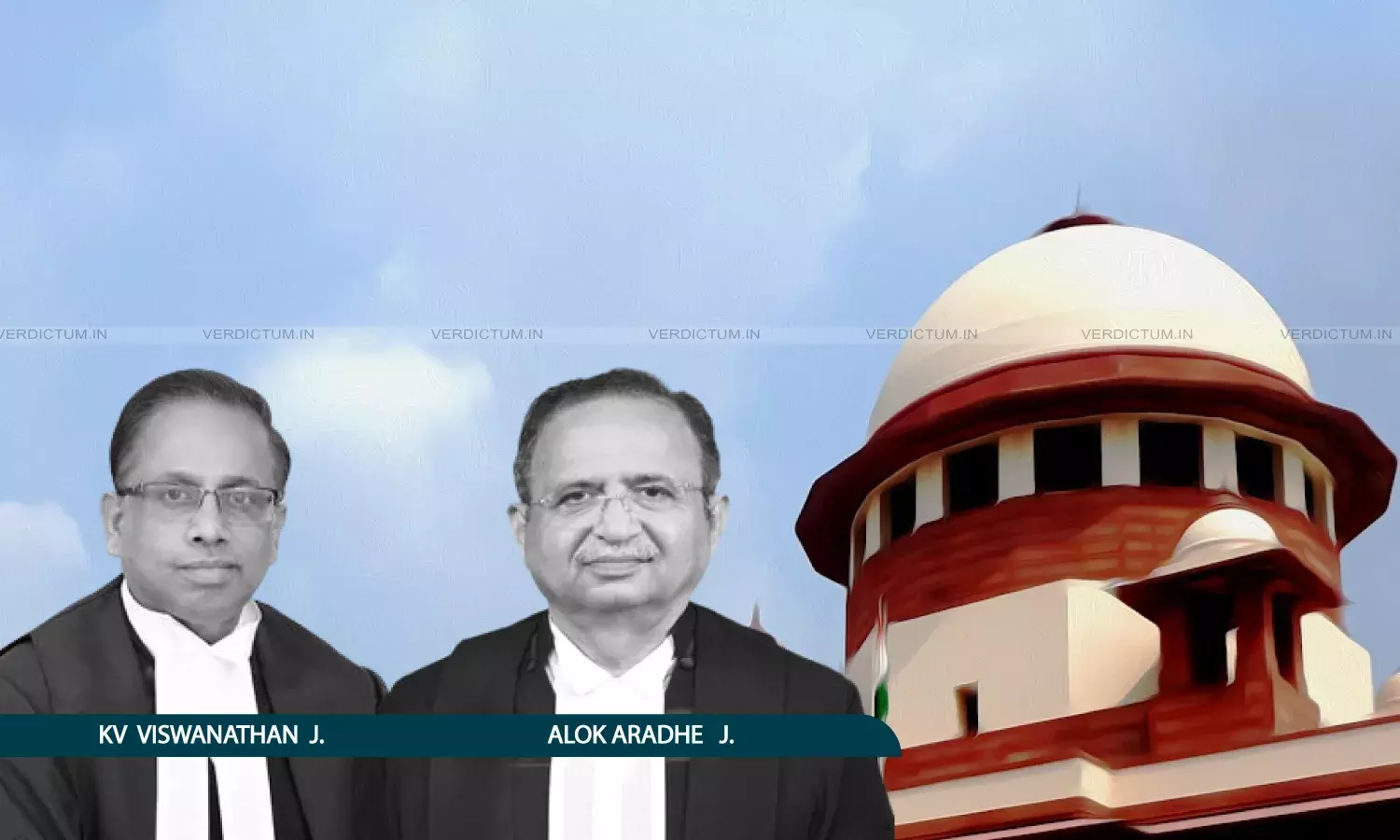
The Supreme Court has held that prior sanction under Section 197 of the Code of Criminal Procedure is not required where a public servant is accused of conspiring to prepare forged documents, presenting them as genuine and manipulating land records to facilitate a fraudulent mutation.
Such alleged acts, the Court held, have no reasonable nexus with the discharge or purported discharge of official duty, the Court said.
It accordingly set aside the Bombay High Court’s decision and restored two criminal cases against a City Survey Officer concerning an allegedly fraudulent land mutation.
The Court was hearing a complainant's appeals against a Bombay High Court order that had quashed two criminal proceedings against a City Survey Officer. The High Court had held that the Magistrate could not have directed an investigation under Section 156(3) of the CrPC without sanction and that applications made to the land-record authorities did not result in deemed sanction because they had not been submitted to the competent authority.
A Bench of Justice K.V. Viswanathan and Justice Alok Aradhe referred to the principles summarised in Om Prakash Yadav v. Niranjan Kumar Upadhyay (2024) and observed: “A public servant can only be said to act or purport to act in the discharge of his official duty, if his act is such that it lies within the scope and range of his official duties. The act complained of must be integrally connected or directly linked to his duties as a public servant for the purpose of affording protection under Section 197 CrPC. Hence, it is not the duty which requires an examination so much as the ‘act’ itself.”
Accordingly, while taking note that “the case set up against Respondent No. 1 is of conspiring to commit criminal offence by preparing forged documents and falsely presenting them as genuine”, the Bench further held: “We are inclined to hold that the acts complained of were not in discharge of or in purported discharge of official duty. Hence, we are not required to examine the aspect of deemed sanction and the issue of the authority competent to grant sanction, insofar as the present facts are concerned.”
Advocate Sagar Pahune Patil represented the appellant, while Advocate Siddharth S. Chapalgaonkar appeared for the respondents.
Background
The dispute arose from two complaints concerning land recorded in the names of a charitable trust and a cooperative housing society. After a civil court passed a decree in a partition suit concerning the society's sale deed, one of the decree-holders applied to the City Survey Office for mutation. The complainant alleged that the mutation was extended to property that was not involved in the suit and that the trust received no notice despite its name appearing in the existing entry.
The complainant further alleged that the mutation application had been altered, that documents not submitted with it were later shown as supporting material and that the City Survey Officer and another official approved the mutation without a hearing or verification. The competent land-record authority subsequently cancelled the entry after finding that due procedure had not been followed.
After the police did not register the allegations, the complainant filed two private complaints. In each case, a Magistrate directed an investigation under Section 156(3) of the CrPC. The resulting charge sheets alleged forgery, use and possession of forged documents, cheating, criminal conspiracy and common intention.
The High Court quashed the proceedings under Maharashtra's amendment to Section 156(3) of the CrPC. It held that the sanction requests had been addressed to authorities that were not competent to remove the officer from service and, therefore, their inaction could not result in deemed sanction.
Before the Supreme Court, the complainant and the State argued that fabricating documents and altering records could not form part of official duty. The officer maintained that the mutation followed an application and a legal opinion and that an erroneous official order could not, without more, be treated as criminal.
Court's Observations
Protection Depends On Quality Of Alleged Act
The Court explained that the protection under Section 197 of the CrPC must be assessed on the facts of each case. The decisive inquiry concerns the nature of the act alleged and whether it bears a direct or reasonable connection with official duty. The source of the opportunity to commit the alleged offence is not conclusive.
Quoting Om Prakash Yadav, the Bench said: “It is the ‘quality’ of the act that must be examined and the mere fact that an opportunity to commit an offence is furnished by the official position would not be enough to attract Section 197 CrPC.”
The Court added that protection may extend to an act performed in excess of official duty if a reasonable connection remains, but not to a pretended or fanciful claim of official character.
Public Office Cannot Camouflage A Crime
The Bench observed that Section 197 of the CrPC protects honest public servants from false or vexatious proceedings arising from their duties, but cannot cover acts that merely use public office as a means of committing an offence.
The judgment quoted the following principle: “The provision must not be abused by public servants to camouflage the commission of a crime under the supposed color of public office. The benefit of the provision must not be extended to public officials who try to take undue advantage of their position and misuse the authority vested in them for committing acts which are otherwise not permitted in law.”
The Court noted that a criminal conspiracy to create false or fabricated documents was among the acts that fell outside the provision's protective umbrella.
Alleged Forgery And Mutation Fell Outside Official Duty
Applying those principles, the Court held that the case did not concern a merely erroneous mutation order. The prosecution alleged a conspiracy to prepare forged documents, pass them off as genuine and alter property records to cheat and transfer property to private persons.
The Bench observed: “There is also an allegation with regard to manipulation of property records at the City Land Survey Office and execution of a mutation entry with intention to cheat.”
Since those alleged acts were neither performed in the discharge nor purported discharge of official duty, Section 197 of the CrPC and the Maharashtra amendment to Section 156(3) of the CrPC did not apply. The questions whether sanction could be deemed to have been granted and which authority was competent to grant it consequently did not require determination.
Finding Confined To Sanction Issue
The Court expressly refrained from deciding whether the allegations were ultimately proved. Its examination was confined to whether the proceedings required prior sanction.
It clarified: “Needless to state that the observations in this judgment are only for the purpose of deciding the aspect of sanction to prosecute. The trial and the other proceedings will be conducted independently, on their own merits.”
Conclusion
The Supreme Court allowed the appeals and set aside the High Court's order quashing the proceedings. It restored both criminal cases to the Chief Judicial Magistrate and directed that they proceed in accordance with law. All pending applications were disposed of.
Cause Title: Ashok v. Mahesh & Another (Neutral Citation: 2026 INSC 1235)
Appearances
Appellant: Sagar Pahune Patil, Advocate; Krishna Pratap Rodge and Sangeeta S. Pahune Patil, Advocates
Respondents: Siddharth S. Chapalgaonkar, Akash Tripathi and Siddhesh Ghodke, Sneha Sanjay Botwe, Advocates; Raman Yadav, Siddharth Dharmadhikari and Shrirang B. Varma, Advocates; Aaditya Aniruddha Pande, Advocate