

Absence Of Original Document Not Fatal For Prosecution In Forgery Case; Can Be Proved By Circumstantial Evidence: Supreme Court
The Court set aside an order discharging accused over missing original building plan, holding that a ground already rejected in an earlier writ petition cannot be re-agitated in a fresh one.

The Supreme Court has held that the non-production of an original document alleged to have been forged cannot, by itself, be the basis for discharging an accused of a forgery charge, since the offence may still be established through other evidence on record, provided that evidence excludes every reasonable possibility of doubt. The Court held that whether the prosecution has in fact discharged this burden is a matter for trial and cannot be pre-judged at the stage of framing of charge by treating the mere absence of the original document as fatal to the entire case.
Furthermore, it noted that once a Division Bench of a High Court has, in an earlier writ petition, specifically considered and rejected a challenge to an order framing charge on a particular ground, it is not open to the same accused to file a second writ petition before the same court re-agitating the identical ground; such a course is barred by the doctrine of issue estoppel, which precludes reopening an issue of fact or law already decided between the same parties in the same proceedings.
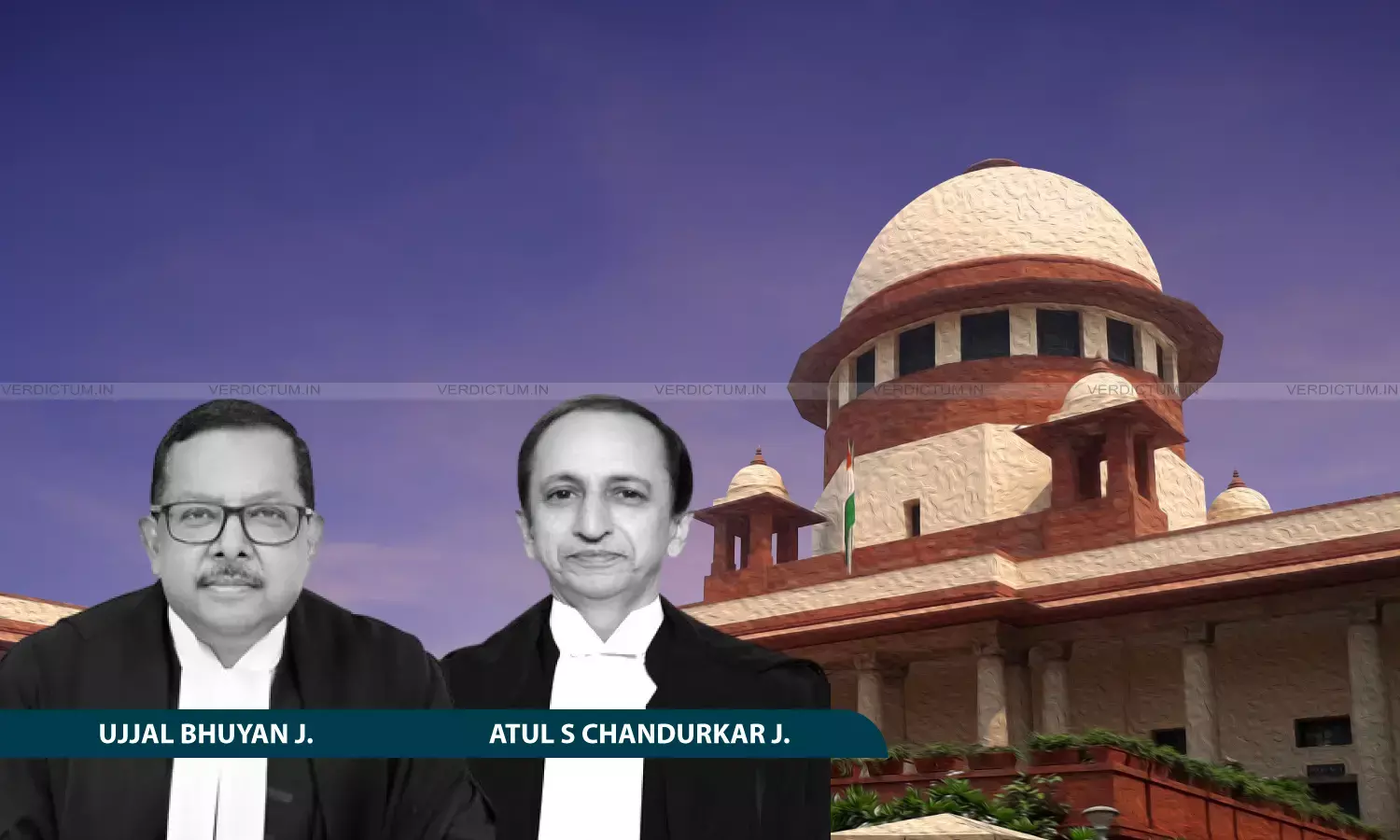
A Bench comprising Justice Ujjal Bhuyan and Justice Atul S. Chandurkar while referring to Rama Shanker Lal and others v. The State of U.P. (1971) 3 SCC 905 observed, “…absence of the original document that is alleged to be forged, by itself, cannot sound the death knell of the prosecution case. It is only after evaluating the entire prosecution material that a finding would be required to be recorded as to whether the charge of forgery has been proved beyond reasonable doubt. That the prosecution could result in acquittal at the conclusion of the trial is a different matter altogether”.
“It is, thus, clear that absence of the original document relied upon by the prosecution to bring home the charge of forgery would be a matter to be considered at the trial and its absence by itself cannot be made the basis for quashing the entire prosecution. In other words, the prosecution can attempt to bring home the charge on the basis of circumstantial evidence. However, the entire proceedings would not be liable to be quashed without affording an opportunity to the prosecution to attempt to prove the charge at the trial as seen in the facts of the present case”, the Bench further noted.
Advocate Vrinda Grover appeared for the appellant and respondent appeared in person.
The case arose from a complaint that the accused and her since-deceased father-in-law had relied upon a forged and interpolated construction plan, falsely represented as the original plan approved by a licensed engineer, to justify allegedly illegal construction on their property. An FIR was registered in 2012 under Sections 468, 471 and 420 read with Section 34 of the IPC, and a chargesheet was filed in 2016.
The accused contended throughout that since the investigating agency never recovered or produced the original plan said to have been forged, no charge of forgery could be framed or sustained against her. The Magistrate rejected this contention in 2017 and framed charges, a decision upheld by the Sessions Court in revision in 2021.
The accused then filed a writ petition before the High Court under Section 482 CrPC challenging the FIR and chargesheet on the same ground of the missing original plan. A Division Bench dismissed this petition in October 2023, holding that sufficient prima facie material existed on record to sustain the charge and declining to interfere, noting also that the revisional order had not been separately challenged. This order was not carried further in appeal.
The accused nevertheless filed a second writ petition in 2024, again challenging the very same orders framing charge and dismissing the revision, on the identical ground of the absent original document. A Single Judge Bench of the High Court, without adverting to the earlier Division Bench order, allowed this second petition, held that the absence of the foundational document rendered the material insufficient to frame charge, and discharged the accused.
The Supreme Court found two independent grounds fatal to the High Court's approach. First, the Division Bench's 2023 order having attained finality without further challenge, it was not open to the accused to mount a fresh, materially identical challenge before the same court in a second petition; the Court invoked the principle of issue estoppel as explained by a three-Judge Bench in Piara Singh v. State of Punjab, holding that once an issue has been distinctly raised and decided against a party, it cannot be re-litigated between the same parties in subsequent proceedings.
Second, on merits, the Court relied on its earlier three-Judge Bench decision in Rama Shanker Lal where a forgery conviction was upheld despite the original document never being produced, to hold that absence of the original document is a factor going to the sufficiency of evidence at trial, not an automatic bar to prosecution.
Reiterating the limited scope of inquiry at the charge-framing stage as explained in K.H. Kamaladini v. State 2025 INSC 745, the Court held that a court examining a charge cannot sift and weigh evidence to separate the grain from the chaff, and must proceed to trial if the material raises a grave suspicion against the accused.
Accordingly, the Court set aside the High Court's order discharging the accused, restored the criminal proceedings before the Magistrate, and directed that the trial proceed and be expedited given that the complaint dated back to 2012, while clarifying that all contentions of both parties remain open to be raised at trial and that its observations would not prejudice either side.
Cause Title: Antonetto J D'Souza v. Aldila Braganza and Others (Neutral Citation: 2026 INSC 1032)
Appearances:
Appellant: Vrinda Grover, Advocate.
Respondent: Appeared in person.