

Monetary Claims Including Maintenance Relinquished By Wife In Settlement Can’t Be Revived Through Subsequent Proceedings: Supreme Court
The Supreme Court was considering an appeal against the order dismissing the petition seeking quashing of the complaint under the Protection of Women from Domestic Violence Act.

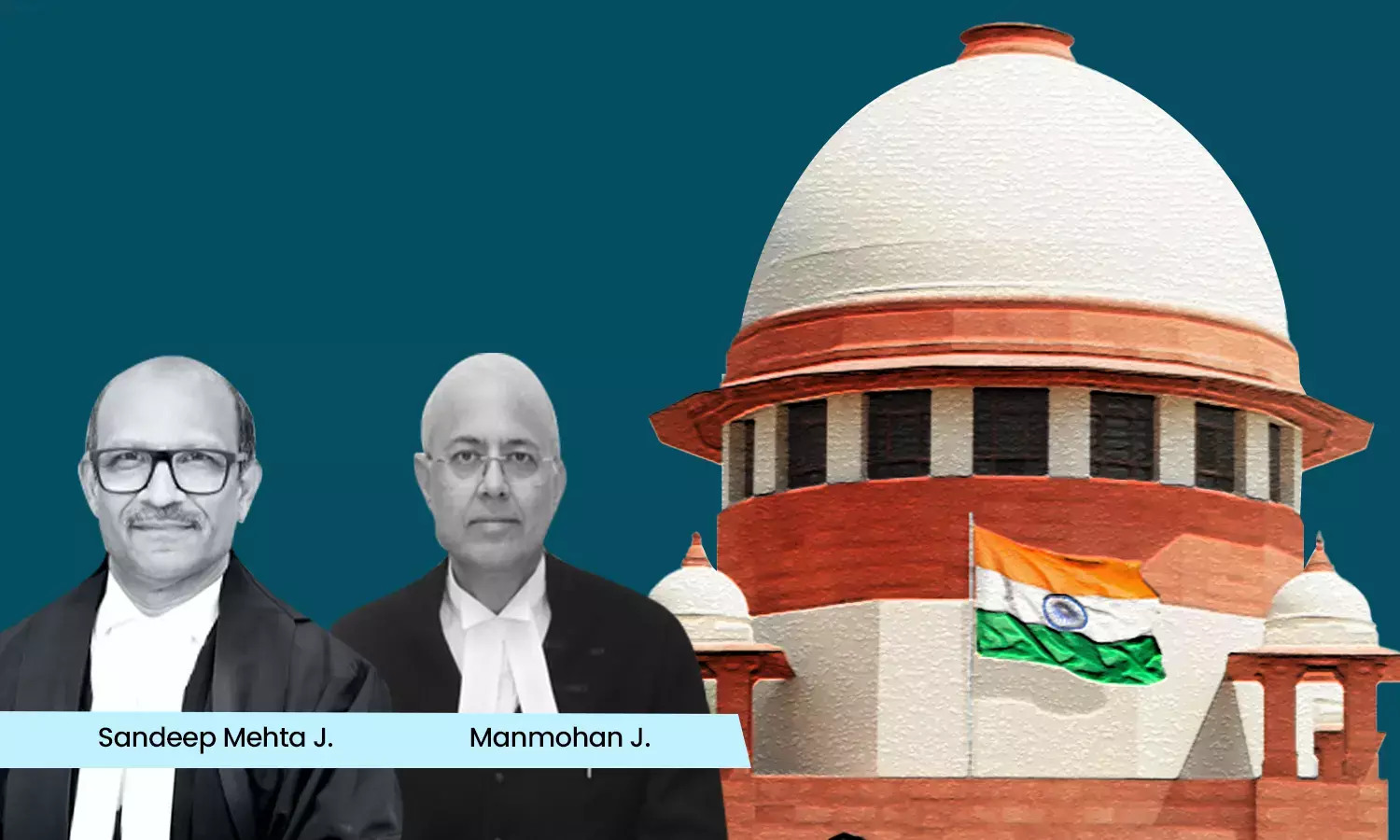
While quashing the proceedings initiated under the Protection of Women from Domestic Violence Act, 2005, the Supreme Court has held that once the wife has voluntarily relinquished all monetary claims, including maintenance, through a divorce settlement, revival of such claims through subsequent proceedings cannot be permitted.
The Apex Court was considering an appeal filed against the judgment passed by the Kerala High Court dismissing the petition filed by the appellant-husband seeking quashing of the complaint filed by the respondents under the Protection of Women from Domestic Violence Act, 2005 (DV Act).
The Division Bench of Justice Sandeep Mehta and Justice Manmohan held, “Upon hearing learned counsel for the parties, this Court is of the view that the proceedings under the DV Act constitute an abuse of process. Once the respondent No.1-wife had voluntarily relinquished all monetary claims, including maintenance, revival of such claims through subsequent proceedings cannot be permitted.”
“Proceedings in M.C. 23/2017 on the file of the Judicial First Class Magistrate Court, Kalamassery, are quashed”, it ordered.
Advocate M. Gireesh Kumar represented the Appellant while Advocate Wills Mathews represented the Respondent.
Submissions
The appellant-husband claimed that the subject proceedings under the DV Act had been initiated by the respondents after settlement of their disputes by way of a Settlement Agreement wherein the respondent-wife had specifically agreed not to make any monetary or maintenance claims against the appellant-husband. It was his case that by way of the subject proceedings the respondents had re-agitated claims that stood extinguished after execution of the Settlement Agreement.
Reasoning
On a perusal of the facts of the case, the Bench noted that the respondent wife not only executed the Settlement Agreement but also filed an affidavit before the Family Court reiterating her waiver of claims. The Bench further noticed that the domestic violence complaint pertained to alleged acts predating the Settlement Agreement.
The Bench held, “Mere averments of coercion, absent any legal challenge, cannot suffice. The parties, being well educated and cognizant of their rights, must be deemed to have consciously and voluntarily executed the Settlement Agreement and joint divorce petition.”
The Bench also found that the Settlement Agreement was executed solely between the appellant and the respondent wife. The second respondent- daughter (who had attained the age of majority before the execution of the Settlement) was not a party to the Settlement Agreement. “In the circumstance, it cannot be said that respondents No. 2-daughter had waived her right to monetary claims”, it added.
Thus, allowing the appeal and setting aside the judgment passed by the High Court, the Bench clarified that the daughter would be at liberty to initiate fresh proceedings seeking monetary reliefs against the appellant, if so advised, in accordance with law.
Cause Title: AB v. CD (Neutral Citation: 2026 INSC 918)
Appearance
Appellant: Advocates M. Gireesh Kumar, Sanjay Singh, Sneha Mathew, AOR Ankur S. Kulkarni
Respondent: Advocates Wills Mathews, Briston George, Shivangi Ranjan, Dhanesh M. Nair, Paul John Edison, Rakesh Garg, Ashish Gopal Garg, AOR Shweta Garg, AOR Nishe Rajen Shonker, AOR Zulfiker Ali P.S., Advocates Lebina Baby, Anna Oommen