Women Can’t Be Denied Maternity Leave Merely Due To Nature Of Employment If Eligibility Conditions Are Met: Rajasthan High Court
The Court quashed the rejection of a contractual consultant’s claim and directed payment of maternity benefits for 180 days falling entirely within her one-year engagement.
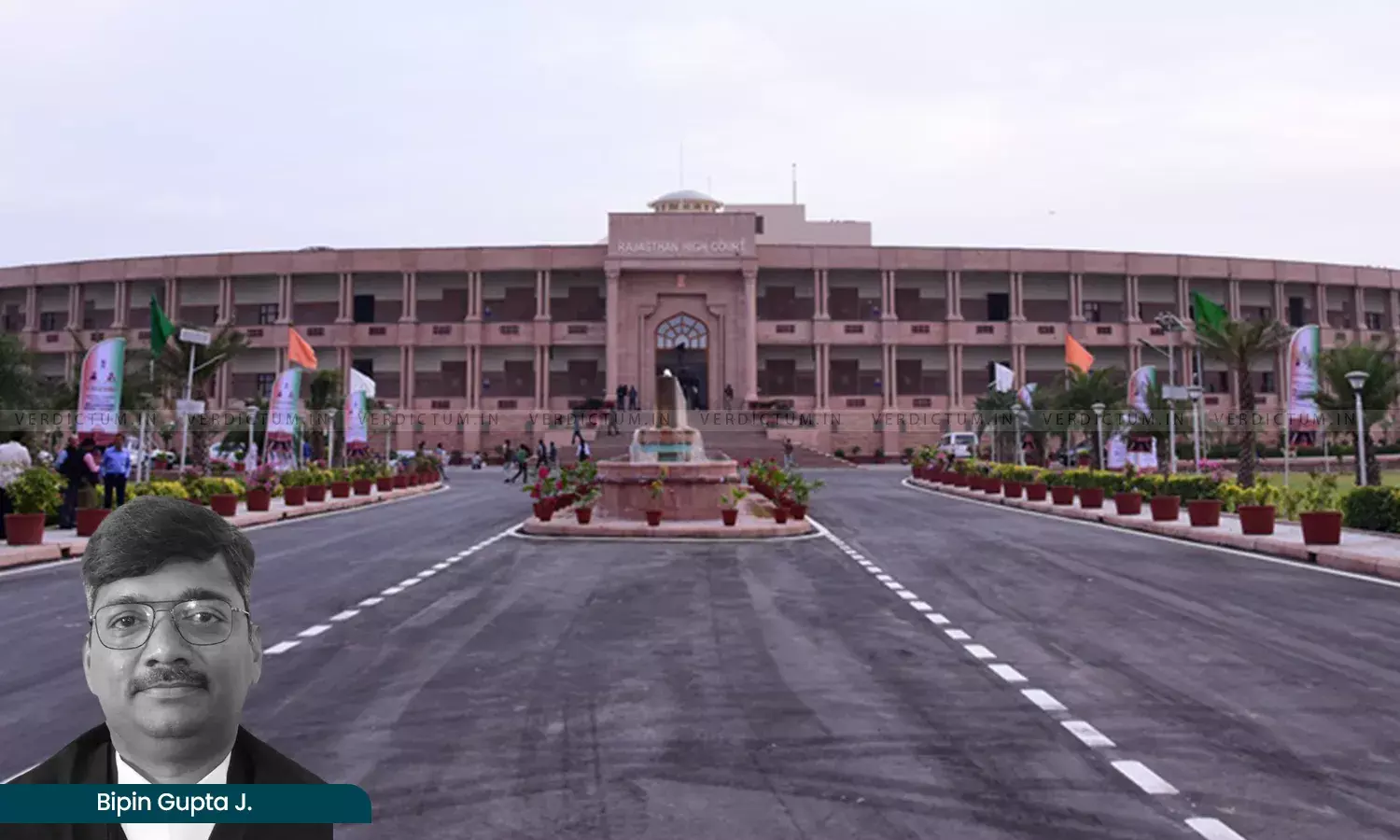
The Rajasthan High Court has held that women cannot be denied maternity leave merely because of the nature of their employment, provided they satisfy the applicable eligibility requirements and the leave period falls within their employment tenure.
The Court quashed the rejection of maternity leave sought by a contractual consultant and directed the authorities to extend maternity benefits for 180 days from December 26, 2022, along with the admissible remuneration.
The Court was hearing a writ petition challenging a letter issued by the Member Secretary of the State Environment Appraisal Committee-I, rejecting the petitioner’s maternity-leave application because her appointment terms permitted only holidays declared by the State Government.
A Bench of Justice Bipin Gupta observed: “It is apposite to observe that maternity leave is not merely a general form of leave available to an employee; rather, it is a statutory entitlement intended to enable a woman to recover her physical strength and well-being following childbirth and to ensure that the child receives the requisite love, care, and affection during the crucial early stages of life”.
The Bench added: “The grant of maternity leave cannot be made contingent solely upon the nature or tenure of employment. Whether a woman is employed on a regular, temporary, ad hoc, urgent temporary, or contractual basis, she cannot be denied maternity leave merely on the ground of the nature of her employment, provided that the applicable legal requirements are satisfied and the period of maternity leave falls within the subsistence of her employment.”
Advocate Shamboo Singh Rathore appeared for the petitioner. Advocate Praveen Kumar Choudhary, appearing for Additional Advocate General Sajjan Singh Rathore, represented the respondents.
Background
The petitioner was engaged as a Consultant (Assistant Environmental Engineer) on a consolidated monthly remuneration of ₹40,000. Her appointment was for one year from August 4, 2022, and was subject to a condition permitting only holidays declared by the State Government and no additional leave.
During her engagement, she applied for six months’ maternity leave from December 26, 2022. The requested period was to end on June 25, 2023, while her initial contractual tenure continued until August 3, 2023.
The respondents rejected the application solely by relying on the appointment condition restricting leave. They also argued that the engagement was contractual, its extension was not automatic, and the petitioner possessed no right to continue after the original tenure expired.
The petitioner contended that the employer could not defeat maternity protection by describing her engagement as contractual. She relied on Rule 103 of the Rajasthan Service Rules, 1951, the Maternity Benefit Act, 1961 and precedents extending maternity benefits to contractual and casual employees.
Court’s Observations
Maternity Benefit Is A Statutory Protection
The Court observed that maternity benefit was neither an ordinary leave facility nor a service-related concession. It held that the benefit was intended to protect a woman’s health, dignity and well-being during pregnancy and after childbirth, while ensuring that motherhood did not adversely affect her employment entitlements.
The Court stated that the protection enabled a woman to fulfil her maternal responsibilities without having to choose between motherhood and her livelihood. It added that this protection was rooted in constitutional guarantees of equality and dignity and in Article 42, which directs the State to provide just and humane working conditions and maternity relief.
The Court noted that Section 5 of the Maternity Benefit Act provided maternity benefits subject to the statutory eligibility conditions, while Section 12 protected women against dismissal or discharge in the specified circumstances. It further observed that Section 27 gave the legislation overriding effect over inconsistent awards, agreements and contracts of service.
Nature Of Employment Is Not Conclusive
Referring to Municipal Corporation of Delhi v. Female Workers (Muster Roll) (2000), the Court observed that the Supreme Court had extended maternity benefits to women engaged casually or on muster rolls and had rejected a narrow approach to maternity protection.
The Court also relied on Dr Kavita Yadav v. Secretary, Ministry of Health and Family Welfare Department (2024), in which the Supreme Court held that an accrued entitlement to maternity benefits could survive the expiry of a contractual term once the statutory eligibility conditions were fulfilled.
The Court further considered Hemlata Saraswata v. State of Rajasthan (2008), Minakshi Chaudhary v. Rajasthan State Road Transport Corporation (2024) and Rani Tanwar v. State of Rajasthan (2025). It observed that these authorities established that regular, casual or contractual employment could not, by itself, conclusively determine a woman’s entitlement to maternity benefits.
The Court nevertheless clarified that entitlement in each case had to be examined under the governing statutory provisions, the nature of the establishment and the eligibility requirements prescribed by law.
Contractual Leave Restriction Could Not Defeat The Claim
The Court observed that the petitioner’s entire maternity-leave period fell within her original contractual tenure. It further noted that the respondents had not rejected her application after independently examining her eligibility under the applicable maternity-benefit provisions.
The Bench held: “The rejection does not proceed on any independent determination of her eligibility under the applicable maternity benefit provisions. Such an approach is inconsistent with the protective object of the Maternity Benefit Act, 1961, and the principles enunciated by the Hon'ble Supreme Court as well as this Court in the aforesaid judgments. In these circumstances, this Court finds that the petitioner's claim cannot be rejected merely on the ground that she was appointed on a contractual basis or that the terms of her appointment restricted the grant of additional leave. Since the period for which maternity leave was sought fell entirely within her initial contractual tenure, and the impugned rejection was founded upon the general restriction contained in Condition No. 5 of the appointment order, the denial of maternity benefits cannot be sustained.”
The Court consequently held that the general restriction in the appointment order could not justify rejecting the petitioner’s statutory claim solely because she was a contractual consultant.
Conclusion
The Court allowed the writ petition and quashed the letter dated December 16, 2022, rejecting the petitioner’s maternity-leave request.
It directed the respondents to grant her maternity benefits for 180 days commencing from December 26, 2022, and pay the admissible remuneration for that period in accordance with the applicable statutory provisions.
The Court ordered the authorities to complete the exercise within three months of receiving a certified copy of the judgment. It also disposed of all pending applications.
Cause Title: Smt. Shivangi Khandelwal v. State of Rajasthan and Another (Neutral Citation: 2026:RJ-JD:49861)
Appearances
Petitioner: Advocates Shamboo Singh Rathore, Ayushi Rathore and Shivani Rathore
Respondents: Advocate Praveen Kumar Choudhary for Additional Advocate General Sajjan Singh Rathore