

Can’t Compel Wife To Undergo Narco Or Polygraph Test Without Her Consent: Rajasthan High Court Dismisses Husband's Appeal
The husband approached the Rajasthan High Court challenging an order rejecting his application under Order XVIII Rule 17 read with Section 151 of the CPC.

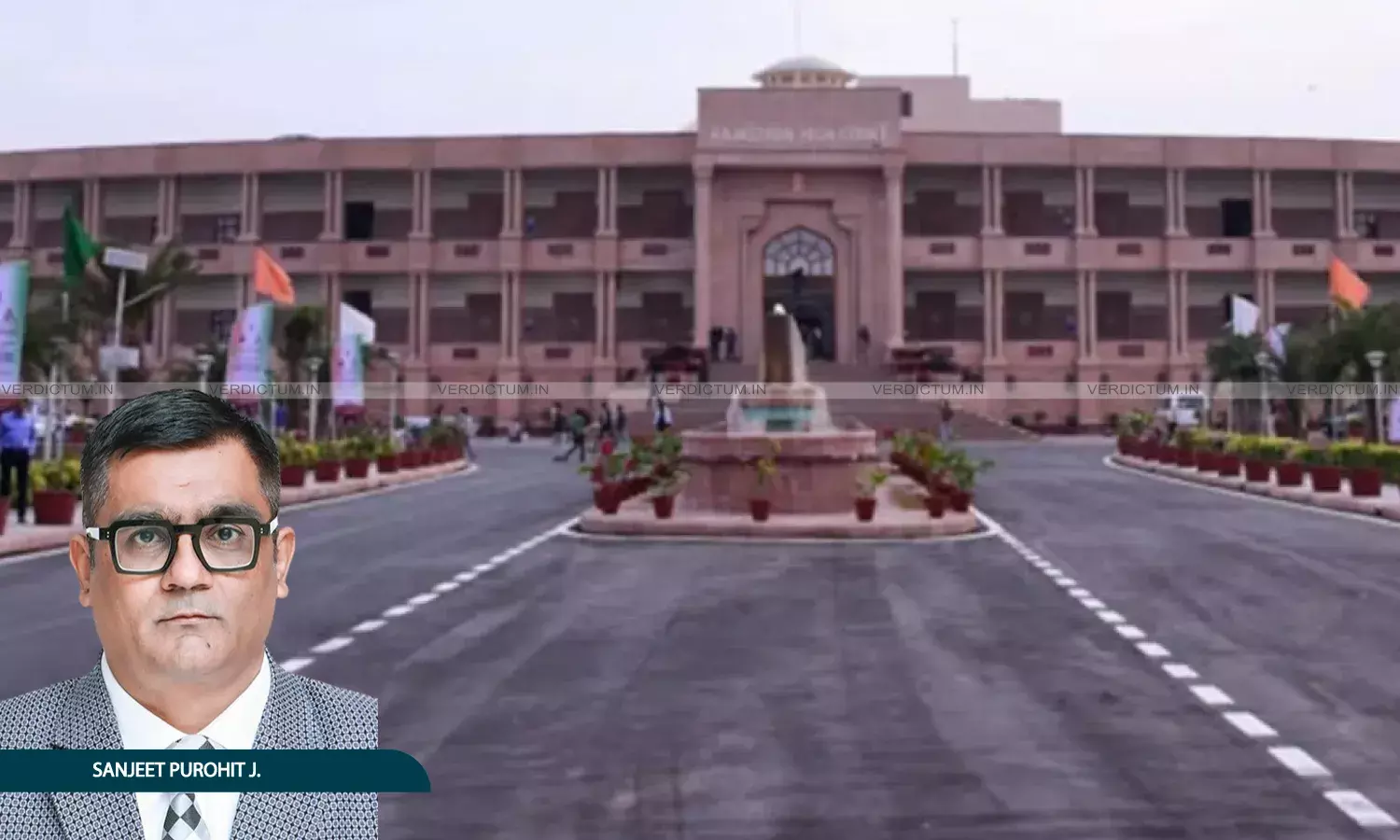
While upholding an order rejecting a man’s application made at a belated stage seeking his wife’s narco, polygraph and DNA tests to challenge the allegations of sexual incapacity, the Rajasthan High Court has held that the wife cannot be compelled to undergo such tests without her consent.
The petitioner approached the High Court challenging the legality, validity and propriety of an order of the Trial Court rejecting his application filed under Order XVIII Rule 17 read with Section 151 of the Code of Civil Procedure, 1908 (CPC).
Referring to the judgment of the Apex Court in Deep Mukherjee v. Sreyashi Banerjee (2024), the Single Bench of Justice Sanjeet Purohit held, “In view of aforesaid judgment, this Court is of considered opinion that prayer made by petitioner seeking a joint medical examination of husband and wife is wholly misconceived and legally untenable. Respondent wife cannot be compelled to undergo such tests without her consent. Petitioner has failed to establish either relevance or necessity of Narco Test, Polygraph Test, DNA Test, etc., with regard to allegations of sexual incapacity. Consequently, such a prayer cannot be allowed in the proceedings pending before the learned Family Court under the provisions of the Act.”
“In the considered opinion of this Court, these circumstances lend credence to the contention of respondent that the application is not bona fide and has been filed at a belated stage with the sole view to delay the proceedings. The same amounts to a gross abuse of the process of law”, it added.
Advocate Ankit Somani represented the Petitioner.
Factual Background
The respondent–wife had instituted a petition under Section 13(1)(2) of the Hindu Marriage Act, 1955, seeking a decree of divorce on the grounds of desertion, cruelty and allegations pertaining to the incapacity of the petitioner–husband. The Petitioner–husband filed a reply to said petition raising counter-allegations against the respondent–wife, and it was averred that despite efforts made by the Petitioner-husband to preserve the matrimonial relationship, the wife was unwilling to live in matrimonial cohabitation with him.
During the pendency of proceedings, the petitioner moved an application dated under Order XVIII Rule 17 read with Section 151 of the CPC, wherein, in view of the allegations of sexual incompetence, impotency and other sexual infirmities levelled against petitioner, it was prayed that both parties be directed to undergo joint narco-analysis test, polygraph test, medical examination as well as DNA testing and that the applicant (husband) would bear entire cost of aforesaid tests. This application was rejected, which led to the filing of the appeal in question.
Reasoning
The Bench found that in the divorce proceedings before the Trial Court, evidence of both parties had already been concluded, and the matter had been posted for final arguments when the application under Order XVIII Rule 17 read with Section 151 of CPC was filed. The Bench also took note of the absence of material to show that, during the course of his own evidence, any endeavour was made by the petitioner to place on record any medical evidence to rebut the allegations pertaining to physical incapacity or impotence levelled against him.
Throwing light on Section 151 of the CPC, the Bench explained, “It thus follows that while the Court possesses inherent power to permit additional evidence or recall a witness where the same appears necessary for just and effective adjudication of the matter at hand, however, such power is exceptional in nature and cannot be invoked in a routine manner to enable party to fill omissions in evidence already led or to improve its case or delay the proceedings. Applicant must demonstrate relevance of proposed evidence as well as bona fide necessity for its production at the stage at which the application is made.”
Considering that the application in question was filed after the conclusion of evidence of both parties and when the matter had already reached the stage of final arguments, the Bench stated, “Other than making bald assertion that proposed tests are necessary to rebut allegations levelled by respondent-wife, petitioner has failed to furnish any satisfactory explanation as to how such tests are relevant and necessary and why such a prayer was not made at appropriate stage of the proceedings.”
According to the Bench, the Trial Court had rightly held that the allegations regarding sexual incapacity and impotence had been levelled by respondent-wife and, therefore, the burden of establishing such allegations was primarily upon her. “Mere dissatisfaction with the conclusions arrived at by learned Trial Court cannot, by itself, constitute a valid ground for interference under Article 227 of the Constitution of India”, it added.
Thus, finding no illegality in the impugned order, the Bench dismissed the appeal.
Cause Title: AB v. CD (Neutral Application: 2026:RJ-JD:26564)