

Blanket Ban On Foreign Travel By Government Employees Manifestly Arbitrary: Punjab & Haryana High Court
The Court held that preventing a Nursing Officer from travelling to Australia for a professional examination also thwarted her pursuit of higher education and was disproportionate to the State’s stated aim of conserving fuel and resources.
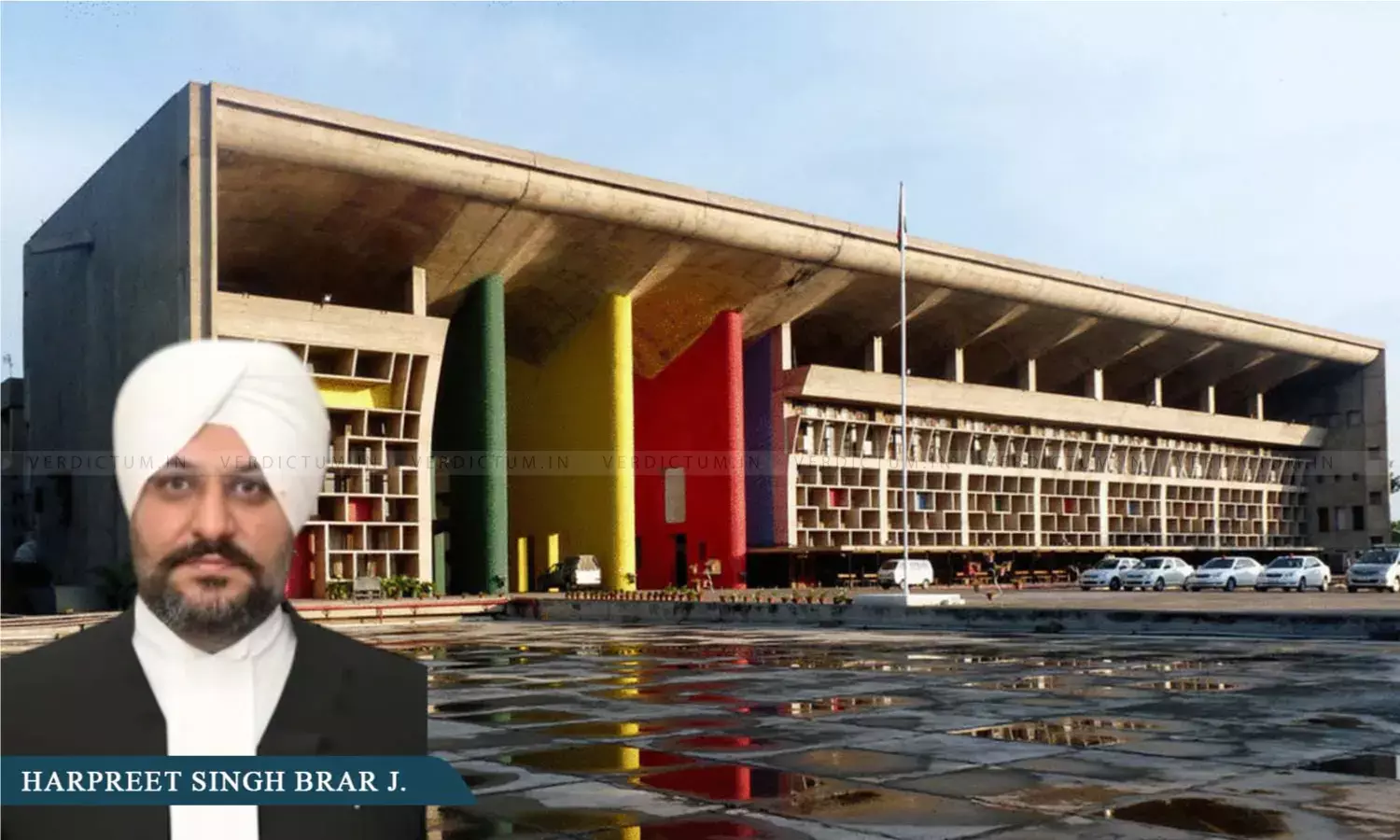
The Punjab and Haryana High Court has held that a blanket prohibition on foreign travel by government employees merely because they are in government service is manifestly arbitrary.
The Court set aside the Haryana Government’s Instructions/Guidelines to the extent they imposed a complete ban on government employees travelling abroad, and directed the competent authority to grant the petitioner permission to travel abroad.
The Court was hearing a writ petition under Articles 226/227 of the Constitution challenging Instructions/Guidelines issued by the State of Haryana insofar as they imposed a blanket restriction on foreign travel by government employees, and seeking a mandamus for grant of earned leave to a Nursing Officer for travelling to Australia after she had already received approval to apply for a visa.
A Bench of Justice Harpreet Singh Brar observed: “A blanket prohibition on an entire class of citizens merely because they are in government service is manifestly arbitrary. The State has failed to demonstrate any rational nexus between the objective sought to be achieved by the impugned Instructions (Annexure P-7), i.e., addressing the impact of the global crisis on fuel and resources, and the complete prohibition imposed on private foreign travel.”
Advocate Brijender Kaushik appeared for the petitioner; AAG Akshit Pathania appeared for the State of Haryana; Advocate Aditya Gautam appeared for other respondents.
Background
The petitioner joined PGIMS, Rohtak as a Nursing Officer. With the objective of gaining professional experience and obtaining higher qualifications, she applied for the Objective Structured Clinical Examination conducted by the Australian Health Practitioner Regulation Agency and National Boards.
Her foreign visit was initially approved by the competent authority by grant of a No Objection Certificate to apply for a visa. She thereafter deposited the prescribed fee, received confirmation of registration, was granted an Australian Visitor Visa, and obtained approval to attend the course and appear in the examination.
She then applied for earned leave for travelling to Australia. Her application was not entertained in view of the Haryana Government Instructions/Guidelines, which prohibited government servants and employees of Boards, Corporations and public authorities from travelling abroad, for official or personal reasons, up to September 2026, except where the travel was required for medical reasons.
The petitioner argued that the instructions were unconstitutional, arbitrary and disproportionate, and that the right to travel abroad is part of Article 21 of the Constitution. The State submitted that the instructions were issued due to the Russia-Ukraine conflict and the West Asian crisis, which had impacted the global supply chain, particularly fuel and essential resources, and that the restrictions were temporary austerity measures in the larger public interest.
Court’s Observations
The Court observed that in today’s globalised world, the right to travel abroad cannot be restricted as a matter of mere administrative privilege. Referring to Satwant Singh Sawhney v. D. Ramarathnam (1967), Maneka Gandhi v. Union of India (1978), and Satish Chandra Verma v. Union of India and others (2019), it held that the right to travel abroad forms part of the right to life and personal liberty under Article 21.
The Court quoted Satish Chandra Verma (2019), where the Supreme Court observed: “The right to travel abroad is an important basic human right for it nourishes independent and self- determining creative character of the individual, not only by extending his freedoms of action, but also by extending the scope of his experience.”
The Court noted that any procedure curtailing such right must be fair, just and reasonable, and not arbitrary, fanciful or oppressive.
The Court found that the impugned Instructions were purely executive in nature and did not derive authority from any legislative enactment.
The Court observed: “At the outset, it must be observed that the impugned Instructions (Annexure P-7) are purely executive in nature. They do not derive their authority from any legislative enactment.”
It further held that even if the Government had power to regulate foreign travel by its employees, the restriction imposed had to satisfy the standards of Articles 14 and 21 of the Constitution, including fairness, reasonableness, non-arbitrariness and proportionality.
The Court referred to State of Kerala v. M. Vijayakumar (2026), State of Punjab and others v. Davinder Singh and others (2025), and Ajay Hasia and others v. Khalid Mujib Sehravardi and others (1981), on the test of reasonable classification under Article 14.
The Court observed that the Instructions imposed a complete ban on foreign travel by government employees and did not provide scope for accommodation based on individual circumstances, nature of duties, designation or purpose of travel.
The Court held: “A perusal of the impugned Instructions (Annexure P-7) makes it evident that a blanket prohibition with respect to foreign travel has been mechanically applied to all government employees. Furthermore, the said Instructions do not provide any scope of accommodation in consideration of individual circumstances, nature of duties, designation of the employee or purpose of travel.”
The Court held that the State failed to demonstrate any rational nexus between the stated objective of addressing the impact of global crises on fuel and resources and the complete prohibition on private foreign travel.
The Court observed: “Additionally, it is unclear as to how denial of foreign travel to a Nursing Officer seeking to upskill would assist in the larger aim of fuel conservation. No plausible explanation is forthcoming on behalf of the respondents in this regard.”
It further held that preventing the petitioner from travelling to Australia for a professional examination not only affected her right to travel abroad but also thwarted her pursuit of higher education. Referring to Miss Mohini Jain v. State of Karnataka (1992) and Avinash Mehrotra v. Union of India (2009), the Court held that the right to education is traceable to Part III of the Constitution and linked to Article 21.
Conclusion
The Court disposed of the writ petition by setting aside the Instructions/Guidelines to the extent they imposed a complete ban on government employees travelling abroad. It directed the competent authority to pass appropriate orders granting permission to the petitioner to travel abroad on or before August 31, 2026, and that she shall rejoin service after expiry of the sanctioned leave period. Pending miscellaneous applications were also disposed of.
Cause Title: Sheetal Rani v. State of Haryana and others (Neutral Citation: 2026:PHHC:120961)
Appearances
Petitioner: Advocate Brijender Kaushik, with Advocate Sandeep Kr. Bhardwaj
Respondents: AAG Akshit Pathania, Advocate Aditya Gautam
