

Confiscated Vehicles Under NDPS Act Can Be Released On Financial Bonds: Punjab & Haryana High Court Asks Trial Courts Not To Reject Applications Mechanically
The Court held that vehicles confiscated under the NDPS Act should ordinarily be released on financial bonds during the pendency of proceedings, observing that continued retention of such vehicles in police compounds serves no purpose and ultimately reduces them to scrap, causing financial and environmental loss.
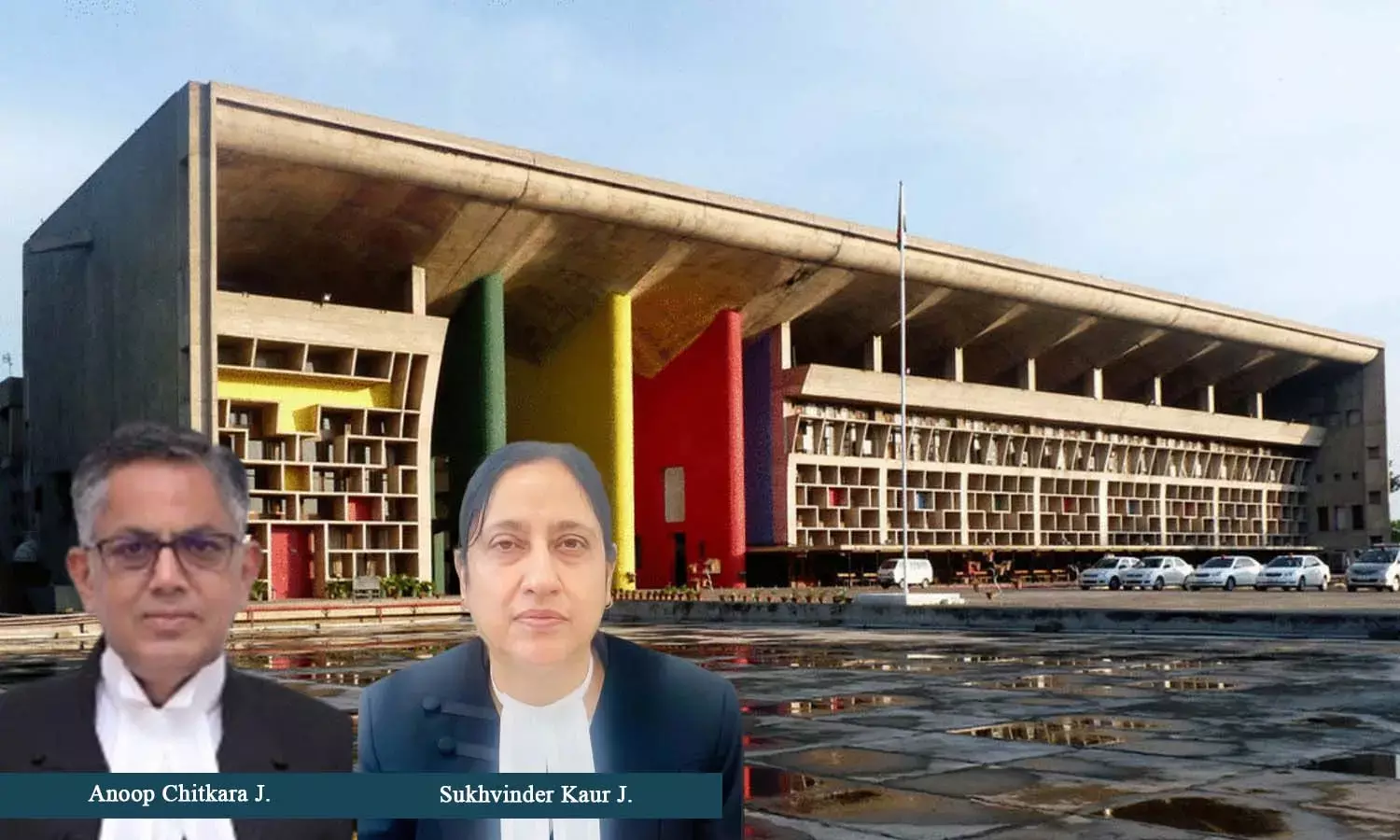
Justice Anoop Chitkara, Justice Sukhvinder Kaur, Punjab & Haryana High Court
The Punjab and Haryana High Court has held that confiscated vehicles under the Narcotic Drugs and Psychotropic Substances Act, 1985, cannot be allowed to remain idle in police stations and godowns for years, resulting in deterioration, devaluation and wastage of public and private resources.
The Court observed that confiscation of vehicles under the NDPS Act is intended to impose financial consequences upon those facilitating the transportation of narcotic substances and not to destroy valuable machinery by leaving vehicles unused until they become junk.
The Court further held that such vehicles can be released on financial bonds pending adjudication, with safeguards ensuring recovery of their market value along with interest in the event of confiscation, if ultimately upheld.
The Court was hearing an application filed by the registered owner of a truck confiscated in connection with an NDPS case seeking release of the vehicle during the pendency of the criminal appeal challenging the conviction under Sections 27A, 25 and 29 of the NDPS Act.
A Division Bench of Justice Anoop Chitkara and Justice Sukhvinder Kaur observed: “This Court earnestly believes that the District Judiciary, while adjudicating the applications for the release of vehicles which are not required to be confiscated under any Statute or Judicial Orders, shall not reject the applications in a mechanical manner”.
The Bench further added: "Apart from the confiscation, the only purposes for which the vehicle may be required are identification or the collection of evidence from the vehicle. Under BSA, 2023 [Indian Evidence Act, 1872], not only the goods, but even perishable items have the same evidentiary status, such as Medico-Legal Certificates, Postmortem Examination Reports, reports from the Forensic Science Laboratory, Chemical Examiners, and Ballistic Experts, and also the FSL reports seized under the NDPS Act, and the only exceptions are identification of the property recovered at the accused’s instance or from the premises of the accused, or from someone to whom the accused had sold or handed over it etc., and even these can be released; however strictly as per law, and at appropriate stages of the investigation and the trial".
Advocate Sandeep Verma appeared for the applicant-appellant. Pooja Nayar Sharma, DAG Punjab, appeared for the respondents.
Background
The case arose out of an FIR registered by the Narcotics Control Bureau alleging transportation of 252.600 kilograms of poppy husk in a truck proceeding towards Bhawanigarh through Samana from Madhya Pradesh.
The prosecution alleged that the truck was intercepted pursuant to secret information and narcotic substances were recovered from sacks loaded inside the vehicle. Three occupants of the truck were arrested at the spot, while further investigation led to implication of the truck owner as accused No.4.
The trial Court convicted the occupants of the truck under Section 15 of the NDPS Act and convicted the registered owner under Sections 27A, 25 and 29 of the Act. The trial Court also ordered confiscation of the truck to the State on the ground that it had been used for transporting narcotic substances.
The applicant thereafter filed an appeal against conviction before the High Court, which remained pending adjudication. During pendency of the appeal, the sentence of the applicant was suspended.
The applicant subsequently moved the present application seeking interim release of the truck on superdari/financial bonds, contending that the vehicle had remained unused in custody for years and continued deterioration would render it worthless.
Court’s Observation
The High Court extensively examined the statutory framework governing confiscation and interim custody of vehicles under the NDPS Act and the Bharatiya Nagarik Suraksha Sanhita, 2023.
The Court noted that under Sections 60 and 63 of the NDPS Act, confiscation proceedings are linked to adjudication of criminal liability and are ultimately subject to the outcome of trial and appeal.
The Bench observed that an appeal against conviction was still pending and the conviction had not attained finality. Therefore, the issue before the Court was confined to the effect of prolonged retention and deterioration of the vehicle during pendency of proceedings.
The Court referred to the decision of the Supreme Court in Bishwajit Dey v. State of Assam (2025), wherein it was held that confiscation of seized vehicles under the NDPS Act can only take place upon conclusion of trial and after affording an opportunity of hearing to persons claiming rights over the vehicle.
The Court also relied upon Sections 497 of the BNSS and Section 52A of the NDPS Act, observing that the statutory scheme itself recognises preparation of inventories, photographs and videography of seized vehicles so that continued physical retention may not become necessary.
The Bench thereafter undertook an extensive survey of precedents including Basavva Kom Dyamangouda Patil v. State of Mysore (1977), Sunderbhai Ambalal Desai v. State of Gujarat (2002), General Insurance Council v. State of Andhra Pradesh (2010), Bishwajit Dey v. State of Assam (2025) and Denash v. State of Tamil Nadu (2025).
Referring to Sunderbhai Ambalal Desai, the Court reiterated that there is ordinarily no utility in allowing seized vehicles to remain parked in police stations for long periods when photographs, inventories and other evidentiary safeguards can sufficiently preserve evidence for trial purposes.
The Court observed that the value erosion suffered by confiscated vehicles ultimately affects not only vehicle owners but also financiers, financial institutions and the State itself.
The Bench made extensive observations regarding the environmental and economic consequences of allowing vehicles to deteriorate into scrap.
The Court observed, “The vehicle's debris is not without a history: it starts with the excavation of minerals, the journey to refineries and smelters, the production line, and sale; en route consuming so much toil, time, energy, carbon footprints, space, and money.”
The Court further observed, “When the confiscated vehicles are kept inside and outside the compounds of the Police Stations or other places, apart from being the eyesores, all and everyone become the losers, starting from our planet that suffered the irreparable loss, the equity provider, the financier, the purchaser, and even the State.”
The Bench also observed that confiscation does not guarantee that a vehicle, once resold by the Government, would never again be used for transporting contraband.
In that context, the Court held that the release of confiscated vehicles on financial bonds constituted a more balanced and legally sustainable mechanism.
The Court held, “After the vehicles are confiscated, they must be released on financial bonds, which means that, if the vehicle is eventually confiscated, the owner shall pay an amount equal to the value of the vehicle as fixed by the Court under confiscation, along with a reasonable rate of interest.”
The Court directed that the applicant furnish personal bonds along with a solvent surety equivalent to the current market value of the truck, together with interest at 6% per annum compounded annually.
The Bench further clarified that there would be no restriction upon alterations, sale, transfer or hypothecation of the vehicle subject to continuation of the financial bonds and compliance with other legal requirements.
The Court also urged the District Judiciary across the State not to reject applications for release of vehicles in a mechanical manner and clarified that the present order could be referred to while deciding such applications.
Conclusion
The Punjab and Haryana High Court allowed the application seeking the interim release of the confiscated truck on financial bonds, subject to conditions specified in the order.
The Court held that continued retention of confiscated vehicles for years together during the pendency of proceedings serves no useful purpose and causes irreversible financial and environmental loss.
The Bench directed that the vehicle be released upon furnishing valuation reports, bonds and undertakings ensuring payment of the current market value with interest in the event of confiscation is ultimately sustained.
Cause Title: Gurjinder Singh v. State of Punjab & Anr.
Appearances
Appellant: Advocate Sandeep Verma
Respondents: Pooja Nayar Sharma, DAG Punjab, Rajiv Sharma, Special Public Prosecutor; Advocates Vinayak Atre & Indu Bala Sharma
