Supreme Court Judgment Can’t Be Presumed Prospective Without Specific Direction: Patna High Court Upholds EBC Treatment Of Tanti-Tantwa Candidates
The Court dismissed an appeal by Trade Instructor candidates who had applied as Scheduled Caste candidates but were subsequently considered under the Extremely Backward Class category following the Supreme Court’s ruling on the status of the Tanti-Tantwa community.
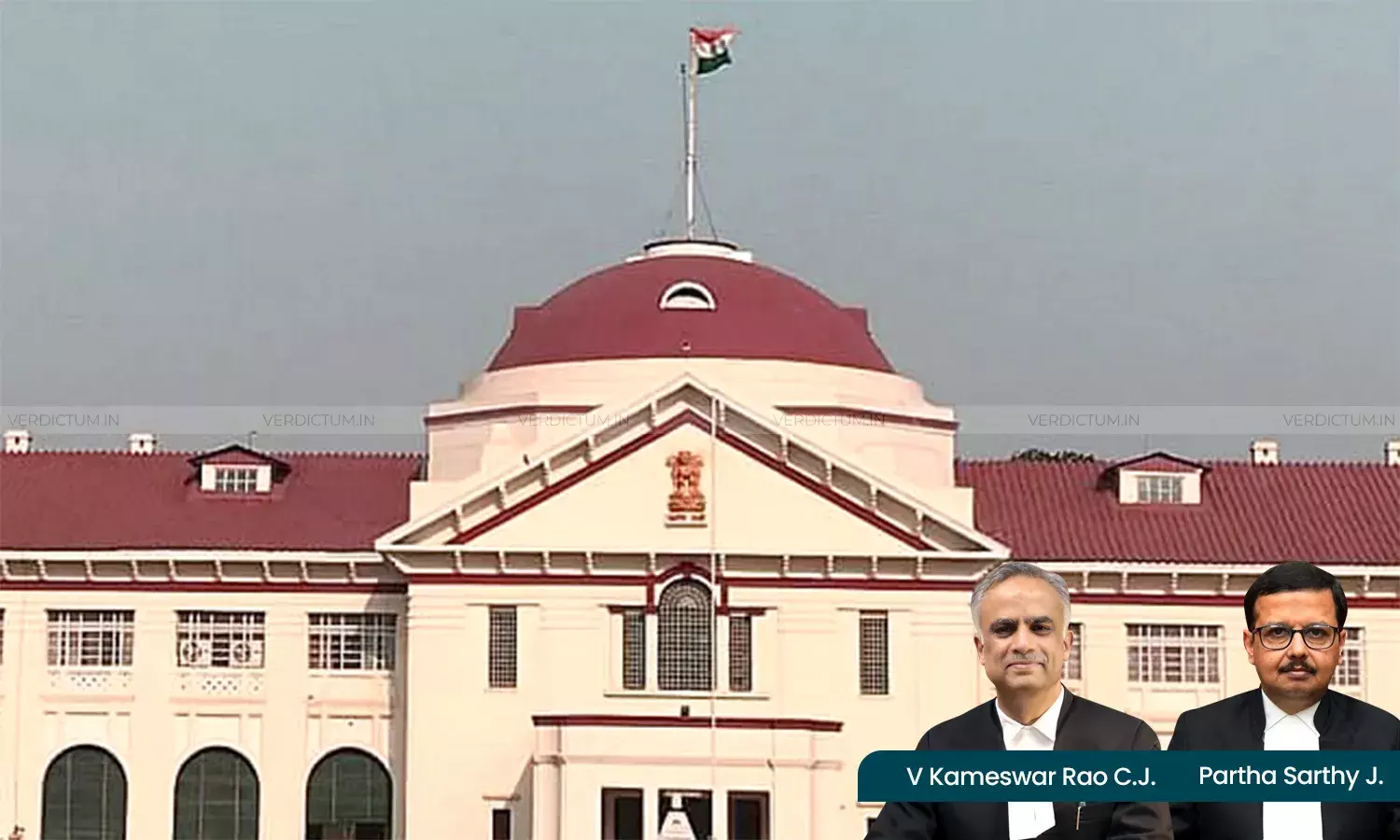
The Patna High Court has held that a Supreme Court judgment cannot be inferred to operate prospectively unless the Supreme Court specifically says so.
It upheld the treatment of Tanti-Tantwa candidates under the Extremely Backward Class category in an ongoing recruitment process and dismissed their intra-court appeal.
The Court was hearing an appeal against a Single Judge’s dismissal of a writ petition challenging the Bihar Technical Service Commission’s decision to exclude the appellants from selection for the post of Trade Instructor (Fitter). The appellants had applied as Scheduled Caste candidates but were considered under the Extremely Backward Class category after the Supreme Court’s judgment in Dr. Bhim Rao Ambedkar Vichar Manch Bihar, Patna v. State of Bihar (2024).
A Division Bench of Chief Justice V. Kameswar Rao and Justice Partha Sarthy observed: “In fact, the issue which fell for consideration before the learned Single Judge was whether the Judgment of the Hon’ble Supreme Court shall have prospective and not retrospective effect is no more res integra, as the issue is covered by the judgment in the case of Ashutosh Kumar (supra), except that in the said case the caste is ‘Lohar caste.’ So the aforesaid shows that the learned Single Judge has rightly held that unless specific observation is made by the Hon’ble Supreme Court, one cannot draw inference that the judgment of the Hon’ble Supreme Court has prospective effect.”
Advocate Ram Shankar Das appeared for the appellants. Additional Advocate General Subodh Kumar Jha represented the State. Advocate Nikesh Kumar appeared for the Bihar Technical Service Commission.
Background
The appellants applied for appointment as Trade Instructors pursuant to a 2023 advertisement. They represented themselves as Scheduled Caste candidates on the basis of their Tanti-Tantwa caste certificates, participated in the examination and were declared successful before being called for document verification.
While the recruitment process was continuing, the State issued a notification to implement the Supreme Court’s decision in Dr. Bhim Rao Ambedkar Vichar Manch Bihar, Patna v. State of Bihar (2024). The decision had set aside a 2015 State resolution extending Scheduled Caste reservation to the Tanti-Tantwa community.
The Supreme Court had directed that Scheduled Caste posts extended to members of the community after the 2015 resolution be returned to the Scheduled Caste quota. It also directed that those who had received the benefit be accommodated under their original Extremely Backward Class category through appropriate State measures.
The Commission consequently asked candidates to submit valid caste or non-creamy-layer certificates. It treated the appellants as Extremely Backward Class candidates, but they did not obtain the cut-off marks applicable to that category and were not selected.
The appellants argued that their reservation category had to be determined according to the position existing when the advertisement was issued or applications were submitted. They contended that a subsequent change could not operate retrospectively or alter the selection process midway.
The Commission maintained that the recruitment had not been finalised when the Supreme Court’s ruling and the implementing notification became applicable. It submitted that the appellants had no right to continue claiming Scheduled Caste reservation after the decision invalidating the State resolution.
Court’s Observations
Judicial Decisions Generally Operate Retrospectively
The Court agreed with the Single Judge’s conclusion that the question of prospective operation was settled. The Single Judge had relied on Directorate of Revenue Intelligence v. Raj Kumar Arora (2025), which discussed the temporal effect of judicial decisions and the Blackstonian theory that courts declare the correct law rather than create a new rule.
The Supreme Court passage reproduced in the judgment stated: “The overruling is generally retrospective with the only caveat being that matters that are res judicatae or accounts that have been settled in the meantime would not be disturbed.”
The judgment also referred to Assistant Commissioner, Income Tax, Rajkot v. Saurashtra Kutch Stock Exchange Limited (2008), which held that a later decision clarifying the correct legal position generally operates retrospectively.
Tanti-Tantwa Candidates Had To Be Treated Under EBC Category
The Division Bench rejected the submission that the appellants’ category had to remain frozen according to the position existing when they applied. It noted that the Supreme Court had set aside the resolution extending Scheduled Caste benefits to the Tanti-Tantwa community and had directed accommodation under the community’s original category.
The Court held: “So, it follows that the effect of the judgment of the Hon’ble Supreme Court in Dr. Bhim Rao Ambedkar Vichar Manch Bihar, Patna (supra) is that ‘Tanti-Tantwa’ caste be treated as an Extremely Backward Class category.”
The appellants’ candidature had accordingly been considered under the Extremely Backward Class category. The Court recorded the Commission’s position that none of them met the applicable cut-off marks.
Single Judge Correctly Dismissed The Writ Petition
The Division Bench agreed with the Single Judge’s reasoning that, in the absence of an express declaration limiting the Supreme Court judgment to prospective operation, the appellants could not continue to claim the benefit of Scheduled Caste reservation during the unfinished recruitment process.
The Court observed: “We are of the view that the learned Single Judge has rightly dismissed the petition as the issue which fell for consideration for treating the appellants belonging to Extremely Backward Class was pursuant to the judgment of the Hon’ble Supreme Court in Dr. Bhim Rao Ambedkar Vichar Manch Bihar, Patna (supra).”
It held that the Single Judge was justified in dismissing the writ petition and found no merit in the appeal.
Conclusion
The High Court dismissed the intra-court appeal and affirmed the Single Judge’s order. The appellants remained treated as Extremely Backward Class candidates in accordance with the Supreme Court judgment, and their non-selection on account of the applicable cut-off was left undisturbed. All pending applications were also disposed of.
Cause Title: Suman Kumar and Others v. State of Bihar and Others
Appearances
Appellants: Ram Shankar Das, Advocate
Respondents: Subodh Kumar Jha, Additional Advocate General, assisted by Sarveshwar Tiwari; Nikesh Kumar and Jyoti, Advocates