

Action Actuated By Malafide At Many Levels: Patna High Court Quashes Summoning Order U/S. 319 CrPC
The Court quashed the summoning order, ruling that the prosecution was completely devoid of substantive evidence and was actuated by malafide at many levels.

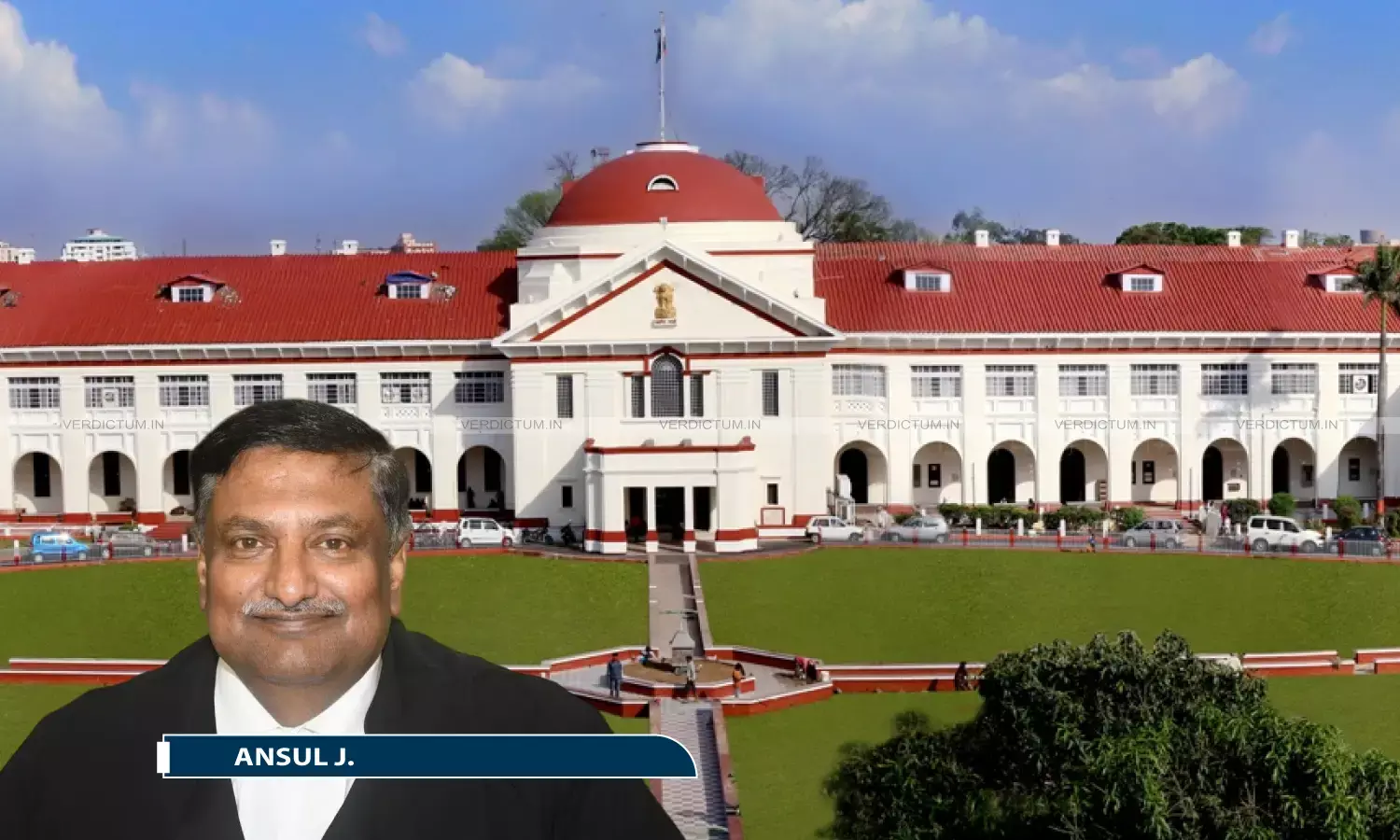
Justice Ansul, Patna High Court
The Patna High Court quashed a summoning order passed under Section 319 of the Code of Criminal Procedure and observed that the entire prosecution was deeply malicious from its inception.
Highlighting a complete absence of substantive evidence, the Court severely condemned the institutional malafide that compromised the administration of criminal justice.
The Bench of Justice Ansul observed, "The Court considered the requirement of calling for the records of the disciplinary proceedings. In the considered opinion of this Court calling for the proceeding in which a judicial officer has been punished would only amount to washing the dirty linon in public. This is a case which has the look of malafide written all over it...The petitioner was not named in the FIR. His name transpires three months after the occurrence. A person who confessed his involvement files a compliant case in which cognizance was taken that he was forced to make such statements. The investigation of the case was taken away from a senior official like SSP. The police submitted final form in all the cases. The Investigating Officer of the case was penalized by National Human Rights Commission as well as Departmently. The judicial officer who passed the instant order was punished in a proceeding before the Hon’ble Patna High Court as per the statement on affidavit made by the petitioner."
APP Mohd. Arif appeared for the State.
Brief Facts of the Case
The informant lodged a First Information Report (FIR) alleging that his younger brother was shot in the stomach by two unknown persons while returning from a tea shop. The victim subsequently succumbed to his injuries and was declared dead. Although the petitioner was not named in the initial FIR, his name transpired months later during the investigation. It was alleged that the murder resulted from business rivalry involving a partnership firm situated in a tenancy belonging to the petitioner's joint family. The police initially arrested two individuals, one of whom gave a statement claiming he was financed by the petitioner to execute the killing.
However, the petitioner asserted that he was falsely implicated due to serious financial and property disputes with a senior police official who instructed the station house officer (SHO) to act against him. Following the petitioner's representation, the Director General of Police transferred the investigation to a high-ranking officer, and subsequently, a final form was submitted by the police, clearing the petitioner of the charges. The investigating SHO faced disciplinary action and was penalized by both the National Human Rights Commission and a departmental proceeding for a flawed investigation.
Later, during the sessions trial, the trial judge summoned the petitioner to face trial under Section 319 of the Code of Criminal Procedure (erroneously noted as Section 319 of the Indian Penal Code in the order). The petitioner challenged this summoning order, alleging severe extortion, corruption by the trial judge, who was also later found guilty in an inquiry conducted by the High Court.
Contentions of the Parties
For the Petitioner: It was contended that the entire case against the petitioner was actuated by deep-seated malice and that he was completely innocent and unnamed in the FIR. It was submitted that the statements under Section 164 of the Cr.P.C. were extracted forcibly by the police on a court holiday, which the concerned accused later challenged by filing a complaint against the police officials. It was further argued that the trial judge acted with complete illegality by placing reliance on Section 164 statements, which were not substantive pieces of evidence, to summon the petitioner.
For the Opposite Party/Informant: The informant contended that the petitioner was a highly rich and influential person who managed to influence the police, secure the transfer of the investigation, and orchestrate the punishment of the investigating officer. It was submitted that the deposition of the deceased’s mother, wherein she stated that the petitioner paid money to get her son killed, constituted sufficient evidence to attract the provisions of Section 319. It was further alleged that the swift listing and hearing of the petitioner's application before the High Court reflected his extraordinary reach and control over the system.
Observations of the Court
The High Court observed that the power to summon an additional accused under Section 319 of the Cr.P.C. was an extraordinary and discretionary power which must be exercised sparingly and with great circumspection.
The Court noted that the constitutional bench of the Supreme Court firmly settled that the word "evidence" under Section 319 meant oral or documentary evidence brought before the court during the trial, and statements recorded under Section 164 of the Cr.P.C. during investigation were not substantive evidence and could not be used independently to summon a person.
The Court highlighted that the test for summoning an individual required a degree of satisfaction higher than a mere prima facie case used at the stage of framing charges, but short of a certainty of conviction. Upon reviewing the trial court records, the Court observed that the trial judge committed a complete illegality by relying heavily on Section 164 statements and entirely ignoring the cross-examination of the deceased's mother, who confessed that her knowledge about the petitioner's involvement came solely from a newspaper report.
The Court strongly deprecated the imputations of motive made by the informant's counsel against the High Court's procedures, stating that such remarks bordered on contempt.
"Apart from complete absence of materials, this Court finds that the case is attended and actuated by malafide from the very beginning and the petitioner has been implicated in this case in the mode and manner which apparently seems malafide. Thus, the court has no hesitation in quashing the order of Section 319 dated 22.08.2019 summoning the petitioner under Section 319 by holding that the action is actuated by malafide at many levels and the materials over which the summons have been issued are, to say the least, are extremely insufficient to exercise the power", the Court said.
The Court concluded that the case was visibly attended by malice from the very beginning, and the materials on record were extremely insufficient to meet the legal standard required for summoning.
Consequently, the High Court quashed the impugned summoning order.
Cause Title: Deepak Kumar v. State of Bihar [Criminal Miscellaneous No. 56895 of 2019]
Appearances:
Respondent: APP Mohd Arif