High Court Cannot Interfere With Section 33C(2) ID Act Computation Order By Effectively Nullifying Unchallenged Labour Award: Patna High Court
The Court held that proceedings under Section 33C(2) of the Industrial Disputes Act, 1947, are analogous to execution proceedings and a Labour Court is competent to interpret an award for purposes of computation and enforcement.
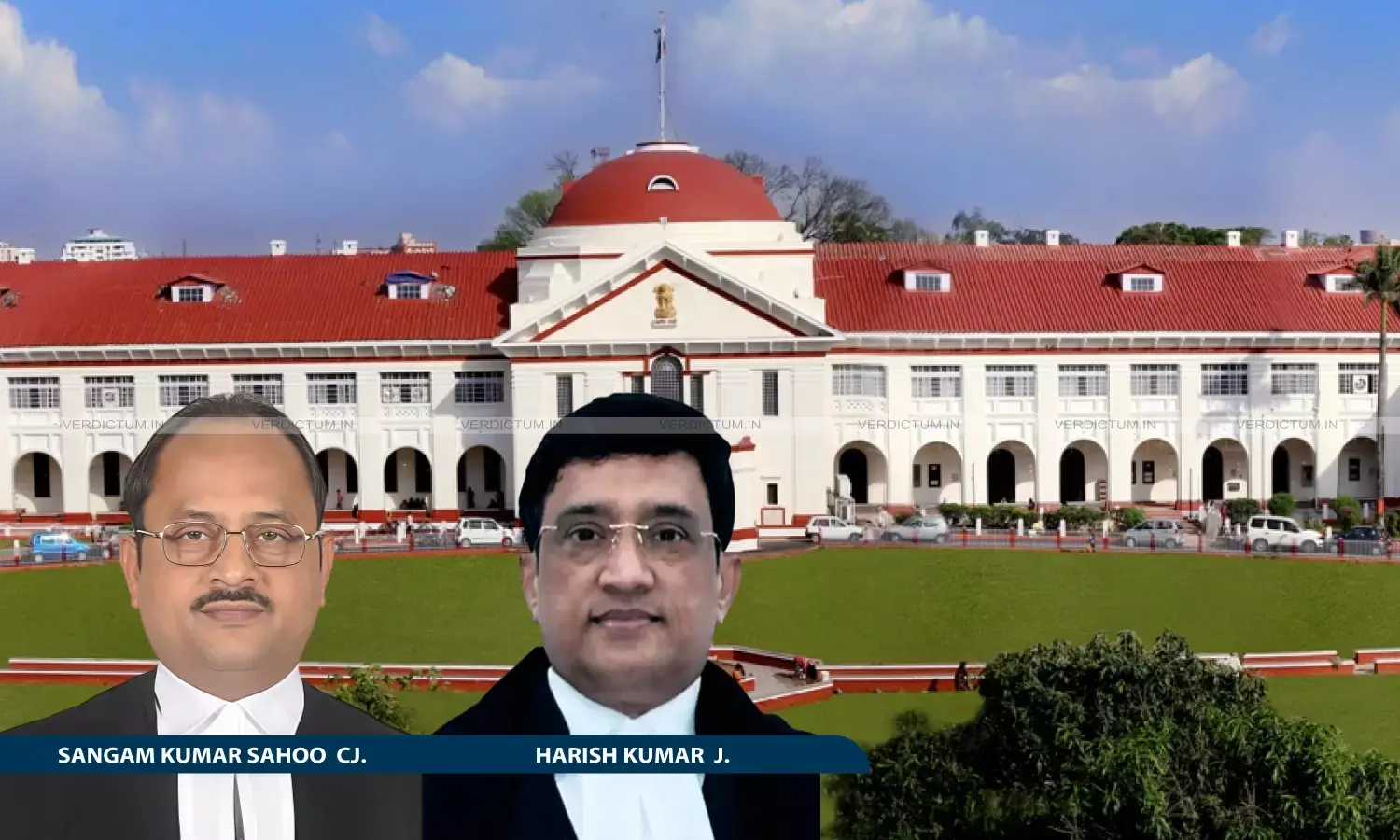
The Patna High Court has held that where a foundational labour award granting reinstatement with full back wages remains unchallenged, a High Court cannot interfere with a computation order passed under Section 33C(2) of the Industrial Disputes Act, 1947, in a manner that effectively nullifies the award itself.
The Court was hearing two Letters Patent Appeals arising from a dispute between a former conductor of the Bihar State Road Transport Corporation and the Corporation regarding the computation and recovery of back wages pursuant to a labour award directing reinstatement with consequential benefits.
A Bench comprising Chief Justice Sangam Kumar Sahoo and Justice Harish Kumar, while referring to Central Bank of India Ltd. v. P.S. Rajagopalan (1964), observed: “the power of the Labour Court in a proceeding under section 33C(2) is akin to that of an ‘Executing Court’ and the Labour Court is competent to interpret the award or settlement on which a workman bases his claim under section 33C(2), like the power of an Executing Court to interpret the decree for the purpose of execution. The decision clearly establishes the fact that the Labour Court’s power under section 33C(2) extends to interpretation of the award or settlement on which the workman’s right rests, like the Executing Court’s power to interpret the decree for the purpose of execution, where the basis of the claim is referable to the award or settlement”.
Thus, the Bench added, “the proceedings under section 33C(2) are analogous to execution proceedings and the Labour Court is called upon to compute in terms of money, the benefit claimed by a workman in such cases”, therefore holding that, “when the award had remained unchallenged, the interference with the executing order passed by the learned Labour Court is not justified”.
Advocate Raj Shekhar appeared for the appellant, while Yogendra Pd. Sinha, AAG, appeared for the respondents.
Background
According to the judgment, the appellant was working as a conductor with the Bihar State Road Transport Corporation when disciplinary proceedings were initiated against him on allegations that he had collected fares from passengers without issuing tickets. He was subsequently dismissed from service.
The industrial dispute was referred to the Labour Court under Section 10(1)(c) of the Industrial Disputes Act, 1947. By an award passed in 2006, the Labour Court set aside the dismissal order and directed reinstatement of the appellant with full back wages and consequential benefits.
After reinstatement, the appellant initiated proceedings under Section 33C(2) of the Industrial Disputes Act seeking computation of monetary benefits payable under the award. The Labour Court quantified the amount payable at ₹11,70,990 and directed payment within the stipulated period.
The Corporation challenged the computation order before the High Court, contending that the appellant had waived his entitlement to back wages and that the principle of “No Work, No Pay” would apply.
A learned Single Judge allowed the Corporation’s writ petition against the computation order and dismissed the appellant’s writ petition challenging the recall of recovery proceedings. The appellant thereafter filed the present Letters Patent Appeals.
Court’s Observation
The Division Bench first noted that the Corporation had failed to produce any material demonstrating that the appellant had voluntarily relinquished his claim to back wages at the time of reinstatement.
The Court further held that the Corporation’s reliance upon the principle of “No Work, No Pay” was contrary to settled law. Referring to Hindustan Tin Works Pvt. Ltd. v. Employees of M/s Hindustan Tin Works Pvt. Ltd. (1979), the Court reiterated that the grant of full back wages is the normal rule once dismissal is found illegal unless exceptional circumstances are established.
The Bench also relied upon Deepali Gundu Surwase v. Kranti Junior Adhyapak Mahavidyalaya (2013), wherein the Supreme Court held that reinstatement ordinarily carries with it entitlement to full back wages unless the employer proves gainful employment during the relevant period.
On the scope of Section 33C(2), the Court reiterated that proceedings under the provision are like execution proceedings. The Bench observed: “Section 33C(2) proceedings are analogous to execution proceedings and a Labour Court called upon to compute benefits claimed by a workman is in the position of an executing Court and as such competent to interpret an award where there is a dispute as to the rights thereunder or as to its correct interpretation.”
The Court clarified that while exercising powers under Section 33C(2), a Labour Court cannot rewrite or modify the award itself. The Bench observed: “Obviously, if the award is unambiguous, the Labour Court is bound to enforce it, and under the guise of interpreting, it cannot make a new award by adding to or subtracting anything therefrom.”
The Court further observed: “Although it cannot go behind the award, it is nevertheless competent to construe the award where it is ambiguous and is also competent to ascertain its precise meaning, for, unless that is done, it cannot enforce the award when it is called upon to do so by an application under section 33C.”
Referring to Central Bank of India Ltd. v. P.S. Rajagopalan (1964), the Court observed that the Labour Court’s powers under Section 33C(2) are akin to those of an executing court interpreting a decree for purposes of execution.
The Court further relied upon State of U.P. v. Brijpal Singh (2005), wherein the Supreme Court held that proceedings under Section 33C(2) are like execution proceedings and cannot be converted into adjudicatory proceedings for the creation of fresh rights.
The Division Bench held that since the foundational award granting reinstatement with full back wages and consequential benefits had never been challenged, the learned Single Judge could not have interfered with the computation order in a manner that diluted the effect of the original award.
Before concluding, the Court observed: “Labour law is not merely an adjunct of the law of contract; it is a charter of human rights at the workplace. The Government cannot be permitted to play hide and seek with its own employees. To deny a workman his lawful dues by juggling with procedural niceties is to negate the very rule of law.”
Conclusion
The Patna High Court held that interference with the computation order passed under Section 33C(2) of the Industrial Disputes Act, 1947, was unsustainable since the foundational labour award directing reinstatement with full back wages and consequential benefits had remained unchallenged.
Accordingly, the Division Bench set aside the order passed by the learned Single Judge, restored the computation order passed by the Labour Court and allowed the workman’s challenge to the recall of recovery proceedings.
Both the Letters Patent Appeals were consequently allowed.
Cause Title: Siya Singh v. The State of Bihar & Ors.
Appearances
Appellant: Advocate Raj Shekhar
Respondents: Yogendra Pd. Sinha, AAG-7; Rakesh Ambastha, AC to AAG-7; Prabhat Kumar Verma, Senior Advocate; Advocates Jainendra Kumar Sinha, Lakshmi Kant Tiwary