

Scope Of LPA Is Limited; Division Bench Can't Differ From Finding Of Fact Recorded By Single Judge In Absence Of Cogent Reasons: Patna High Court
The Patna High Court was considering an intra-court appeal in a land dispute matter.

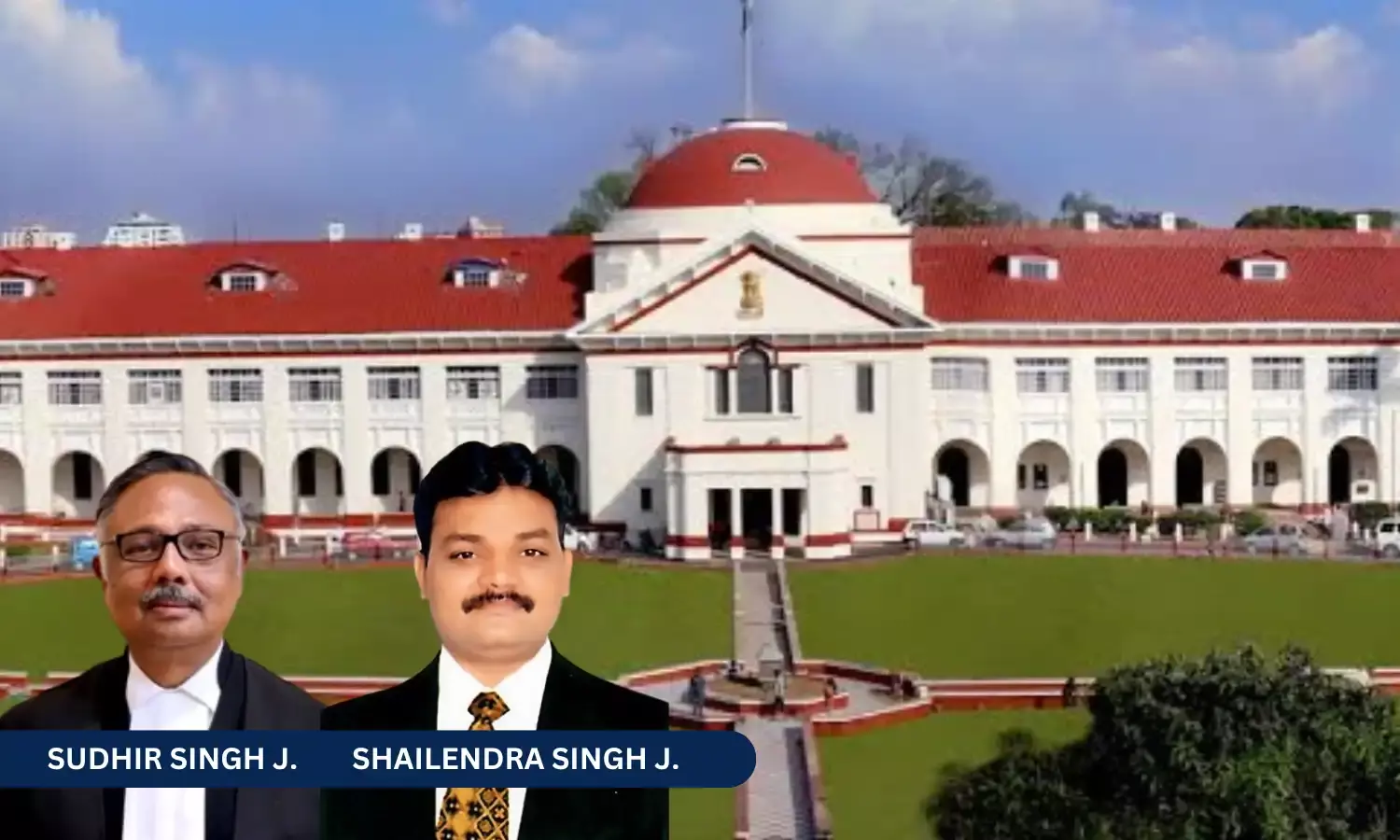
While reiterating that the issues involving seriously disputed questions of fact are not suited for adjudication in writ jurisdiction under Article 226, the Patna High Court has held that the scope of Letters Patent Appeal is limited, and in the absence of cogent reasons, the Division Bench would not differ from a finding of fact recorded by a Single Judge.
The High Court was considering an intra-court appeal in a land dispute matter.
The Division Bench of Justice Sudhir Singh and Justice Shailendra Singh held, “Further, the appellant has been unable to substantiate the grounds of the present appeal to dislodge the findings of the learned Single Judge. The Scope of a Letters Patent Appeal is limited, and normally in absence of cogent reasons, Division Bench would not differ from a finding of fact recorded by learned Single Judge.”
Advocate Raghvendra Kumar Singh represented the Appellant, while Additional Advocate General Md. Khurshid Alam represented the Respondent.
Factual Background
The father of the appellant was recorded as a Raiyat in the cadastral survey in respect of a piece of land. He also jointly held another parcel of land along with Bhukhal Mandal and Ugri Mandal. It was stated that upon the death of the appellant’s father, the appellant came into possession thereof, continuing to cultivate the land for her livelihood. It was further submitted that adjacent to the appellant’s land, an institute in the name of District Institute of Education and Training, Tikapatti, Katihar, was functioning over the land. It was alleged that the Principal, District Institute of Education and Training, with mala fide intentions, requested the Circle Officer to prohibit cultivation on land claimed to fall within the boundary of the said institute.
Subsequently, the Principal requested initiation of mutation proceedings in respect of the land alleged to be in possession of the institute. In these circumstances, the writ petition came to be filed seeking a direction of no interference with the subject property.
Reasoning
On a perusal of the materials available on record, the Bench noted that the controversy did not merely involve a pure question of law, but was deeply entangled with disputed questions of fact, particularly concerning the issue of possession over the land in question. The Bench noted that the parties had advanced rival claims, each asserting possession over the land in question. “Such competing claims would necessarily require a closer scrutiny of the evidence on record. The nature of the dispute demands a thorough examination of the documents”, it added.
The Bench reiterated that issues involving seriously disputed questions of fact are not suited for adjudication in writ jurisdiction under Article 226, and writ jurisdiction, though wide in its amplitude, is not designed to resolve factual controversies where the parties are at variance on foundational facts. “Proceedings under Article 226 are not intended to substitute a full-fledged trial, particularly in cases where determination of rights hinges upon contested questions of fact requiring detailed evidence. The Writ Court, in exercise of such jurisdiction, does not ordinarily engage in a detailed fact-finding inquiry or attempt to conclusively determine competing factual claims. Here the dispute turns upon contested facts that cannot be satisfactorily resolved on the basis of the material available on record, the Court would ordinarily refrain from exercising its writ jurisdiction and would instead leave the parties to seek redress before a competent forum”, the order read.
Considering that the core issue revolved around the question of possession of the land in question, which was a matter of serious factual dispute between the parties, the Bench held that the Single Judge was justified in holding that the writ petition, involving disputed questions of fact not amenable to determination under writ jurisdiction, ought to be pursued before an appropriate forum.
Thus, holding that the approach adopted by the Single Judge did not warrant any interference in the intra-court appeal, the Bench stated, “The reasoning proceeds on settled principles governing the exercise of writ jurisdiction under Article 226, particularly where the matter involves disputed questions of fact not amenable to determination in such proceedings.”
The Bench disposed of the petition by ordering, “If so advised, the appellant may make an appropriate application in respect of possession over the land in question under Section 144 of the Cr.P.C., now corresponding to Section 163 of the B.N.S.S., 2023, or before a competent authority, with a liberty to place all the documentary evidence as well as ocular evidence during the proceeding.”
Cause Title: Shyama Devi v. The State of Bihar (Case No.: Letters Patent Appeal No.1014 of 2023)
Appearance
Appellant: Advocates Raghvendra Kumar Singh
Respondent: Additional Advocate General Md. Khurshid Alam