Adultery Allegations Against Wife Vague & Unsupported: Patna High Court Upholds Dismissal Of Husband’s Divorce Plea
The Court held that allegations of adultery cannot be sustained on vague assertions, conjectures and evidence beyond pleadings, particularly where the alleged paramour is not impleaded as a party to the proceedings.
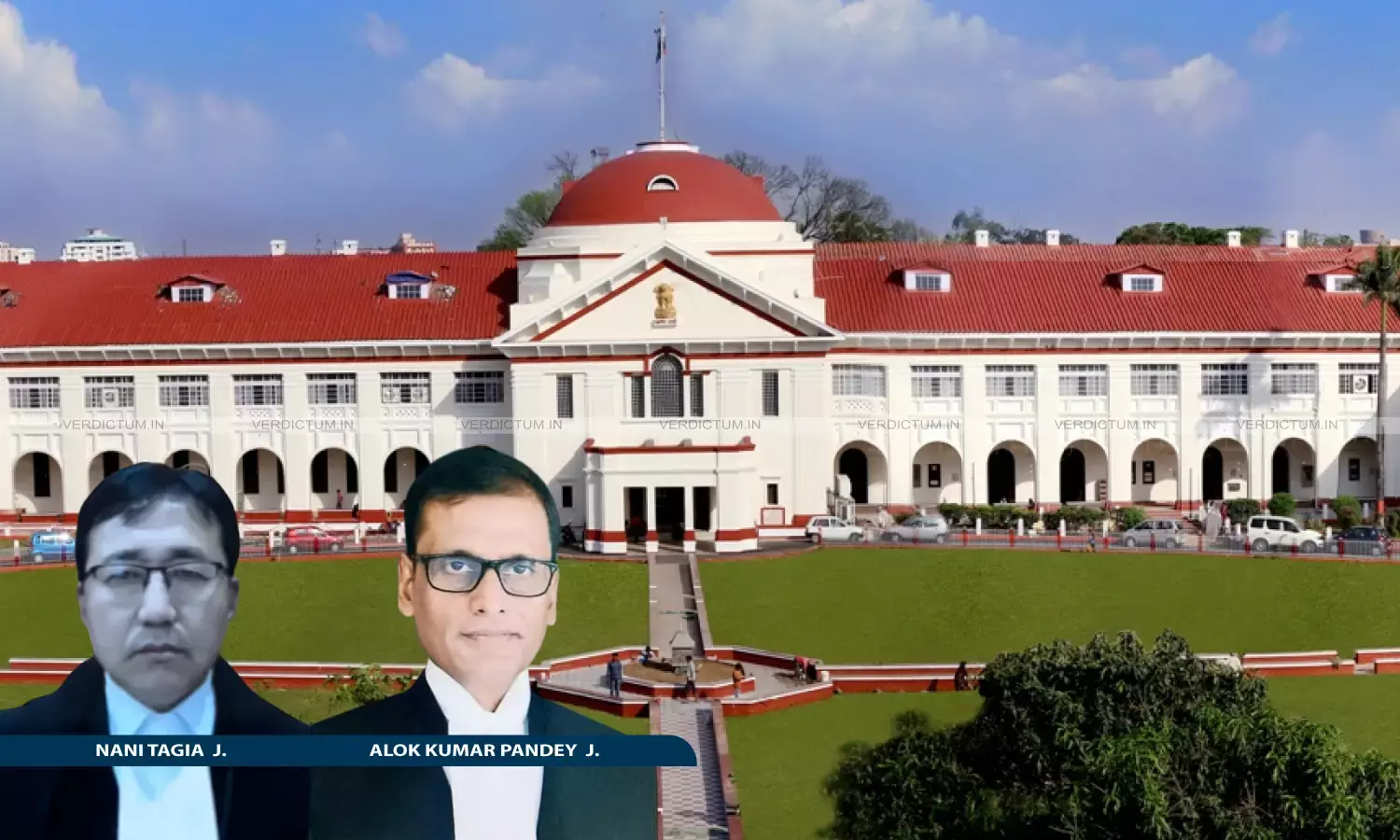
Justice Nani Tagia, Justice Alok Kumar Pandey, Patna High Court
The Patna High Court has dismissed a husband’s appeal challenging the rejection of his divorce petition, holding that the allegations of adultery levelled against the wife were vague, unsupported by specific pleadings and based merely on conjectures and surmises.
The Court observed that the petition failed to disclose specific dates, times, places, or circumstances regarding the alleged illicit relationship, and that the person against whom allegations were made had not even been impleaded as a party to the proceedings.
The Court was hearing a miscellaneous appeal filed against the judgment of the Family Court, which had dismissed a divorce petition instituted under the Hindu Marriage Act, 1955. The husband had alleged that the wife was involved in an illicit relationship and had deserted the matrimonial home.
A Division Bench comprising Justice Nani Tagia and Justice Alok Kumar Pandey observed: “The divorce petition is quite vague as the specific date of the cause of action has not been mentioned. The divorce petition does not reveal any specific date and time from which the conduct of the wife became incompatible with the appellant. Even the allegation of adultery is without any basis as no circumstance since 2003 to 2012 has been specified with regard to the date, time and place of the allegation. In para 14 of the divorce petition, it is stated that the respondent has not revealed the name and parentage of paramours. In this way, the allegation is based on mere conjecture and surmises”.
The Bench also observed: “It is settled law that if the person against whom an allegation is made has not been made party to the divorce proceeding, then, on that score, the person against whom the allegation is made has been left undefended.”
Advocate Dhanendra Chaubey appeared for the appellant.
Background
According to the husband, the marriage between the parties was solemnised in 2003 according to Hindu rites and customs. It was alleged that the marital relationship remained cordial for about two years, after which the wife’s behaviour allegedly changed.
The husband claimed that the wife used to visit marketplaces without informing family members and was allegedly seen with other men. A specific allegation was made regarding an incident in October 2012 when the wife allegedly returned late from the market and was seen coming out of a cinema hall with a male person.
Based on these allegations, the husband instituted a divorce case before the Family Court seeking dissolution of marriage on grounds including adultery and desertion. The Family Court proceeded ex parte after the wife did not appear despite service of notices.
The Family Court ultimately dismissed the divorce petition after finding that the allegations of adultery were vague and unsupported by cogent material.
Court’s Observation
The High Court observed that the divorce petition did not contain material particulars necessary to sustain allegations of adultery.
The Bench noted that although the husband alleged that the wife had illicit relationships with “paramours”, no names were disclosed in the pleadings. The name of one individual was introduced only at the stage of evidence, but that person had not been impleaded as a party to the proceedings.
The Court found that, except for one alleged incident in October 2012, the petition did not mention any specific date, time or place concerning the allegations of adultery between 2003 and 2012.
The Bench further observed that the pleadings merely stated that the wife had become “indisciplined” after two years of marriage, but did not specify from when her conduct allegedly became incompatible with the husband.
The Court rejected the contention that deficiencies in pleadings could be cured through oral evidence. Referring to settled principles of civil procedure, the Bench reiterated that evidence beyond pleadings cannot be relied upon for the grant of relief.
The High Court relied upon decisions including National Textile Corporation Ltd. v. Nareshkumar Badrikumar Jagad (2011), Bachhaj Nahar v. Nilima Mandal (2008), Ram Sarup Gupta v. Bishun Narain Inter College (1987) and other precedents on the necessity of proper pleadings in civil proceedings.
The Bench remarked: “… the pleadings are more of help to the court in narrowing the controversy involved and to inform the parties concerned to the question in issue, so that the parties may adduce appropriate evidence on the said issue. It has been further observed that as a settled legal proposition, relief not founded on the pleadings should not be granted. A decision of a case cannot be based on grounds outside the pleadings of the parties. The pleadings and issues are to ascertain the real dispute between the parties to narrow the area of conflict and to see just where the two sides differ”.
The Bench observed that permitting parties to lead evidence beyond pleadings would defeat the very purpose of pleadings and would unfairly take the opposite side by surprise.
Conclusion
The Patna High Court held that the husband had failed to establish grounds of adultery or desertion against the wife.
Finding no infirmity in the Family Court’s reasoning, the Patna High Court dismissed the appeal and affirmed the judgment and decree rejecting the husband’s divorce petition.
Cause Title: SBM v. SD