

Tendering Authority Cannot Penalize Bidders Beyond Original Notice Inviting Tender Conditions: Patna High Court
The Bench noted that State instrumentalities cannot shift the regulatory basis of punitive actions post-contract execution, as selective deviation from prescribed tender conditions violates the doctrine of equality under Article 14.

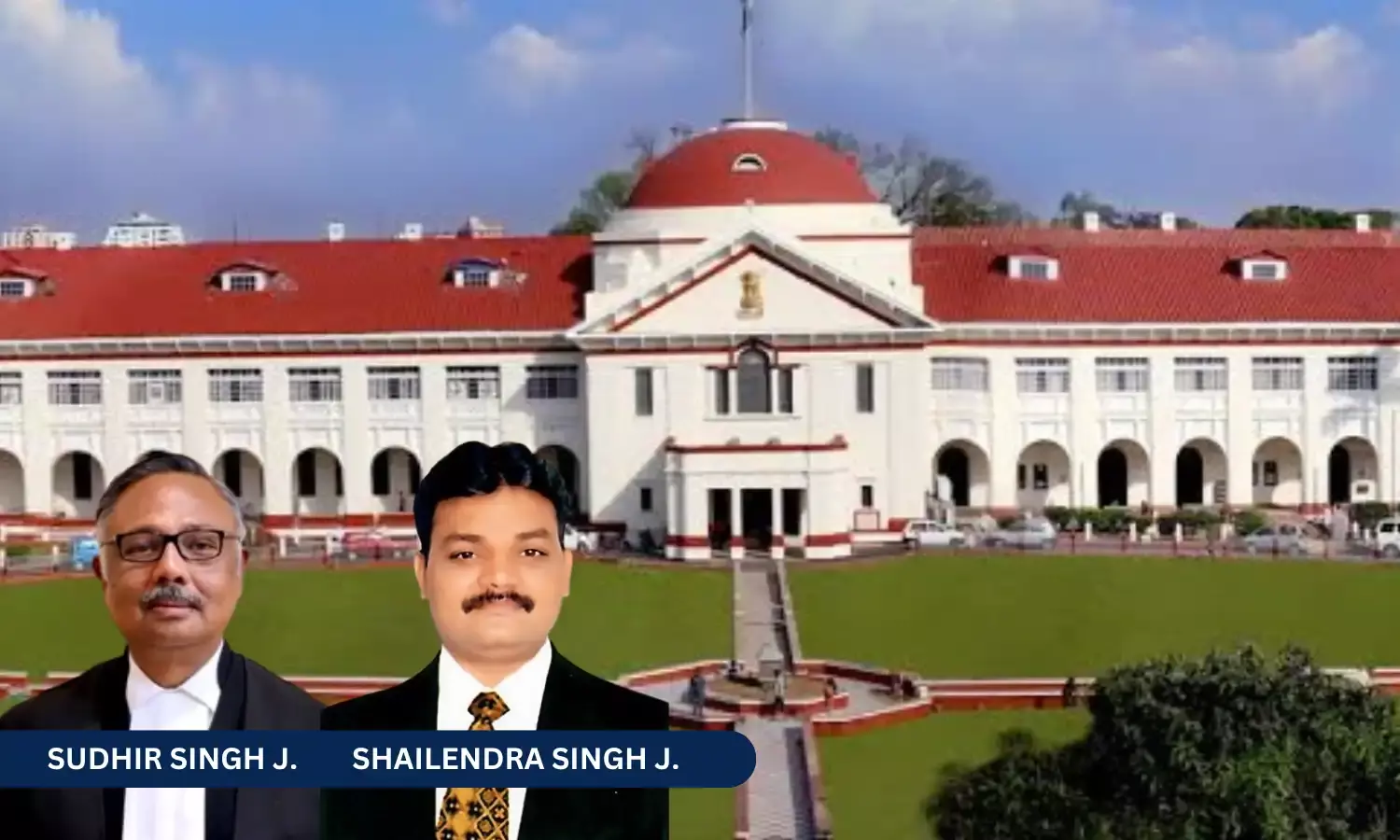
The Patna High Court has held that the State and its instrumentalities are rigorously bound by the explicit eligibility criteria published within a Notice Inviting Tender (NIT). It said that a tendering authority cannot terminate an active agreement, forfeiting security assets, or blacklisting a contractor by invoking rules or clauses that did not form part of the original tender document.
Noting that the employer cannot pass severe punitive orders by going beyond the initial tender conditions, the court said that the principle that all participants are entitled to absolute certainty regarding the regulatory standards governing their selection. Consequently, an administrative departure from the original terms, unless expressly authorized from the outset, amounts to a denial of equal treatment under Article 14 of the Constitution of India.
The pertinent question that the court had to adjudicate upon was, whether the employer can pass an order of cancellation, forfeiture and blacklisting by going beyond the terms and conditions of the tender notice.
A Division Bench comprising Justice Sudhir Singh and Justice Shailendra Singh observed, “…Once the petitioner had been declared eligible by the competent authorities and agreement had already been executed, the respondents could not have subsequently resorted to cancellation of agreement, forfeiture of security amount and bank guarantee and blacklisting of the petitioner on the basis of a condition not forming part of the original tender document”.
Advocate Amrendra Narayan Rai appeared for the petitioner and Advocate Shailendra Kumar Singh appeared for the respondents.
The dispute originated from a tender notice issued on February 5, 2016, by the Bihar State Food and Civil Supply Corporation Limited (BSFC) for the appointment of Transporting and Handling Agents for doorstep food grain delivery.
The petitioner participated, underwent scrutiny by the District Transport Committee and Head Office Transporting Committee, was declared eligible, and subsequently executed an agreement to commence transport operations. After roughly one year of service, the corporation issued a show-cause notice alleging that the petitioner had violated Clause 9(iii)(d) of the NIT and submitted a false affidavit.
The petitioner denied the allegations, asserting that the cited clause was entirely absent from the original NIT. Disregarding the explanation, the Managing Director of the corporation proceeded to issue an order terminating the doorstep delivery agreement, blacklisting the petitioner for three years, and forfeiting both the security deposit and bank guarantee.
Crucially, the final order shifted the contractual basis of the penalty from the originally cited Clause 9(iii)(d) to Clause 9.6 of the NIT, prompting the petitioner to approach the High Court via a writ application.
Analyzing the administrative framework, the Court observed that the respondents failed to produce any evidence proving that the clause used to initiate the show-cause action was present in the original tender package. Relying on Apex Court precedents, including Ramana Dayaram Shetty v. International Airport Authority of India (1979) 3 SCC 489, the Bench emphasized that corporations acting as instrumentalities of the State must scrupulously observe their own published standards on pain of invalidation.
“This Court is, therefore, of the considered opinion that the impugned action of the respondents suffers from arbitrariness and cannot be sustained in the eye of law. Consequently, the issue framed hereinabove is answered in favour of the petitioner and against the respondents”, the Bench observed.
Accordingly, the Bench quashed the impugned termination and blacklisting orders. The Bench allowed the writ application and ordered the respondent authorities to return and release the forfeited security amount and bank guarantee to the petitioner within a reasonable period from the date of receiving the court’s order.
Cause Title: Sanjay Kumar Jaiswal v. The Bihar State Food and Civil Supply Corporation Ltd. & Ors. (CWJC No. 1630 of 2018)
Appearances:
Petitioner: Amrendra Narayan Rai, Advocate.
Respondents: Mr. Shailendra Kumar Singh, Advocate.