

Plaintiff Who Fails To Perform His Part Of Essential Terms & Conditions Of Contract Can't Enforce Specific Performance: Patna High Court
The Court held that a defaulting buyer who fails to pay essential contract installments is legally barred from seeking specific performance, and the seller is entitled to enforce the agreed 10% forfeiture clause.

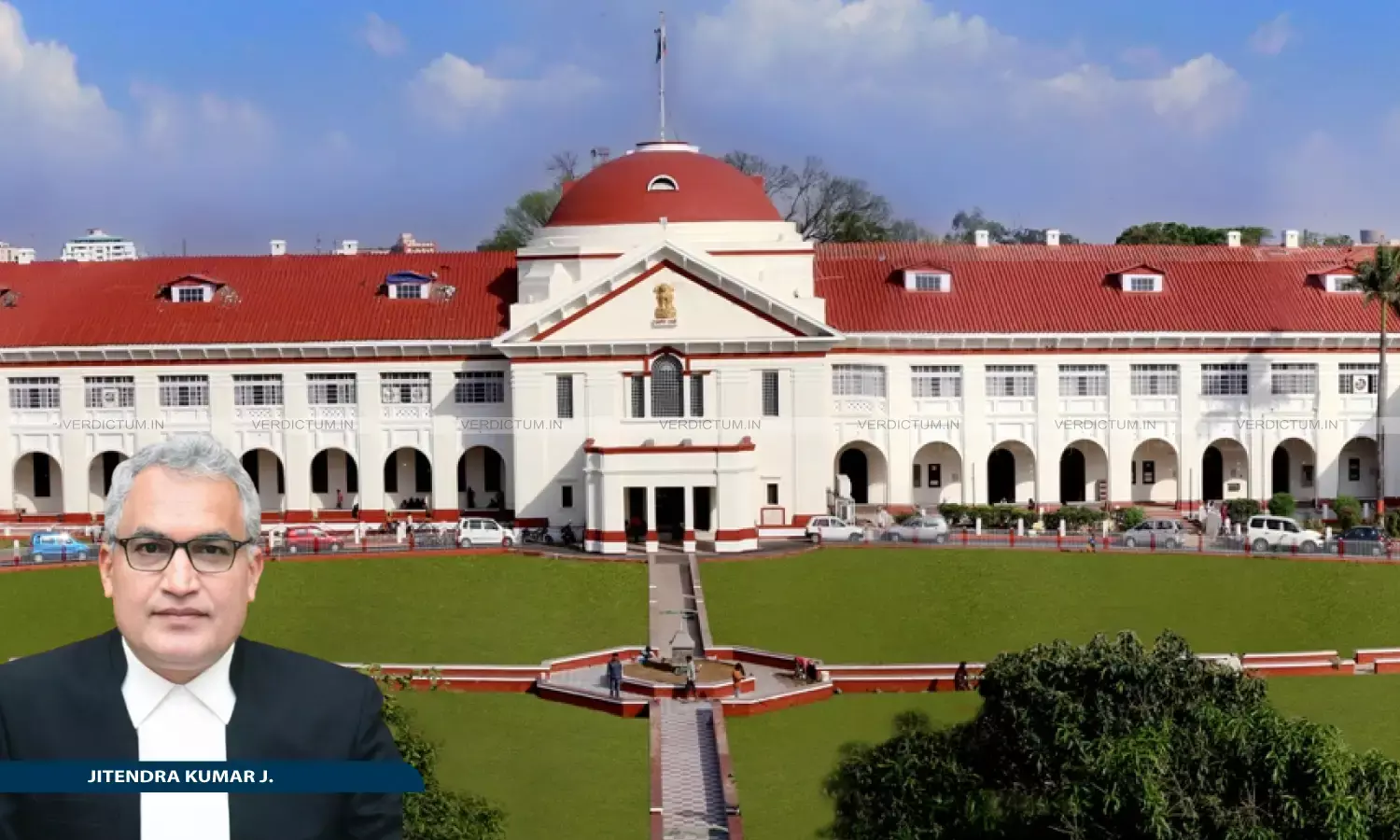
Justice Jitendra Kumar, Patna High Court
The Patna High Court has observed that under Section 16(c) of the Specific Relief Act, 1963, if the Plaintiff fails to perform his part of the essential terms and conditions of the contract, which was required to be performed by him, he cannot enforce the specific performance of the contract.
It was held that the bar operates against any litigant who fails to prove continuous readiness and willingness to fulfill essential contractual obligations.
The Court modified a Trial Court's decree by ruling that a buyer who fails to satisfy primary installment deadlines cannot claim the equitable relief of specific performance, while simultaneously upholding the vendor's contractual right to deduct ten percent of the advance money as a penalty for the buyer's default.
The Bench of Justice Jitendra Kumar held, "It clearly shows that the Plaintiff/Respondent did not perform his part of the contract as required, rendering him disentiteled to get equitable relief of specific performance by the Defendant/Appellant....Here, Sub-Section (c ) of Section 16 of the Act clearly shows that if the Plaintiff fails to perform his part of the essential terms and conditions of the contract, which was required to be performed by him, he cannot enforce the specific performance of the contract..."
Advocate Dhiraj Sagar appeared for the Appellant, while Senior Advocate P.N. Shahi appeared for the Respondents.
Brief Facts
The respondent instituted a title suit before the Trial Court seeking specific performance of an agreement for sale executed in respect of a house property built over land measuring three katha and ten dhurs for a total consideration amount of rupees one crore fifty-five lakhs. The respondent claimed to have paid an advance amount of rupees forty-three lakhs and thirty thousand towards the part consideration.
The Trial Court partly decreed the suit, declining the primary relief of specific performance on the ground that the respondent failed to demonstrate readiness and willingness to perform his part of the contract, and that certain terms regarding encumbrances were vague.
However, the Trial Court granted the alternative relief, directing the appellant to refund the entire advance amount with interest at the rate of nine percent per annum along with an additional compensation of rupees five lakhs. Aggrieved by the direction to refund the entire amount with interest and compensation, the appellant preferred the present appeal.
Contentions of the Appellant
The Appellant contended that the terms and conditions of the agreement for sale were explicit and unambiguous. It was submitted that the respondent was contractually obligated to pay a further specified sum within a stipulated period, which was a prerequisite for the appellant to clear the mortgage dues, holding tax, and outstanding electricity bills.
The appellant argued that since the respondent failed to make the said payment within the agreed timeframe, the appellant legally rescinded the agreement and offered to return the advance money after a valid deduction of ten percent. It was further urged that the impugned judgment was highly contradictory, as the Trial Court penalised the appellant with interest and compensation despite explicitly finding that the respondent was the defaulting party who lacked readiness and willingness to fulfill the contract.
Contentions of the Respondent
Conversely, the respondent submitted that the breach was committed entirely by the appellant, who failed to clear the encumbrances and execute the registered sale deed. It was further asserted that the appellant was legally bound to return the complete advance amount along with the interest and additional compensation awarded by the Trial Court, as the appellant reaped unfair advantages from the financial transaction.
Observations of the Court
The High Court observed that there was no dispute between the parties regarding the execution of the agreement for sale or the mutual terms stipulated therein. It was noted that under the explicit terms of the contract, the respondent was obligated to pay a substantial conditional installment within four months of the execution of the agreement, following which the appellant was required to redeem the subject property from an active bank loan and clear outstanding municipal dues.
The Court said that despite clear contractual timelines, the respondent failed to lead evidence or plead that the said amount was paid or that any genuine willingness was shown to tender the same.
The Court further observed that while the respondent had paid certain smaller subsequent amounts towards the part consideration, the primary obligation to clear the first major installment was completely neglected despite demands from the appellant.
Consequently, it was held that the respondent failed to perform his part of the contract, thereby disentitling himself to the equitable relief of specific performance. Invoking Section 16(c) of the Specific Relief Act, 1963, the Court observed that a personal bar operates against any plaintiff who fails to aver and prove readiness and willingness to perform the essential terms of a contract according to its true construction.
The Court observed that as per the forfeiture clause embedded in the agreement, the appellant was legally entitled to deduct ten per cent of the advance money in the event of a default by the respondent.
It was noted that after deducting ten percent from the total advance, the principal sum due for refund stood modified. However, since the appellant had also failed to voluntarily refund or offer the residual balance to the respondent at the time of the breach, the Court observed that the appellant was liable to pay reasonable interest on the due amount to prevent unjust enrichment.
Finally, the Court held that because the default was committed entirely by the respondent, the Trial Court had erroneously penalized the appellant. It was held that the direction to pay additional compensation and a higher rate of interest was completely unsustainable.
"In view of the default on the part of the Respondent/Plaintiff to perform his part of contract, the Appellant/Defendant cannot be penalized by directing him to pay any compensation. In fact, the Appellant/Defendant is liable to return the total paid amount to him only after deduction of 10 per cent from it", the Court said.
The Court concluded that the appellant was only liable to return the principal amount after the contractually mandated ten percent deduction, accompanied by a reasonable interest rate, with a stipulation for penal interest in case of non-compliance within the granted timeline.
Cause Title: Prusottam Swaroop v. Umesh Kumar Sahu [First Appeal No.67 of 2017]
Appearances:
Appellant: Advocates Dhiraj Sagar and Santosh Kumar Singh
Respondent: Senior Advocate P.N. Shahi and Advocate Bipin Bihari
Click here to read/download the Judgment