

Follower Of Spiritual Leader Not “Person Aggrieved” U/S 199(1) CrPC To Prosecute For Defamation: Patna High Court Quashes Complaint Over Book On Swami Ramdev
The Bench held that cognizance of an offence under Section 295-A IPC without previous sanction under Section 196(1)(a) CrPC is illegal, and that allegations did not disclose the deliberate and malicious intent the provision requires.

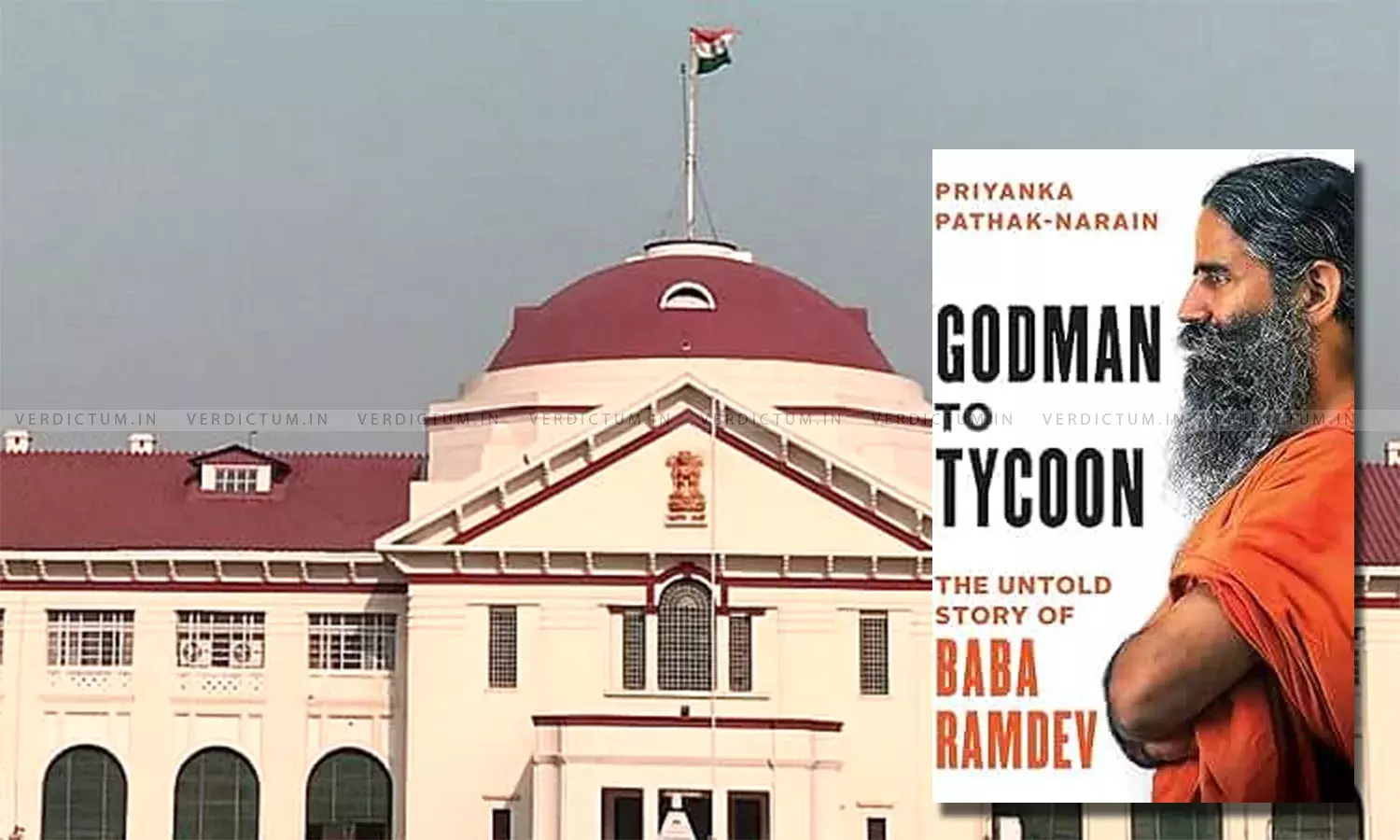
The Patna High Court has held that a complainant who claims to be a follower or disciple of a person allegedly defamed does not become a “person aggrieved” under Section 199(1) of the CrPC, merely because of that association. Quashing a defamation complaint over the book “Godman to Tycoon: The Untold Story of Swami Ramdev,” the Court held that cognizance of the offences under Sections 500, 501 and 502 of the Indian Penal Code was not sustainable in law.
The Court further held that the Magistrate could not have taken cognizance of the offence under Section 295-A IPC without the previous sanction of the Central or State Government under Section 196(1)(a) CrPC, and that the complaint did not disclose the essential ingredients of that offence. It held that a correction of the section from 495-A to 295-A did not cure the absence of sanction, and that an inquiry under Section 202 CrPC cannot confer on a complainant a status he does not possess.
A Single Judge Bench of Justice Alok Kumar Sinha observed, “The complainant cannot, therefore, step into the position of the person allegedly defamed merely because he is a disciple or a follower of that person. The statutory requirement under Section 199(1) cannot be enlarged on the basis of personal sentiments or association. The law requires that the complainant must be a “person aggrieved” by the alleged offence”.
“…the complainant does not fall within the expression “person aggrieved” under Section 199(1) of the Code of Criminal Procedure. Consequently, cognizance of the offences under Sections 500, 501 and 502 of the Indian Penal Code on the complaint instituted by opposite party no. 2 is not sustainable in law”, the Bench noted.
Senior Advocate Ashish Giri appeared for the petitioner and Ramchandra Sahani, APP appeared for the respondent.
The complaint was filed on September 6, 2017 by Amit Kumar before the Chief Judicial Magistrate, Hajipur, Vaishali. He described himself as a follower of Swami Ramdev and alleged that the book, which he bought on September 1, 2017, defamed Swami Ramdev and hurt the sentiments of the Hindu religion and of his numerous followers. The complaint alleged, among other things, that the book indirectly held Swami Ramdev responsible for the deaths of three persons and depicted him as an illiterate farmer’s son.
After recording the complainant’s statement and those of two other witnesses, the Additional Chief Judicial Magistrate-II, Hajipur, took cognizance on October 7, 2017 of offences under Sections 495-A, 500, 501 and 502 IPC. By an order dated October 9, 2017, Section 495-A was substituted with Section 295-A, treating the earlier reference as a typographical error. The publisher, Juggernaut Books Pvt. Ltd., approached the High Court under Section 482 CrPC to quash both orders. The State opposed the petition. No one appeared for the complainant despite opportunities.
The Court first held that the petition warranted examination under Section 482, citing State of Haryana v. Bhajan Lal, since the challenge went to the maintainability of the prosecution and not to disputed facts. On Section 199(1), it held that the requirement of a complaint by a “person aggrieved” is mandatory, citing G. Narasimhan, G. Kasturi and K. Gopalan v. T.V. Chokkappa (1972) 2 SCC 680, Dhirendra Nath Sen and Another v. Rajat Kanti Bhadra, (AIR 1970 Cal 216), and Ganesh Anand Chela v. Swami Divyanand, (1980) 17 DLT 492.
The imputations were directed at Swami Ramdev and not at his followers as a definite and identifiable class, and the complaint made no imputation against the complainant himself. The Court clarified that a member of a well-defined class may maintain a complaint where that class is defamed.
On Section 295-A, the Court held that previous sanction is a condition precedent and that the record showed none. Independently, citing Mahendra Singh Dhoni v. Yerraguntla Shyamsundar (2017) 7 SCC 760, it held that the provision penalises only deliberate and malicious acts intended to outrage the religious feelings of a class, and that the complaint did not identify the religious belief insulted. On Section 202, relying on Vijay Dhanuka v. Najima Mamtaj, (2014) 14 SCC 638 and Abhijit Pawar v. Hemant Madhukar Nimbalkar, (2017) 3 SCC 528, it declined to accept that no inquiry had been conducted, since the examination of witnesses can itself constitute the inquiry.
Holding that the prosecution suffered from fundamental legal infirmities and that its continuation would be an abuse of process, the Court allowed the application and quashed the orders dated October 7, 2017 and October 9, 2017, together with all consequential proceedings against the petitioner.
Cause Title: M/s Juggernaut Books Pvt. Ltd. v. State of Bihar and Anr., Criminal Miscellaneous No. 10548 of 2018
Appearances:
Petitioner: Ashish Giri, Senior Advocate, Sumit Kumar Jha and Pranav Kumar, Advocates.
Respondent: Ramchandra Sahani, APP.