Scheduled Caste Status Exists By Birth, Not From Date Of Issuance Of Certificate: Patna High Court
The Court upheld the direction to consider the candidate under the Scheduled Caste category, finding that the advertisement did not require a married woman’s certificate to mention her father’s name instead of her husband’s.
The Patna High Court has held that Scheduled Caste status exists by birth and is not acquired from the date on which a caste certificate is issued, as the certificate merely affirms a pre-existing fact and enables authorities to grant the corresponding benefit.
The Court was hearing the Bihar Public Service Commission’s Letters Patent Appeal against a Single Judge’s decision directing it to consider the candidate under the Scheduled Caste category on merit and, if she was otherwise suitable, offer her appointment from the date candidates lower in merit were appointed, without consequential benefits except those specified in the Single Judge’s judgment.
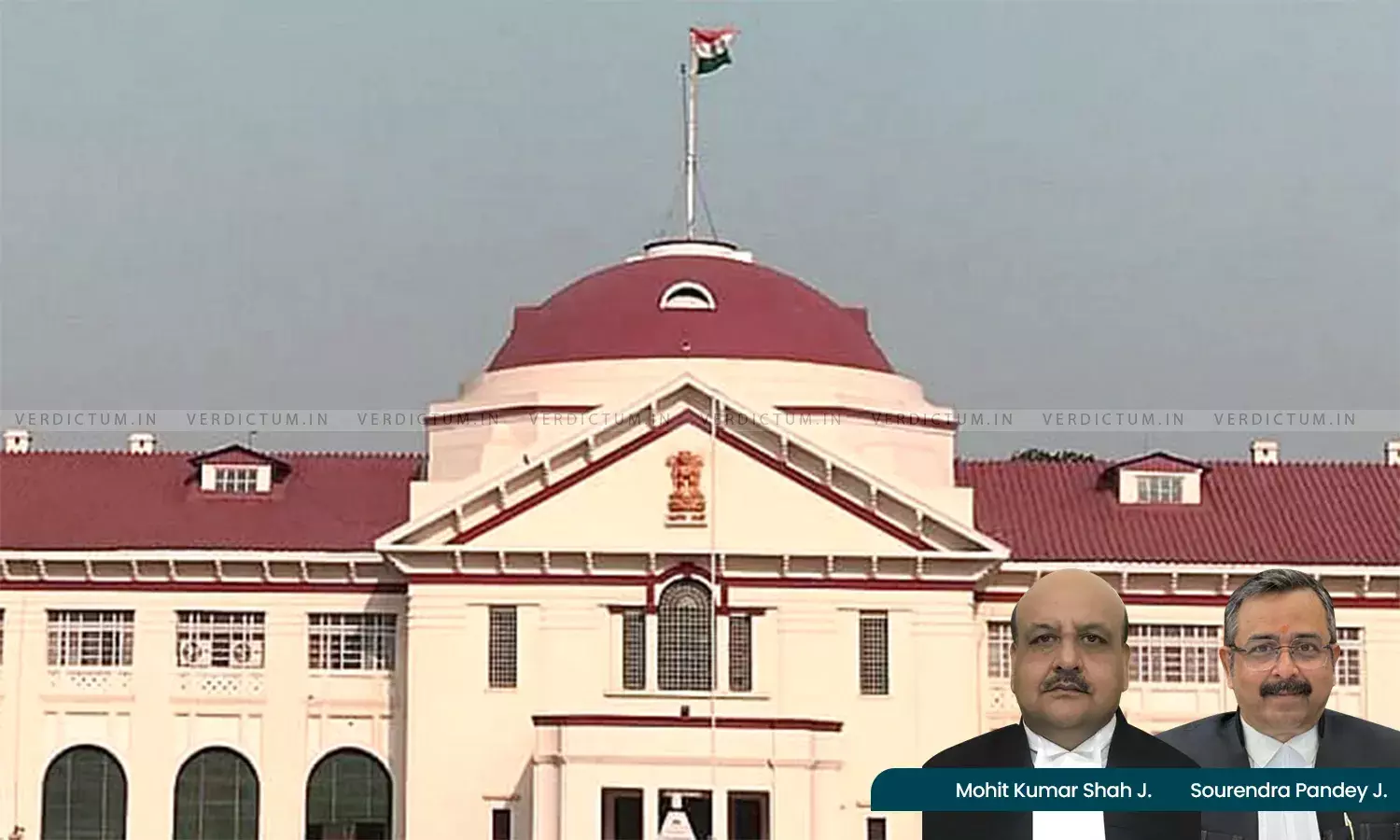
A Division Bench of Justice Mohit Kumar Shah and Justice Sourendra Pandey held: “It is a well-settled law that a certificate issued by the competent authority regarding a person belonging to a scheduled caste category by birth is only an affirmation of the fact which is already in existence and the purpose of such certificate is to enable the authorities to believe in the assertion of the candidate that he/she belongs to the scheduled caste category and act thereon by giving benefit to such candidate for him belonging to the scheduled caste category.”
The Bench, while referring to the decision of the Delhi High Court in Tej Pal Singh and Others v. Government of NCT of Delhi (1999), reiterated: “If a person is SC he is so by birth and not by acquisition of this category because of any other event happening at a later stage”.
Advocate Kaushal Kumar Jha appeared for the Commission. Senior Advocate Chitranjan Sinha appeared for the candidate. Advocate Anil Kumar Verma appeared for the State.
Background
The Commission advertised 74 Assistant Professor posts in the Obstetrics and Gynecology Department of government medical colleges and hospitals. Thirteen posts were reserved for Scheduled Caste candidates, including five earmarked for women.
The candidate applied under the Scheduled Caste category and submitted a caste certificate issued by the Sub-Divisional Officer. Her application was initially found to be in order, following which she was called for an interview and her original documents were verified.
The Commission subsequently treated her as an unreserved candidate because the caste certificate mentioned her husband’s name instead of her father’s. She did not qualify under the unreserved-category cut-off.
BPSC stated that notices issued in July 2018 gave affected candidates an opportunity to submit corrected certificates on August 6 or 7, 2018, failing which they would be considered under the unreserved category.
The candidate challenged that decision. The Single Judge directed the authorities to consider her for appointment under the Scheduled Caste category according to her merit. The Commission appealed, contending that the certificate did not comply with the prescribed requirements and that a subsequent certificate issued by the Circle Officer mentioning her father’s name had been produced only after the selection process.
The candidate argued that the advertisement contained no requirement that a married woman’s certificate must mention her father rather than her husband. She also submitted that the Sub-Divisional Officer was competent to issue the earlier certificate and that her Scheduled Caste status was never disputed.
Court’s Observations
Advertisement Did Not Require Father’s Name
The Court framed the principal question as whether mentioning the husband’s name instead of the father’s name in the caste certificate justified treating the candidate as belonging to the unreserved category.
Answering the question in the negative, the Bench held: “To this, our answer is in negative, for the reason that a bare perusal of the entire terms and conditions mentioned in the aforesaid Advertisement No.20/2007 [sic] would show that no such condition is prescribed therein, i.e. to the effect that the caste certificate to be submitted by the SC/ST candidate should contain the name of the father of the candidate and not the husband of a married female candidate.”
The Commission could not, therefore, shift the candidate to the unreserved category by relying on a condition that did not form part of the advertisement.
Scheduled Caste Status Exists By Birth
Referring to Ram Kumar Gijroya v. Delhi Subordinate Services Selection Board (2016), the Court considered the principle from Tej Pal Singh v. Government of NCT of Delhi (1999) that Scheduled Caste status exists by birth and is not acquired when the certificate is issued.
The precedent stated: “If a person is SC he is so by birth and not by acquisition of this category because of any other event happening at a later stage. A certificate issued by competent authority to this effect is only an affirmation of fact which is already in existence.”
The Court noted that the Commission had not disputed the candidate’s Scheduled Caste status. It also considered that the Sub-Divisional Officer who issued the earlier certificate was higher in rank than the Circle Officer and that the candidate had subsequently produced a certificate issued by the Circle Officer mentioning her father’s name.
In these circumstances, the Court held that her Scheduled Caste candidature could not be rejected on what it described as “non-existent technicalities/reasons”.
Writ Court Could Grant Relief In A Deserving Case
The Commission relied on Braj Kishore Prasad v. State of Bihar (1998), concerning the submission of certificates within the prescribed period. The Full Bench had recognised that writ courts could grant relief in deserving cases involving extreme hardship or injustice arising from circumstances beyond a candidate’s control, provided the candidate had acted diligently.
Applying that principle, the Division Bench observed: “Thus, it is apparent from what has been held by the learned Full Bench of this Court in the judgment rendered in the case of Braj Kishore Prasad (supra), as aforesaid that the powers of the writ court are not fettered, thus it may grant relief in exercise of its writ jurisdiction in deserving cases and this is exactly what has been done by the writ court in the present case.”
The Court therefore rejected the argument that the Single Judge lacked authority to grant relief concerning the certificate.
Constitutional Purpose Of Reservation Considered
The Bench referred to Articles 15(4) and 16(4) of the Constitution, which enable the State to make special provisions for Scheduled Castes and Scheduled Tribes.
It observed that reservation in public employment seeks to address inequality faced by socially and educationally disadvantaged communities. Since the candidate’s Scheduled Caste status was not disputed, that constitutional objective could not be defeated by an unprescribed technical objection concerning the name appearing on her certificate.
The judgment also recorded the Single Judge’s reliance on Aarav Jain v. Bihar Public Service Commission (2022) and Dolly Chhanda v. Chairman, JEE (2005).
Conclusion
The High Court found no infirmity in the Single Judge’s judgment and dismissed the Commission’s appeal.
Consequently, the direction to consider the candidate for appointment as an Assistant Professor under the Scheduled Caste category according to her merit, and to offer her appointment if otherwise suitable on the terms specified by the Single Judge, remained undisturbed.
Cause Title: Bihar Public Service Commission and Another v. Dr. S.S. and Others
Appearances
Appellants: Advocates Kaushal Kumar Jha and Amish Kumar
Respondents: Senior Advocate Chitranjan Sinha with Advocate P.N. Pathak; Advocate Anil Kumar Verma, Assistant Counsel to Additional Advocate General-9
Click here to read/download Judgment