

Disciplinary Authority's Finding Alone Cannot Prove Foundational Facts Without Supporting Evidence: Patna High Court
The Court observed that although a disciplinary authority is competent to disagree with the findings of an Inquiry Officer, such disagreement must be based on persuasive material capable of sustaining the ultimate conclusion.
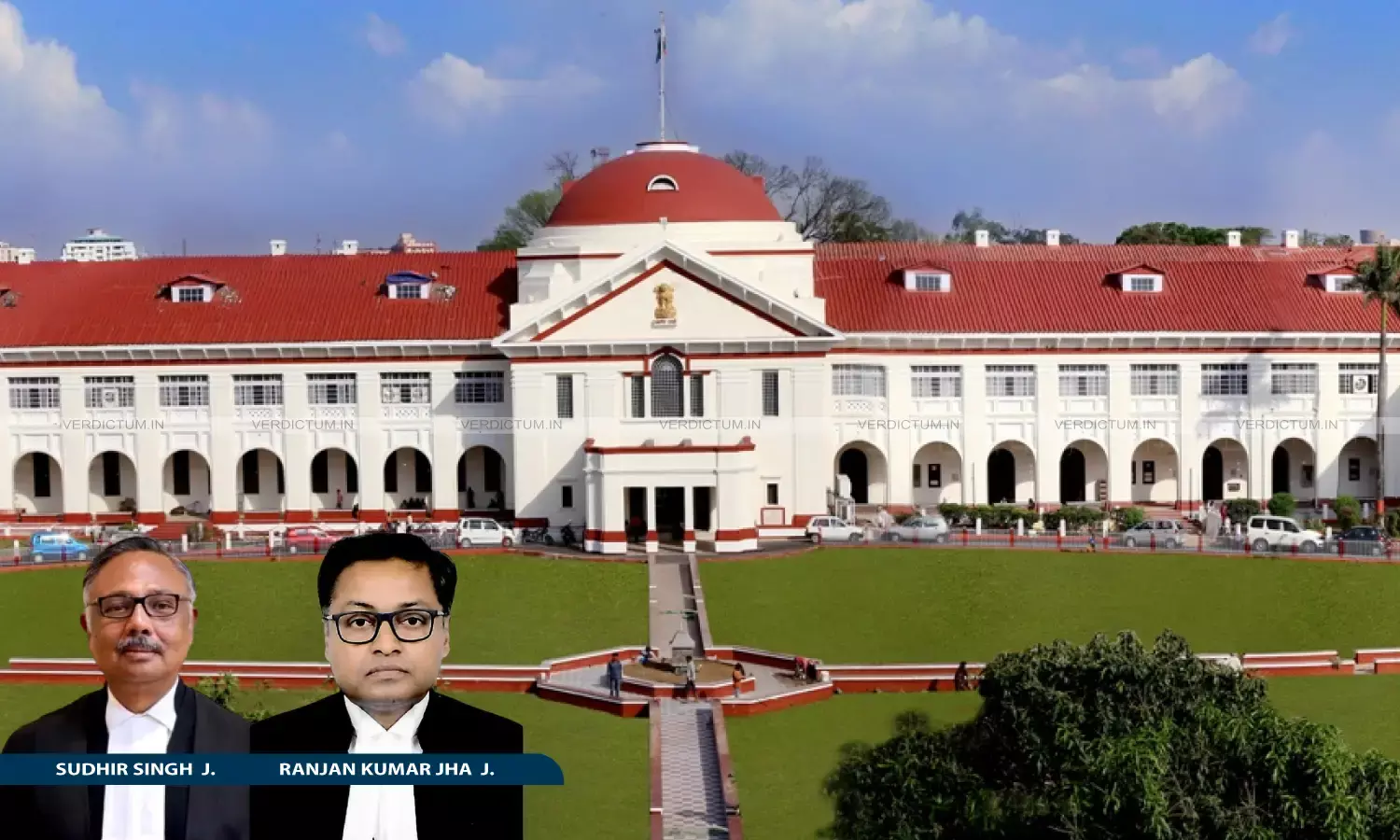
The Patna High Court held that a disciplinary authority's conclusion that the employee belonged to a particular caste could not, by itself, establish the foundational fact necessary to sustain the charge of fraud, particularly when the finding was unsupported by contemporaneous evidence, and the employee's caste certificate had never been cancelled by a competent authority.
The Court dismissed an intra-court appeal filed by Bihar Gramin Bank challenging the order of a Single Judge setting aside the dismissal of a Branch Manager accused of obtaining appointment by allegedly misrepresenting his caste status.
A Division Bench comprising Justice Sudhir Singh and Justice Ranjan Kumar Jha observed: "The finding that the respondent belonged to the 'Tanti' caste primarily emanates from the conclusion recorded by the Disciplinary Authority while differing from the Inquiry Officer. However, a finding recorded in a disciplinary order cannot by itself constitute proof of the foundational fact unless supported by reliable evidence available on record."
Ajay Kumar Sinha, Senior Advocate, appeared on behalf of the appellant, while Advocate Ajay Kumar Prasad represented the respondent.
Background
The respondent was appointed as a Branch Manager in the erstwhile Champaran Kshetriya Gramin Bank. Nearly fifteen years after his appointment, disciplinary proceedings were initiated alleging that he had secured appointment against a Scheduled Caste vacancy by falsely claiming to belong to the "Pan" caste, whereas he actually belonged to the "Tanti" caste.
Following a departmental inquiry, the Inquiry Officer returned a finding that the charge was not proved. The Disciplinary Authority, however, disagreed with the inquiry report, issued a disagreement note, and ultimately imposed the penalty of dismissal from service. The departmental appeal was also dismissed.
The respondent challenged the dismissal before the High Court. The learned Single Judge allowed the writ petition, quashed the disciplinary and appellate orders and directed payment of consequential service and retirement benefits. Aggrieved thereby, the Bank preferred the present Letters Patent Appeal.
Court's Observations
The Court observed at the outset that the disciplinary proceedings were initiated almost fifteen years after the respondent's appointment and that throughout this period no dispute had been raised regarding his caste status.
The Bench held that although delay by itself may not invalidate disciplinary proceedings, the long period during which the respondent's caste status remained unquestioned constituted a relevant circumstance while examining allegations of deliberate fraud and misrepresentation.
The Court further noted that the respondent possessed a caste certificate issued by the competent authority and that the certificate had never been cancelled, withdrawn or declared invalid in accordance with law.
Relying upon Kumari Madhuri Patil v. Additional Commissioner, Tribal Development, the Bench observed that a caste certificate continues to carry legal sanctity unless invalidated by the competent scrutiny mechanism.
The Court also found that the Bank had failed to produce any contemporaneous material demonstrating that the respondent had knowingly misrepresented his caste at the time of appointment.
The Bench observed: "No document forming part of the appointment process has been produced before this Court to demonstrate that the respondent himself had declared his caste as 'Tanti' or that there existed any contradictory declaration made by him at the relevant time. In fact, despite the serious nature of the allegation, the appellant has not placed on record the original application form, attestation form, service records, or any contemporaneous document evidencing such alleged misrepresentation."
Examining the disciplinary proceedings, the Court held that the Disciplinary Authority's disagreement with the Inquiry Officer could not substitute proof of the foundational facts.
The Bench acknowledged that the Disciplinary Authority was legally competent to differ from the Inquiry Officer but reiterated that such disagreement had to be supported by persuasive evidence.
Quoting Punjab National Bank v. Kunj Behari Misra, the Court observed: "Though the Disciplinary Authority was competent to disagree with such finding, as held in Punjab National Bank v. Kunj Behari Misra reported in (1998) 7 SCC 84, such disagreement must be supported by persuasive material capable of sustaining the ultimate conclusion."
The Court further reproduced the Supreme Court's observation that: "Whenever the disciplinary authority disagrees with the enquiry authority on any article of charge, then before it records its own findings on such charge, it must record its tentative reasons for such disagreement and give to the delinquent officer an opportunity to represent before it records its findings... The principles of natural justice... require the authority which has to take a final decision and can impose a penalty, to give an opportunity to the officer charged of misconduct to file a representation before the disciplinary authority records its findings on the charges framed against the officer."
The Court emphasised that allegations of obtaining public employment by fraud require a high degree of proof.
The Bench observed: "The allegation against the respondent is essentially one of securing public employment by fraud. It is trite that fraud is a serious charge and must be established by clear and convincing evidence."
Applying that principle, the Court held that the Bank had failed to establish deliberate misrepresentation.
It observed: "Apart from the conclusion drawn by the Disciplinary Authority, no contemporaneous document has been shown to conclusively establish that the respondent knowingly made a false declaration regarding his caste status at the time of appointment."
The Bench also found that even assuming the reports obtained from the District Administration correctly indicated that the respondent belonged to the "Tanti" caste, such reports could not by themselves justify dismissal in the absence of cancellation of the caste certificate and evidence of deliberate misrepresentation.
The Court further observed: "The burden to establish the charge rested upon the employer. In the absence of the best evidence being brought on record, an adverse finding of fraud carrying severe civil consequences could not have been sustained merely on inference."
Finally, the Court held that no patent illegality or perversity could be found in the judgment of the learned Single Judge warranting interference in Letters Patent jurisdiction.
Conclusion
Holding that the disciplinary authority's findings were unsupported by reliable contemporaneous evidence and that the employer had failed to establish the charge of fraud by clear and convincing material, the Patna High Court upheld the judgment of the learned Single Judge.
The Court concluded that the Bank had failed to demonstrate any legal infirmity in the order setting aside the respondent's dismissal and consequently dismissed the Letters Patent Appeal.
Cause Title: Bihar Gramin Bank & Ors. v. Madhusudan Prasad Tanti
Appearances
Appellants: Ajay Kumar Sinha, Senior Advocate, Ajit Kumar Sinha, Dilkash Khan, Zeba Akhtar and Pravin Kumar, Advocates.
Respondent: Ajay Kumar Prasad and Binod Kumar Sinha, Advocates.
