

Unchecked Freedom Can Cause Great Harm To Society: Patna High Court Upholds Restrictions Imposed On Religious Procession By Hindu Group
Restrictions were imposed on Mahabiri Julus on the 11th day of Bhadrapad Krishna Paksha by devotees of Akhara No.1.
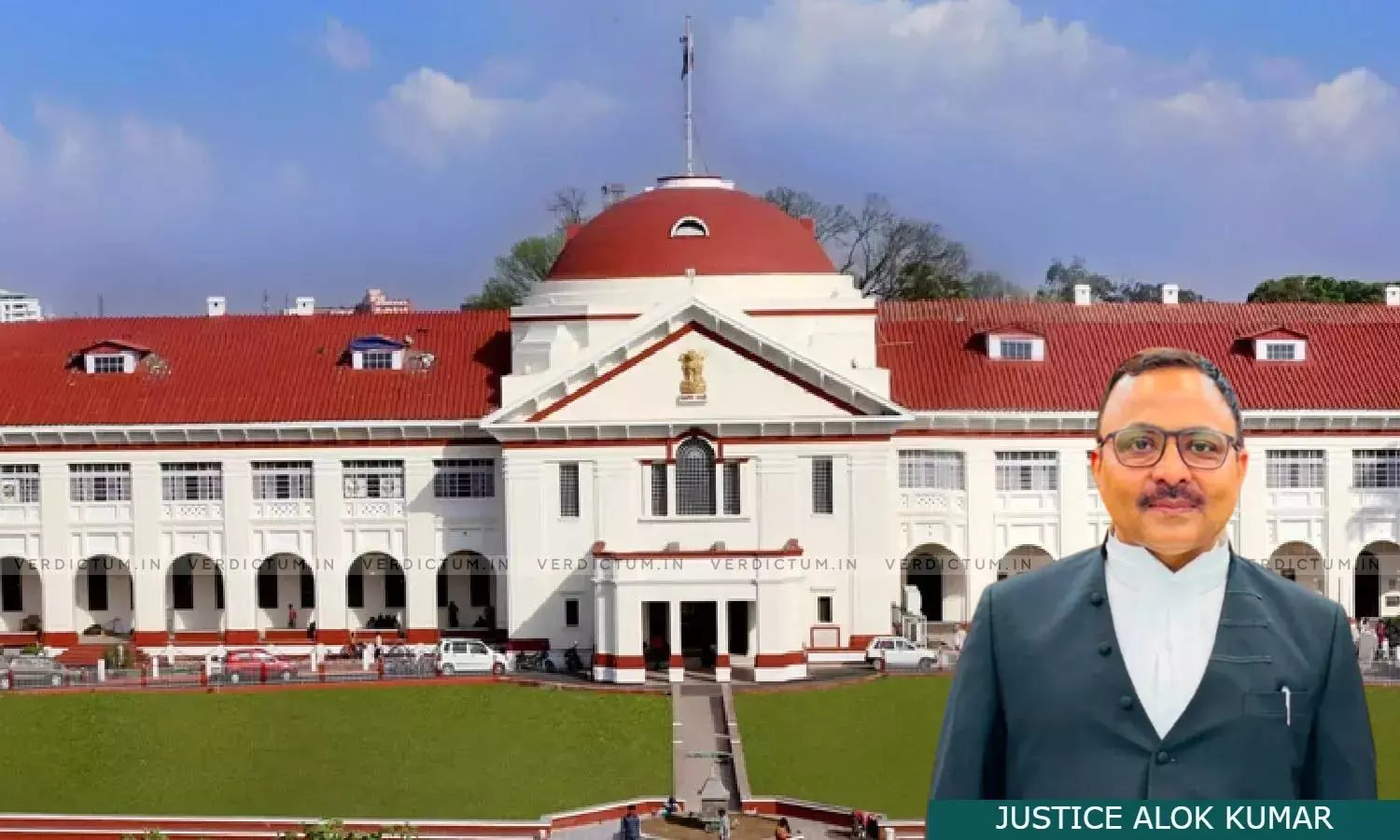
The Patna High Court has held that while the right to profess and practice religion, including taking out religious processions, is protected under Articles 19(1)(b) and 25 of the Constitution, the right is “not absolute” and is subject to reasonable restrictions.
A Bench of Justice Alok Kumar held, "The reasonable restrictions denotes to legal limits on individual rights and freedom by the state to balance personal liberty with collective public welfare, national security, and social order. Hence, no Constitutional right is absolute; unchecked freedom can cause great harm to society at large".
The Court also held, “...while the right to profess and practice religion — including taking out religious processions — is protected under Articles 19(1)(b) and 25 of the Constitution, this right is not absolute. The constitutional protection extends only to what is essential and integral to the religious practice, not to every mode or manner of its exercise. ”
The Court made the observation while dismissing a writ petition which sought directions to conduct the ‘Mahabiri Julus’ of Akhara No.1 through the traditional route in Hathaura village under Husainganj police station in Siwan district and to allow at least 300 devotees to participate.
Advocate Harshvardhan Shivsundaram appeared for the petitioner and Advocate Madhukar Mishra appeared for the respondents.
The petitioner claimed that a licence for conducting the religious procession on the 11th day of Bhadrapad Krishna Paksha had been granted to the devotees of Akhara No.1 every year since 1958.
According to the petitioner, while 200 devotees were permitted in 2012 and 2013, the number was progressively curtailed to 150 in 2014, 100 in 2015 and eventually to five devotees from 2023 onwards. He also challenged the alteration of the traditional route.
The petitioner contended that the traditional route had never been the subject matter of any complaint of breach of peace. It was also submitted that in a Peace Committee meeting dated August 16, 2023, the devotees were compelled to agree to restrict their number to five and alter the traditional route under threat of denial of licence altogether.
The State, however, submitted that short-term licences were granted with the objective of maintaining law and order. According to the State, against a sanctioned strength of five devotees, 1,700 to 2,000 persons would in fact assemble and participate between 2015 and 2022, resulting in a number of cases.
The State further submitted that in 2024, the petitioner and the accompanying crowd set fire to a government vehicle belonging to the Block Development Officer, Husainganj, and pelted stones upon police personnel.
Referring to the Supreme Court judgment in Dr. M. Ismail Faruqui v. Union of India, the Court noted that while offer of prayer or worship is a religious practice, its offering at every location where such prayers can be offered would not be an essential or integral part of such religious practice unless the place has a particular significance for that religion.
The Court also referred to Church of God v. K.K.R. Majestic Colony Welfare, where it was held that no religion prescribes or asks to offer prayers with the help of loudspeakers and by disturbing the peace of the public.
“Articles 25 and 26 guarantees the freedom of religion but are subject to public order, morality, and health constraints,” the Court observed.
The Court said that while there is a need for freedom to practice and profess one’s own religion, there is also a necessity of maintaining public tranquility, particularly in residential areas.
It held that the right to profess and practice religion, including taking out religious processions, is protected under Articles 19(1)(b) and 25, but “this right is not absolute”.
The Court further held, “it becomes imperative to reiterate that in India secularism is a part of the basic structure of the Constitution. The State remains neutral towards all religion, treats every faith with equal respect (sarva dharma samabhava), and guarantees freedom to practice and profess any religion. The right to take out a religious or civic processions is a recognized civil and fundamental right under Article 19(1)(b) and Article 25 of the Constitution. However, they are subject to reasonable restrictions. ”
The Court also rejected the petitioner’s apprehension that the number of devotees may be restricted to five in future, holding that such apprehension was premature and unreasonable.
According to the Court, any such restriction would depend on the prevailing law and order situation of the locality at the time permission is actually sought and cannot be adjudicated upon on the basis of a hypothetical future contingency.
Finding no merit in the writ petition, the Court dismissed it.
Cause Title: Bhadai Chaudhary v. The State of Bihar & Ors.
