

Deity Is Not Exempt From Adverse Possession Claim Merely Because It Is Described As A Perpetual Minor: Orissa High Court
The Court still dismissed the second appeal, holding that cultivation of temple land under annual lease and bhag arrangements is permissive and does not establish title by adverse possession.

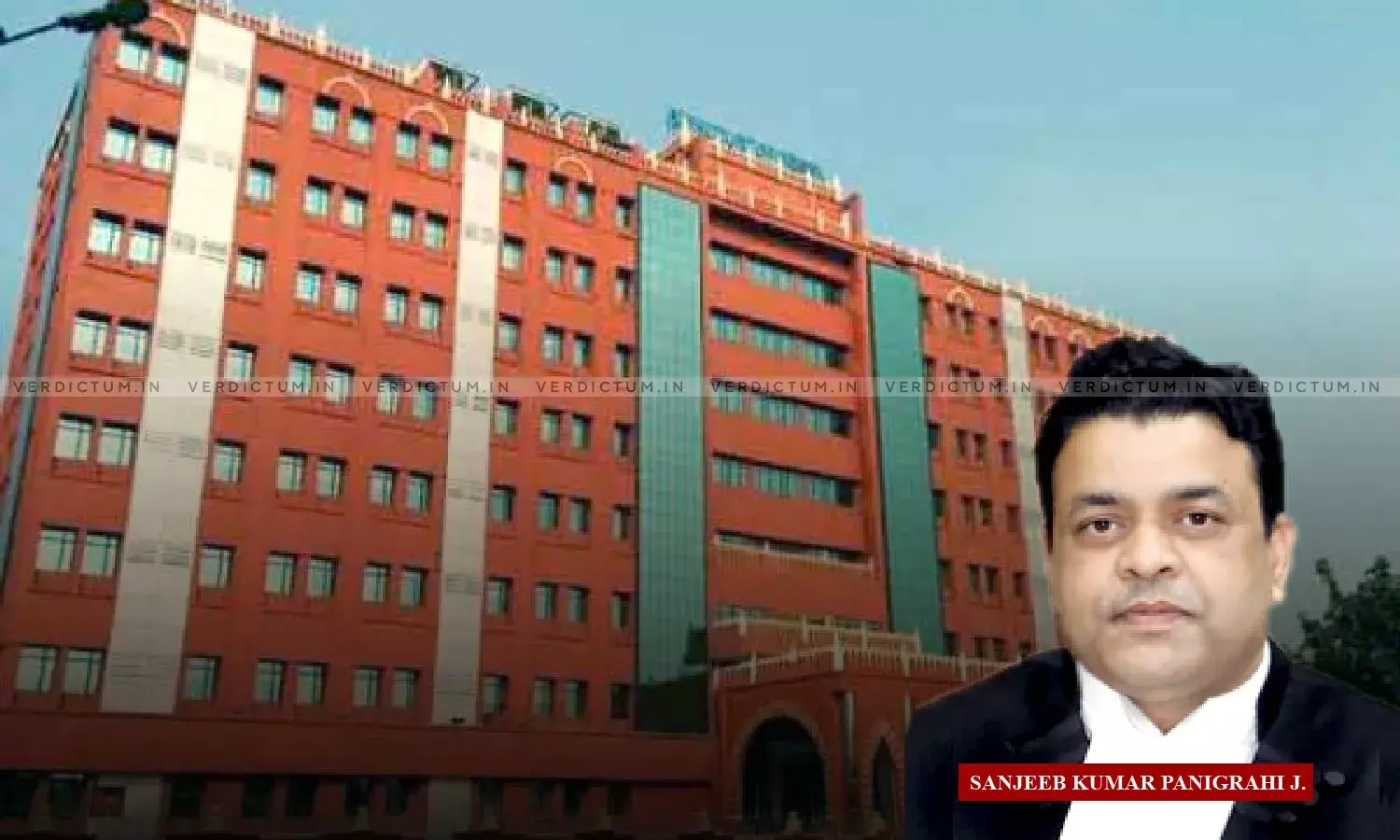
The Bench of Justice Sanjeeb K Panigrahi observed, “Both courts below proceeded on the proposition that a deity is a perpetual minor and that adverse possession can never operate against its property. That proposition cannot be accepted in such absolute terms.”
It added, “The second limb of the substantial question must therefore be answered by holding that the description of a deity as a perpetual minor does not, by itself, exclude a claim founded on adverse possession.”
Senior Advocate Manoj Mishra appeared for the Appellants, while ASC Prabhu Prasanna Behera appeared for the Respondents.
Brief Facts
The suit land belonged to the deity Maa Sureswari Devi of Sonepur Town. The plaintiff claimed that his father had been in possession of the land for more than 50 years, and that he had continued in possession after his father’s death, thereby acquiring a right of occupancy. When the defendants refused his request to settle the land in his favour during the 5th Settlement Operation, he filed a suit.
The civil court dismissed the suit, holding that a deity is a perpetual minor against whom no adverse possession can be pleaded. It found that the receipts showed the plaintiff’s father and brother took the land on an annual lease and paid bhag, which was permissive possession. The district court confirmed the decree in the first appeal.
The second appeal was admitted on the substantial question of whether the evidence was sufficient to prove adverse possession, and whether the law of adverse possession can apply to the properties of a deity.
Contentions of the Parties
The appellants accepted that adverse possession cannot be claimed against a deity, but contended that they were in settled possession of the land since their grandfather’s time and were still cultivating it. It was submitted that a person in settled possession cannot be dispossessed except by due process of law, and that they were entitled to a decree for confirmation of possession.
The respondents contended that the plaintiff and his predecessors were tenants cultivating the land for and on behalf of the deity, and that a suit for adverse possession is not maintainable against a deity. They argued that the plaintiffs had neither pleaded nor proved the essentials of adverse possession, including the date of entry or the date from which possession became adverse. Being trespassers, they submitted, the plaintiffs could not seek confirmation of possession against the true owner.
Observations/Findings of the Court
Relying on the Constitution Bench decision in M. Siddiq v. Mahant Suresh Das (Ayodhya case), the Court noted that the Supreme Court had expressly rejected the contention that a deity stands exempted from limitation merely because it is described as a perpetual minor. It noted that “the need for human agency to represent the deity does not place its property beyond the operation of limitation.”
The Court, however, held that this error did not require reversal of the decrees, since the courts below had also rejected the claim on an independent ground.
On permissive possession, the Court observed that the view of the courts below that permissive possession can never become adverse “requires qualification. The correct position is that permission does not become hostility merely because occupation continues.”
Examining the receipts, the Court held, “Continuity of cultivation is not equivalent to continuity of hostile possession. The period during which the family occupied the land under annual arrangements cannot be counted as adverse merely because the occupation is said to have extended over several decades.”
It found no established commencement of hostile possession or proved conduct repudiating the deity’s title for the prescriptive period.
The Court also held that the plaintiff’s request for settlement of the land in his favour did not prove that hostile possession had commenced. It noted that, under Ravinder Kaur Grewal v. Manjit Kaur, a plaintiff can seek relief on the basis of adverse possession, but held that “The claim here fails because possession having the requisite hostile character has not been established, rather than because such a suit is inherently unavailable.”
On the plea of settled possession, the Court accepted the reliance on Rame Gowda only to the extent that recovery of possession cannot be pursued by unlawful force. It observed, “At the same time, protection against forcible dispossession must be distinguished from recognition of a proprietary or occupancy right over the land.”
Accordingly, subject to the correction of the legal proposition on perpetual minority and the clarification on dispossession, the Court affirmed the judgments of the courts below and dismissed the second appeal.
Cause Title: Ghuturam Bagh (Dead) by his LRs v. Commissioner of Endowments, Bhubaneswar & Anr. [Neutral Citation: 2026:OHC:259]
Appearances:
Appellants: Senior Advocate Manoj Mishra and Advocate Tanmay Mishra.
Respondents: ASC Prabhu Prasanna Behera and Advocate Pratyusha Naidu.