

Evening Courts To Be Launched As Pilot Project In Bihar, Delhi & Andhra Pradesh To Reduce Pendency: Union Law Minister
The Law Minister said the Uniform Civil Code should be implemented across the country and called the Opposition’s agitation against the Special Intensive Revision of electoral rolls unjustified.

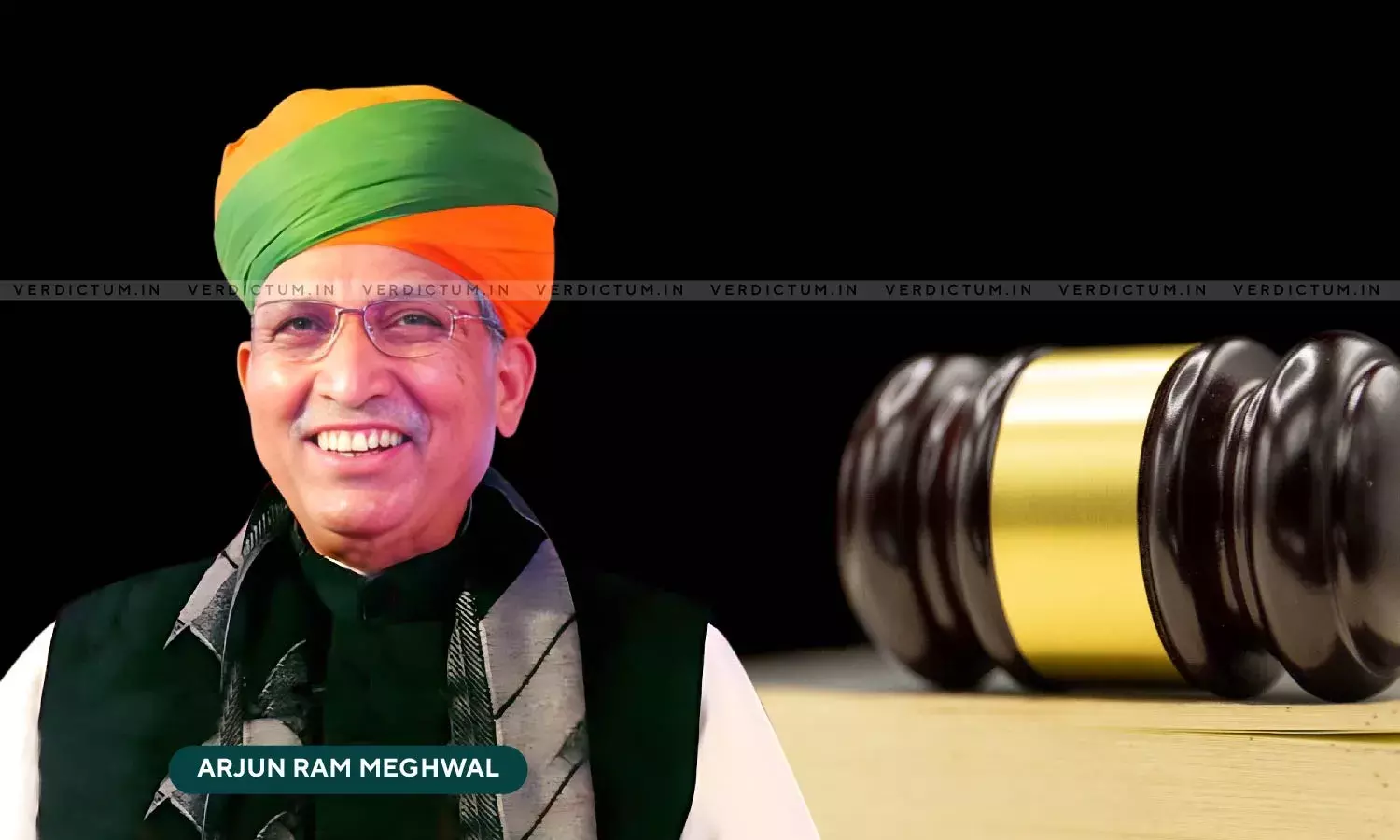
Union Minister of State (Independent Charge) for Law and Justice and Parliamentary Affairs Arjun Ram Meghwal has said that the Central Government will introduce evening courts as a pilot project in Bihar, Delhi and Andhra Pradesh, in collaboration with certain High Courts, to expedite the disposal of pending cases.
In an interview with The New Indian Express, the Minister said that courts functioning during regular hours would sit for a few additional hours in the evening, and that retired judges would also be engaged to support the initiative. After assessing its performance, the Government will consider extending it to other States.
The Minister also spoke on the Uniform Civil Code, the three new criminal laws, women’s reservation and delimitation, and the Opposition’s agitation against the Special Intensive Revision (SIR) of electoral rolls.
Explaining the proposal, the Minister said, “Under the proposed arrangement, courts that function during regular daytime hours will sit for a few additional hours in the evening to hear cases and expedite their disposal.”
The Minister said the pilot project for evening courts is expected to begin soon. Apart from this, the Government is focusing on resolving and disposing of cases through Lok Adalats.
He added that the Government is also focusing on Alternative Dispute Resolution, under which an impartial third party helps disputing parties communicate, negotiate and arrive at a mutually acceptable settlement, thereby reducing the burden on courts. Pre-mediation, he said, can help resolve disputes before they lead to prolonged litigation.
On whether the three new criminal laws have helped make justice delivery faster, the Minister said the initial indications are encouraging, as the laws introduce mechanisms for time-bound proceedings.
He said five e-platforms have been developed under the new laws, initially launched on a pilot basis in Chandigarh, Gujarat and Delhi. These platforms enable electronic sharing of court orders and judgments with prison authorities, “ensuring prompt access and action.”
On whether the Uniform Civil Code (UCC) would remain confined to BJP-ruled States, the Minister said that it was envisaged by the Constitution-makers under Article 44, and that the Supreme Court has also commented on the need for a common civil code on several occasions.
Pointing out that Goa has long had a common civil code, even when the BJP was not in power there, he said, “We believe that the UCC should be implemented across the country, and our government is committed to this objective. It has a constitutional basis, and there is no reason why its implementation should remain restricted to a few states.”
The Minister said the Government is working on both delimitation and the implementation of women’s reservation, and that the relevant Bills have been introduced in the Lok Sabha. He alleged that the Opposition did not extend the necessary support to the legislation.
Responding to the demand that women’s reservation be implemented within the existing strength of 543 Lok Sabha seats, he said this cannot be achieved without delimitation. He added, “A Delimitation Commission is required for the process, and delimitation is linked to the Census.”
On the Opposition’s agitation against the SIR of electoral rolls, the Minister said the exercise is not new and has been conducted 12 times in the country. He described it as a periodic exercise to update electoral rolls and ensure that every eligible citizen can exercise the right to vote, and termed the agitation unjustified.
Responding to the Opposition’s remarks about “regime change”, he said the Constitution-makers envisaged that governments would change through elections, with the people’s mandate determining who governs.
He also rejected the allegation that the Government prevents discussions in Parliament. He said that in Business Advisory Committee meetings and all-party consultations, all parties, including the Congress, agree on the issues to be discussed, but the Opposition neither honours these decisions nor respects the Speaker’s directions.