

Andhra Pradesh High Court's Order Against Junior Advocate: The Stand Of Bar Bodies Across Country
Contradicting the AP Bar Association’s claim of an amicable resolution, the Junior Advocates Association demanded contempt proceedings and the withdrawal of judicial work.

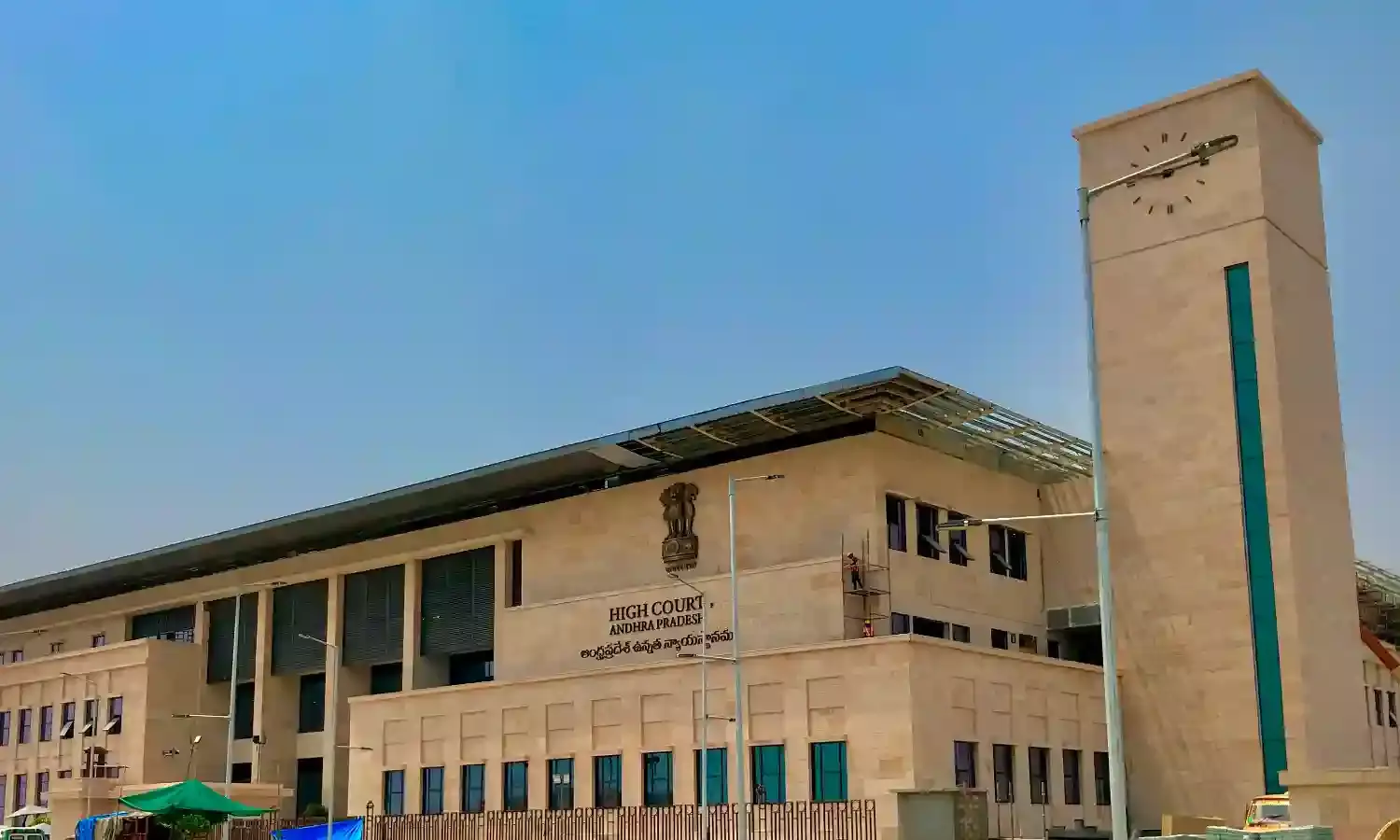
The legal fraternity is witnessing a divide within it following an incident on May 4, 2026, where Justice Tarlada Rajasekhar Rao of the Andhra Pradesh High Court ordered a junior advocate to be taken into 24-hour police custody for an act of perceived courtroom defiance.
While the Andhra Pradesh High Court Advocates’ Association (APHCAA) maintains that the matter was "amicably resolved" through mediation and has cautioned against outside interference based on social media reports, national bodies including the Bar Council of India (BCI) and the Supreme Court Bar Association (SCBA) have expressed "deep shock," characterizing the judge's conduct as a grave threat to judicial temperament.
The escalation reached a new peak today as the Junior Advocates and Law Students Association (JALSAI) and the Bombay Bar Association joined the fray, with the former petitioning the President of India and the Chief Justice for contempt proceedings, arguing that the intimidation of advocates as officers of the court undermines the very foundations of the justice delivery system.
On Monday, May 4, 2026, an incident occurred in the courtroom of Justice Tarlada Rajasekhar Rao at the Andhra Pradesh High Court during a hearing regarding a Look Out Circular. A disagreement arose when a junior advocate continued to argue after the judge indicated an inclination to defer the proceedings. The situation escalated when the advocate allegedly placed a file down loudly, which the judge interpreted as an act of defiance.
Justice Rao then orally directed that the young lawyer be taken into police custody for 24 hours. Despite the advocate apologizing with folded hands and begging for mercy, the judge remained firm in his rebuke. The video of the part of the proceedings where the direction was passed went viral on social media. However, what led to such an order being passed was not clear from the video.
The Bar Council of India wrote a letter, on May 6, 2026, to the Chief Justice of India. It expressed that such actions raise grave questions about judicial temperament, fairness, and proportionality. While a judge may correct or caution an advocate, sending a young member of the profession to custody for a procedural lapse is viewed as grossly inappropriate and damaging to the Bar's confidence in the judiciary. The BCI emphasized that advocates are officers of the court who should be entitled to correction without humiliation, as the relationship between the Bench and the Bar must be founded on mutual respect and institutional grace.
The BCI formally requested the Chief Justice of India to take immediate institutional cognizance of the matter by reviewing the video recordings and the specific orders passed. To preserve the moral authority of the judiciary, the BCI suggested administrative measures, including the withdrawal of judicial work from the judge, his immediate transfer to a distant High Court, and mandatory judicial training focused on court management and Bar-Bench relations.
The Supreme Court Bar Association (SCBA) also expressed "deep concern and shock" regarding the incident and emphasized that the relationship between the Bench and the Bar must be built on mutual respect, dignity, and institutional balance. The SCBA warned that actions leading to the "fear, humiliation, or intimidation" of junior advocates could severely undermine the independence of the Bar and the efficiency of the justice delivery system. Consequently, the association urged the Chief Justice of India to take institutional cognizance of the matter, review the records, and implement corrective measures to preserve public confidence and maintain cordial Bar-Bench relations.
Following this, on May 6, 2026, the Andhra Pradesh High Court Advocates’ Association (APHCAA) Executive Committee met to discuss the matter. They passed a resolution stating that the issue was "amicably resolved" through mediation and timely intervention. The Association noted that the concerned counsel did not file a formal complaint and emphasized the importance of maintaining a harmonious relationship between the Bar and the Bench.
It said, "The said incident was promptly brought to the notice of this Association, and through the earnest mediation and timely intervention of the Andhra Pradesh High Court Advocates' Association, the matter was resolved, without any further escalation."
It also said that the said incident, having found wide circulation on social media platforms, came to the notice of the Bar Council of India and the Supreme Court Bar Association, whereupon both bodies passed formal resolutions not only condemning the incident but also seeking consequential action apparently without knowing the actual facts and circumstances of the issue and without taking cognizance of the fact that the matter had already been resolved.
It said, "This Association, while deeply respecting the concern of the Bar Council of India and the Supreme Court Bar Association for the welfare of the legal profession, is of the considered view that passing of resolutions based solely on social media content, without verifying the complete facts or conducting a proper enquiry, may lead to unintended consequences, may not reflect the ground reality of the situation, and has the potential to adversely affect the harmonious relationship between the Bar and the Bench, which has been nurtured with great care and commitment by the legal fraternity of Andhra."
Today, the Junior Advocates and Law Students Association, contrary to the stand taken by the APHCAA, written a letter/representation to the President of India and the Chief Justice, praying to take action under the Contempt of Courts Act, 1971 against Justice Tarlada Rajasekhar Rao for wilful disregard of binding directions laid down by the Supreme Court in State of U.P. v. Association of Retired Supreme Court & High Court Judges, (2024).
It said, "No Judge is permitted to behave in such fashion or to intimidate advocates with the threat of custody or police action, advocates being officers of the Court entitled to the same dignity and institutional respect accorded to Judges themselves and that no power exists in law to send any person to custody for twenty-four hours even where the arguments advanced are found to be inappropriate, intemperate, or unacceptable to the Court."
It said that such conduct demonstrated a lack of judicial temperament, restraint, and courtesy, effectively treating the advocate as an inferior rather than an officer of the court. JALSAI asserted that these actions interfered with the fearless administration of justice and eroded public confidence in the judiciary.
The association concluded by seeking several directions from the highest authorities. They prayed for the initiation of contempt and criminal proceedings against the judge, the immediate withdrawal of judicial work from him, and the implementation of mandatory training programs for all judicial officers.
Thereafter, today, the Bombay Bar Association also issued a statement expressing "strong disapproval," calling the judge's actions intimidating and humiliating. It said, "Conduct perceived as intimidating, humiliating, or bullying, particularly when directed at younger members of the profession, undermines the relationship of friendship, warmth, trust and confidence that the Bar and Bench share. It also impacts the justice delivery system."
Incidentally, the Akhil Bharatiya Adhivakta Parishad had passed a resolution in its last National Conference held in December 2025 stating that both judges and advocates are duty-bound to maintain decency and decorum - within the courtroom and outside it - in order to preserve public confidence in the justice delivery system. "Judges, as the anchors of courtroom proceedings, must demonstrate patience, dignity, neutrality, and courtesy. Unnecessary irritation, avoidable provocation, personal remarks, or conduct that humiliates or intimidates advocates is inconsistent with the high standards expected from the Bench and is detrimental to a healthy court environment", the resolution said.