

Congress MP Advocate R Sudha Writes To President Seeking Suspension Of Rajiv Gandhi’s Assassin's Enrolment As Advocate
The Member of Parliament cites Section 24A of the Advocates Act, which bars enrollment following conviction for offence involving moral turpitude.
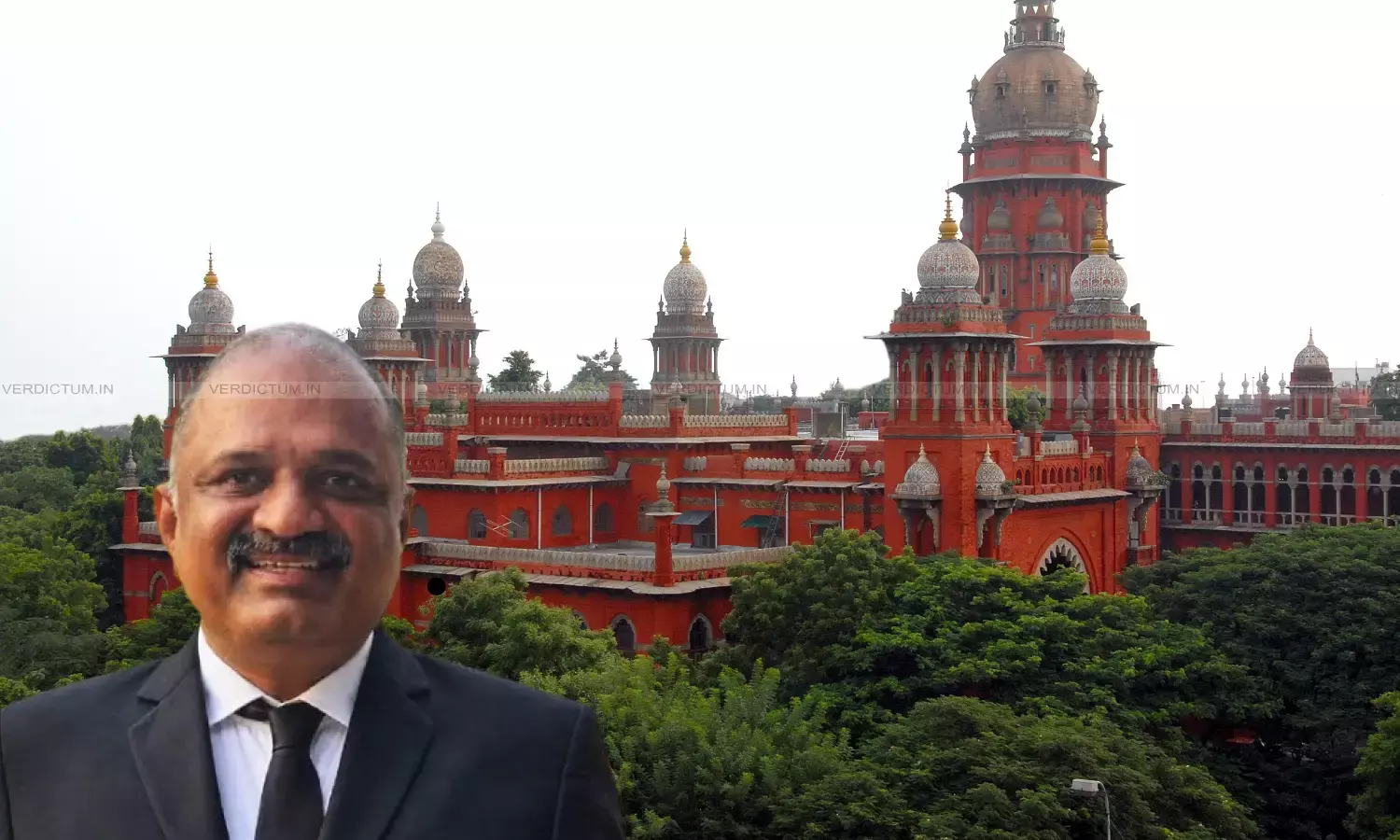
In a letter addressed to the President of India, Congress MP Advocate R. Sudha has sought immediate suspension of the enrolment of A.G. Perarivalan as an advocate by the Bar Council of Tamil Nadu and Puducherry, while also calling for a broader examination of the legal framework governing the entry of convicted persons into the legal profession.
Opening the letter on a note of institutional concern, Advocate Sudha stated that she was writing “not with ink, but with the blood and rage of every right-thinking lawyer and a conscientious person from every corner of this nation,” indicating the gravity with which the issue is viewed within sections of the legal community.
The letter accompanied a detailed timeline tracing the Rajiv Gandhi assassination case from 1991 through the conviction, commutation, and eventual release of Perarivalan in 2022.
Referring to the enrolment of Perarivalan as an Advocate on April 27, 2026, MP Sudha described the development as one that “shall go down in the judicial history of our great nation as a Black Day.” She noted that Perarivalan had been convicted of the assassination of former Prime Minister Rajiv Gandhi, with the conviction having been affirmed by the Supreme Court.
While pointing out that release of Perarivalan in 2022 was not on account of a re-evaluation of guilt but was granted under Article 142 of the Constitution due to “inordinate delay on the part of the Governor in deciding the plea of remission", the MP emphasised that such release does not erase the finding of guilt, stating that “once he was found guilty… a finality of guilt is attained… the subsequent… release… will not wipe off the guilt.”
Addressing the statutory framework, Advocate Sudha referred to Section 24A of the Advocates Act, 1961, which provides for disqualification from enrolment following conviction. While acknowledging that the statutory bar ceases after a prescribed period, the letter emphasised that the provision must be read in its entirety, observing that “a law and rule comprise letter and spirit… the above enrolment is akin to taking only the letter… abandoning the spirit.”
Advocate Sudha further raised concerns regarding the circumstances surrounding the enrolment. The letter emphasised that the Bar Council’s office-bearers had effectively ceased to hold office at the relevant time, owing to pending elections, questioning how such an enrolment could be carried out and asking “what is the tearing hurry? Is it to benefit this one convict?”
Beyond procedural issues, the MP stressed the broader implications for the legal profession. Referring to observations of the Law Commission and judicial pronouncements, the letter emphasised the need to preserve the integrity of the Bar and questioned whether the lapse of time alone can “cleanse such a person of the corrupt character trait… and transform him into a person fit for being enrolled as a member of this noble profession.”
The letter also highlighted the institutional role of advocates, noting that enrolment confers access to court records and the authority to represent litigants. The letter emphasised that permitting such enrolment in the present case could be “disastrous as well as demoralising for youngsters entering the profession,” while also affecting public confidence in the justice delivery system.
Setting out specific reliefs, Advocate Sudha requested that the issue be referred to a larger bench of the Madras High Court for an authoritative determination on the interpretation of Section 24A in cases involving serious offences. Pending such consideration, the letter emphasised that “his enrolment… shall be kept in abeyance, and he shall not be allowed to practice before any court.”
The representation also seeks inquiries into the manner in which the enrolment was processed, including the role of the Bar Council’s office-bearers and the circumstances under which the application was cleared.
The MP requested the appointment of a retired High Court judge to examine the matter comprehensively, while also seeking scrutiny of the circumstances surrounding the enrolment ceremony itself, specifically calling for verification as to whether the Chief Justice of the Madras High Court, Justice Sushrut Arvind Dharmadhikari, had delivered the enrolment address with full awareness that A.G. Perarivalan was among those being administered the oath as an Advocate.
