Manipur High Court Calls For Early Notification Of Mediation Act Provisions Governing Settlement Agreements And Their Enforcement
The Court noted that only 21 of the Mediation Act’s 65 sections had been brought into force, leaving the remaining 44 provisions dormant more than three years after the legislation was enacted.
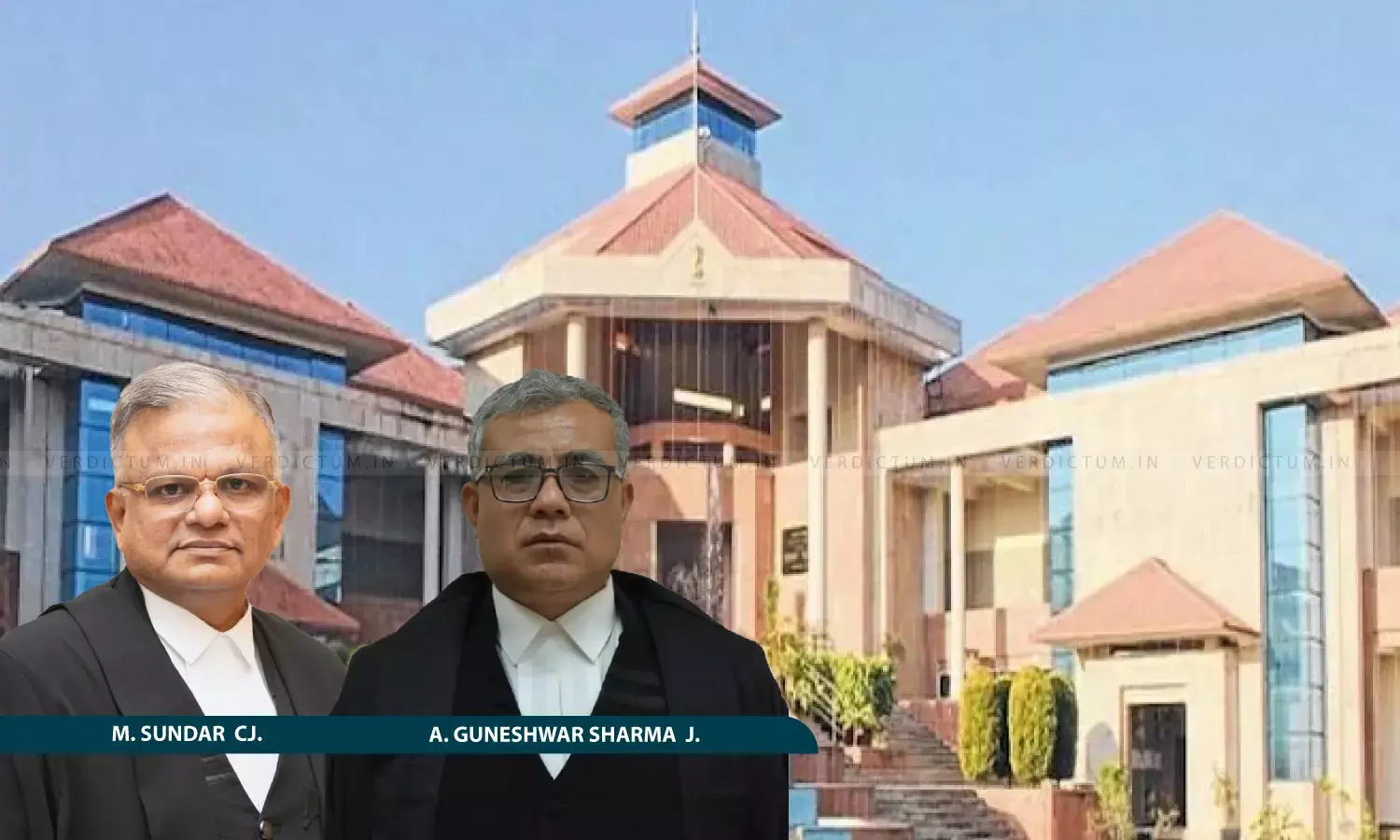
The Manipur High Court has called for the early notification of Sections 19(1) and 27 of the Mediation Act, 2023, along with other important provisions, so that parties do not have to return to court for a judicial order after successful mediation.
The Court said that, because Section 27 had not come into force, a mediated settlement agreement could not yet be enforced as a court decree under that provision.
The Court was hearing a regular first appeal under Section 96 of the CPC that had been settled after being referred to the High Court Mediation Centre.
A Bench of Chief Justice M. Sundar and Justice A. Guneshwar Sharma observed: “There is a need to make a judicial order in terms of said Settlement Agreement because a mediated settlement agreement is not enforceable as a decree of the Court owing to Section 27 of ‘the Mediation Act, 2023 (32 of 2023)’ {‘said Act’ for the sake of brevity and clarity} not having come into force.”
The Bench, accordingly, remarked: “This Court deems it appropriate to take this opportunity and write that it is desirable to have Sections 19 (1) and 27 besides some other important provisions of said Act notified at the earliest so that parties need not come to Court for a judicial order post mediation, be it mediation pending litigation or pre litigation mediation.”
Senior Advocate S. Nepolean appeared for the appellants. Advocate M. Nabakishwor appeared for the respondents.
Background
The regular first appeal was referred to the High Court Mediation Centre under the aegis of the High Court Legal Services Committee. The mediation succeeded, and the parties recorded the terms of their settlement in a written agreement.
Counsel for both sides informed the Court that the agreement had been signed in their presence and countersigned by them. They jointly requested the Court to record the settlement and dispose of the appeal in accordance with its terms.
The Court noted that the Mediation Act, 2023, is dated September 14, 2023, and was published in the Gazette of India the following day. The legislation contained 65 sections, but only 21 had been brought into force through a Central Government notification issued in October 2023. The remaining 44 provisions, including Section 27, had not commenced.
The Court explained that this partial commencement made a further judicial order necessary despite the successful mediation. It also considered a separate difficulty arising from the authority of officers representing the State during mediation.
Court’s Observations
Mediation Act Operates As Conditional Legislation
The Court described the Mediation Act, 2023, as conditional legislation because Section 1(3) permitted different provisions to be brought into force on dates appointed by the Central Government.
The Court reproduced Section 1(3), which states: “It shall come into force on such date as the Central Government may, by notification, appoint and different dates may be appointed for different provisions of this Act and any reference in any such provision to the commencement of this Act, shall be construed as a reference to the coming into force of that provision.”
The Court referred to its earlier decision in Meitankeisangbam (Ongbi) Ibemcha Devi v. Meitankeisangbam Indrajit Singh and Others (2026), which had explained that Sections 19(1) and 27 had not been notified even though the definition of a mediated settlement agreement under Section 3(n) had commenced.
Section 27 Would Make Mediated Settlements Enforceable
The Court explained that Section 19(1) defines the scope of a mediated settlement agreement, while Section 27 provides for its binding effect and enforcement. However, neither Section 19(1) nor Section 27 had been brought into force.
The judgment reproduced Section 27(1): “A mediated settlement agreement resulting from a mediation signed by the parties and authenticated by the mediator shall be final and binding on the parties and persons claiming under them respectively and enforceable as per the provisions of sub-section (2).”
Section 27(2) provides that, subject to Section 28, such an agreement shall be enforced under the CPC in the same manner as a court judgment or decree. Since Section 27 remained dormant, the parties still required the Court to pass an order and draw up a decree in terms of their settlement.
Early Notification Would Avoid Post-Mediation Court Orders
The Court said that Sections 19(1) and 27, along with other important provisions, should be notified at the earliest so that parties would not have to return to court after successful mediation, whether conducted during pending litigation or before proceedings are instituted.
Juridical Entities Should Send Representatives With Written Mandates
The Court separately issued a guideline for cases in which the State, an Indian company or another juridical entity participates in mediation. Such an entity should send a natural person with written authority to represent it, decide matters during the mediation and sign the settlement agreement.
The Court observed that “the entity concerned while going for mediation should send a natural person with a written mandate and authority to represent the entity, take a decision on behalf of the entity in the mediation itself and also to sign the mediated settlement agreement if mediation is successful.”
The first mediation had encountered difficulty because no officer with the necessary mandate was present, even though the process had otherwise succeeded. In the renewed process, authorised officers signed for the State entities, and their separate written mandates were placed before the mediator and the Court.
Conclusion
The High Court disposed of the regular first appeal in terms of the mediated settlement agreement, made the agreement part of its judgment and directed the Registry to draw up a decree. It made no order as to costs.
The Court made the judgment reportable because the need for a judicial order pending the commencement of Sections 19(1) and 27 of the Mediation Act, 2023, and its guideline that juridical entities should send properly authorised representatives to mediation arose regularly in mediation proceedings.
Cause Title: State of Manipur and Others v. Konsam Ningol Khagembam Ongbi Rebina Devi and Another (Neutral Citation: 2026:MNHC:260-DB)
Appearances
Appellants: S. Nepolean, Senior Advocate, instructed by Y. Robert, State Counsel
Respondents: M. Nabakishwor, Advocate