

Community Hall Can't Be Converted Into Place of Worship Without Collector's Prior Approval: Madras High Court Directs Demolition
The Court upheld the Collector’s refusal to approve the conversion after finding that the decision was based on reports from the revenue and police authorities apprehending public-order problems.
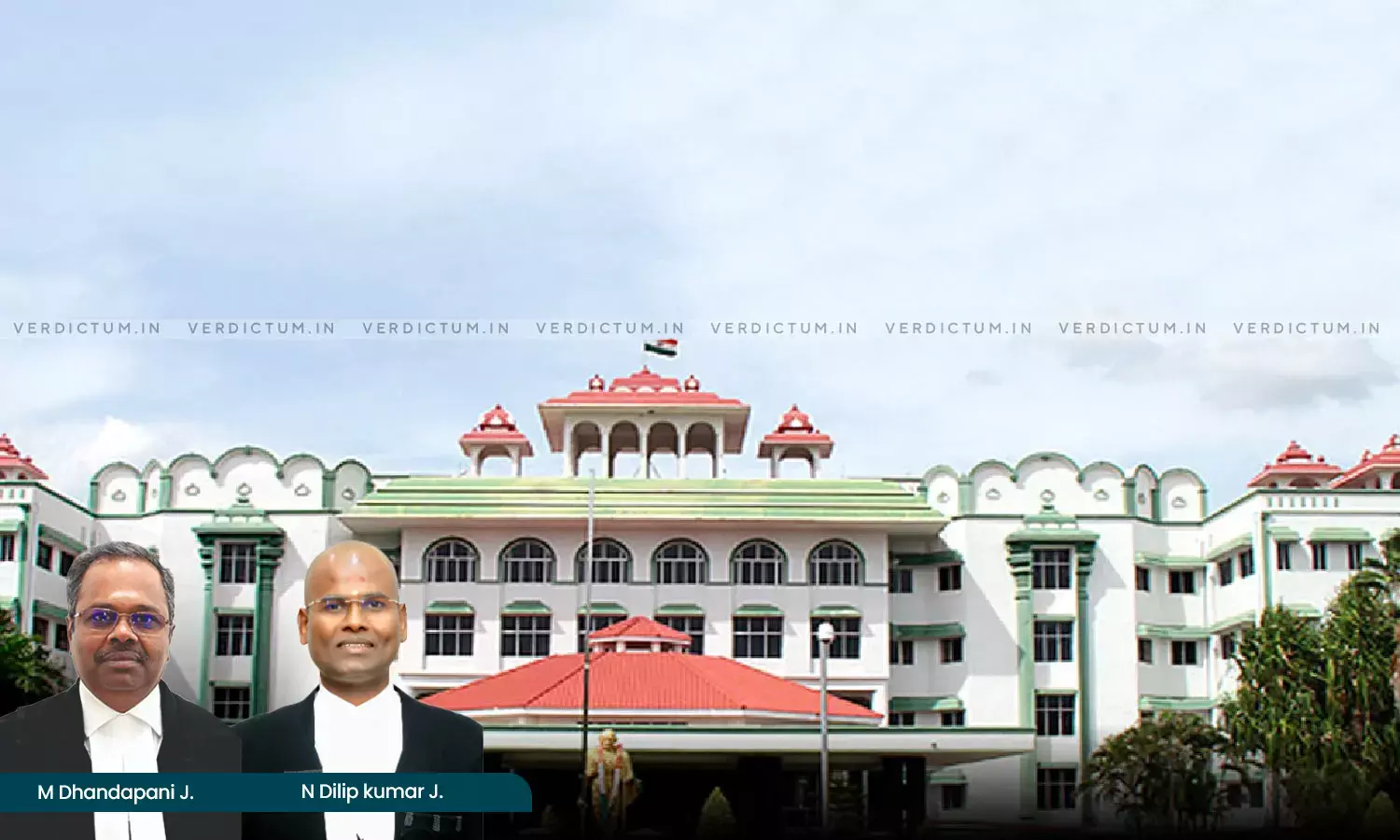
The Madras High Court has held that prior approval of the District Collector is mandatory before constructing a building intended for public worship or religious purposes and upheld the rejection of permission to convert an approved community hall into a church.
The Court directed the District Collector to demolish or pull down the unapproved structure and restore the building as the community hall for which permission had originally been granted. The exercise was directed to be completed within four weeks.
The Court was hearing a writ petition challenging the District Collector’s rejection of the petitioner association’s application to use an approved community hall as a church. The petitioner also sought permission to continue using the building for religious purposes.
A Division Bench of Justice M. Dhandapani and Justice N. Dilipkumar, while referring to the Tamil Nadu Panchayats Rules, 1997, more particularly Rule 4 (3), observed: “The above provision clearly mandates obtaining prior approval before putting up any building, which is intended for public worship or religious purposes and the District Collector may refuse such approval, if in his opinion the same is likely to endanger public peace and order.”
Advocate G. Prabhu Rajadurai appeared for the petitioner. Special Government Pleader M. Mahaboob Athiff appeared for the revenue authorities; Counsel for the State of Tamil Nadu I. Murugesan appeared for the Superintendent of Police; and Advocate S. Moorthy appeared for the impleaded respondent.
Background
The petitioner association had obtained permission from the Village Panchayat in 2014 to construct a community hall. After constructing the hall, it installed a spire without obtaining further approval and began using the building for church services and other religious activities.
Following an earlier public interest litigation concerning the unauthorised use, the High Court permitted the petitioner to apply to the District Collector for approval. The Collector rejected the subsequent application after obtaining reports from the Revenue Divisional Officer and the Superintendent of Police and directed the authorities to remove the unapproved construction.
The petitioner argued that the church had functioned peacefully for about nine years and that no material supported the apprehension of a law-and-order problem. It submitted that the difference between the number of Hindu and Christian families in the locality could not justify the rejection.
The State contended that permission had been granted only for a community hall and not for the construction of a spire or the building’s conversion into a church. It submitted that the revenue and police authorities had apprehended public-order problems and that Rule 4(3) of the Tamil Nadu Panchayats Building Rules, 1997, authorised the Collector to refuse approval on that ground.
The impleaded respondent similarly argued that the construction and use lacked prior approval and that earlier litigation itself demonstrated the concerns surrounding the structure.
Court’s Observations
The High Court referred to Rule 4(3) of the Tamil Nadu Panchayats Building Rules, 1997, which governs the construction of buildings intended for public worship or religious purposes.
The provision states: “No site shall be used for the construction of a building intended for public worship or religious purposes without the prior approval of the Collector of the District who may refuse such approval, if in his opinion the use of the site and buildings is likely to endanger public peace and order.”
The Court held that the provision expressly requires prior approval before a religious building is constructed. It further held that the Collector is empowered to refuse permission when, in the Collector’s opinion, the proposed use is likely to endanger public peace and order.
The Court found that the Panchayat’s approval was confined to constructing a community hall. It noted that the building had initially been constructed for that purpose but was subsequently altered by installing a spire and used for church services without the required approval.
The Court observed that the petitioner itself admitted that the spire had been constructed without permission. Since the building was thereafter used for religious activities, the Court held that prior permission from the District Collector was necessary.
The Court stated: “In the present case, the mandate of Rule 4 (3) has not been complied with and necessarily it has to be held that the building put up is a structure, which is illegal and impermissible.”
The Court added that the earlier public interest litigation had nevertheless given the petitioner an opportunity to seek approval from the Collector, who was required to consider the application in accordance with law.
The Court noted that the Collector had sought reports from the Revenue Divisional Officer and the Superintendent of Police before deciding the application.
The Court stated that the Revenue Divisional Officer’s report referred to issues concerning the revenue records and apprehended a possible law-and-order problem after a field inspection. It further noted that the police report referred to the unapproved construction of a 97-foot spire and similarly recommended against granting permission because of the apprehended public-order consequences.
The Court observed: “The above portion of the counter clearly reveals that before the 1st respondent passed the impugned order, following the legal necessities, the 1st respondent had called for necessary reports from the field, from the Revenue Divisional Officer and the Superintendent of Police regarding the law and order situation that would follow if approval for the religious structure is granted.”
The Court also referred to the State Government’s standard operating procedure requiring an individual or group proposing to construct a religious structure or place of worship to obtain a no-objection certificate from the District Collector before seeking plan approval.
The Court found that the Collector had considered Rule 4(3), the reports from the field authorities and the possible impact upon public peace and tranquillity before rejecting the application.
The Court noted that the reports referred to the demographic composition of the locality and apprehended a law-and-order problem if permission were granted. It further considered the earlier public interest litigation arising from the unauthorised religious use as indicating an existing disagreement concerning the structure.
The Court held that the apprehension could not be brushed aside and that the Collector had acted to prevent the disagreement from developing further.
The Court stated: “In the present case, the authorities have given a report apprehending law and order problem and the peace and tranquillity of the locality being of utmost importance, the rejection order had come to be passed.”
The Court held that the direction to demolish or pull down the unapproved structure was a necessary consequence of the rejection of permission. It also noted that the Collector had instructed the authorities to ensure that no untoward incident occurred during the demolition.
The Court observed: “Therefore, the resultant order of rejection, which is impugned in the present writ petition, cannot be held to be illegal, unreasonable or arbitrary; rather, it is cogent, reasonable and sustainable and the same does not deserve interference at the hands of this Court.”
Conclusion
The High Court dismissed the writ petition and affirmed the District Collector’s order refusing permission to convert the community hall into a church.
The Court directed the Collector to take the necessary steps to demolish or pull down the unapproved structure and restore the building to the community hall for which approval had been granted. It ordered the exercise to be completed within four weeks from receipt of the judgment.
Cause Title: Tirunelveli Diocesan Trust Association v. The District Collector and Others
