Gold Coins With Engraved Pictures Lose Character Of Bullion & Are Taxable As Gold Articles: Madras High Court
The Court held that bars and ingots may constitute bullion, but manufactured gold items carrying markings, embossing or engraving become distinct commercial products once value addition changes the character of the metal.
The Madras High Court has held that gold coins engraved with the picture of Goddess Lakshmi cannot be treated as bullion and are taxable as gold jewellery or gold articles at the higher rate of 4%.
The Court was hearing a Tax Case Revision filed by the State of Tamil Nadu challenging the order of the Sales Tax Appellate Tribunal, which had held that the sale of such gold coins by HDFC Bank was taxable as bullion at 1% and not as gold jewellery or gold articles at 4%.
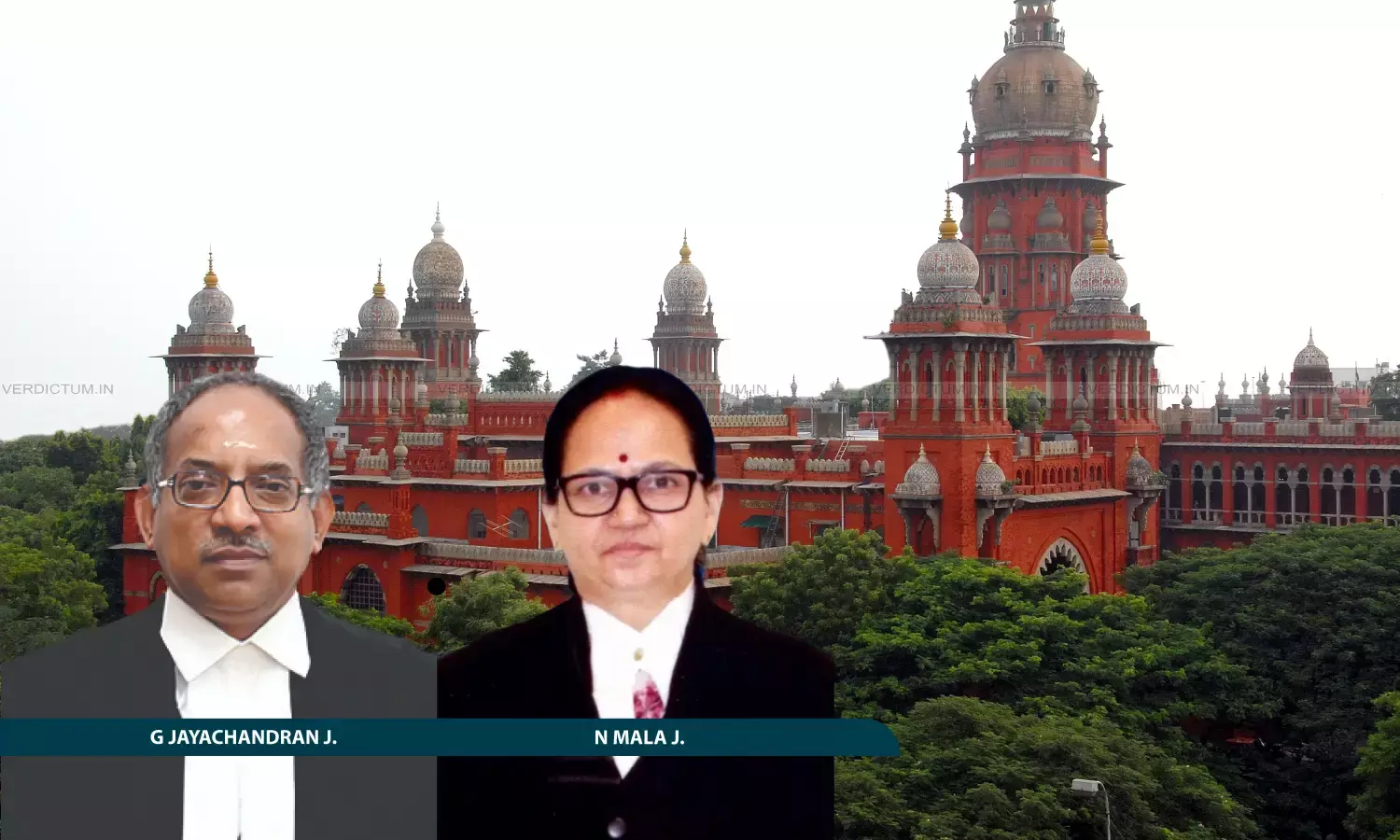
A Bench of Justice G. Jayachandran and Justice N. Mala observed: “Bullion exists either as a bar or an ingot directly from the manufacturing unit. It becomes a common commodity subject to a melting or manufacturing process, getting converted into a different shape with specific markings that cause it lose the character of bullion. More particularly, the embossing or engraving a picture whether it is of Goddess Lakshmi or anything else, carries a value addition that changes the character of the metal.”
Amirtha Poonkodi Dinakaran, Government Advocate (Taxes), appeared for the State.
Background
The dispute arose from the sale of gold coins imported from Switzerland, which were sold with the picture of Goddess Lakshmi engraved on them. The question was whether such coins were to be treated as bullion in uncoined form, taxable at 1%, or as gold jewellery/articles taxable at 4%.
The Sales Tax Appellate Tribunal accepted the bank’s case and held that engraving the picture of Goddess Lakshmi on gold coins did not alter their character as bullion. It accordingly interfered with the differential tax and penalty imposed, and remitted the matter to the Assessing Officer for refixation.
The State challenged the Tribunal’s order before the High Court. It relied on the decision of the Supreme Court in Deputy Commissioner of Sales Tax (Law), Board of Revenue (Taxes), Ernakulam v. G.S. Pai & Co. (1980), contending that manufactured or finished gold articles cannot be treated as bullion merely because they are made of gold.
Court’s Observations
The High Court noted that the short point involved in the appeal was whether the sale turnover of gold coins imported and sold with the picture of Goddess Lakshmi was taxable at 1% or 4%.
The Court observed: “The short point involved in this appeal is whether the respondent bank, dealing in gold coins, is liable to pay tax on its turnover at the rate of 1% or at the rate of 4% in respect of gold coins imported from Switzerland and sold with the picture of Goddess Lakshmi. If the gold coins are considered bullion, the tax rate is 1%, if they are considered articles of gold or jewellery, the tax rate is 4%.”
The Court noticed that the Tribunal had followed judgments of the Kerala High Court, which had held that a gold coin with an embossed picture does not lose its character as bullion or become jewellery unless it is fitted with a hook or otherwise modified to be used as an ornament.
However, the Bench relied on the Supreme Court’s decision in G.S. Pai & Co. (1980), where it was held that entries in sales tax legislation must be understood in common parlance and not in a technical or scientific sense. The Supreme Court had explained that bullion ordinarily means gold or silver in mass, raw material, ingots or bars, and does not include ornaments or finished articles of gold.
Applying that principle, the High Court held that bullion exists either as a bar or ingot directly from the manufacturing unit. Once it undergoes a melting or manufacturing process and is converted into a different shape carrying specific markings, it loses the character of bullion.
The Court further held that engraving or embossing any picture on gold, including the picture of Goddess Lakshmi, involves value addition and changes the commercial character of the metal. It noted that bars or ingots had undergone a manufacturing process and were transformed into coins carrying the picture and weight of the coin.
The Bench observed: “While so, these finished metal items cannot be treated on par with ingots or into any unwrought body, of any degree of fineness. In common trade practice, gold coins with engraved pictures are not sold for a price par with bullion, but with a value addition that includes making charges and wastage. It is not the case of the bank that they sold these gold coins on par with bullion rates. Further, for a part of the turnover, the respondent bank itself realized that the sale of these gold coins is taxable under the category of gold jewellery/articles and had collected the higher rate of tax (i.e.) 4%.”
The Court therefore accepted the distinction drawn by the Appellate Authority between bullion and manufactured gold articles. It held that while bars and ingots may be classified as bullion, manufactured items and articles form distinct commercial products and cannot be classified as bullion.
The Bench held: “As a result, we uphold the findings of the Appellate Authority, which has observed that while bars and ingots are bullion, manufactured items and articles are distinct commercial products and cannot be classified as bullion.”
Conclusion
The High Court allowed the Tax Case Appeal filed by the State of Tamil Nadu.
The Court set aside the order of the Sales Tax Appellate Tribunal and restored the assessment order passed by the Appellate Authority.
Cause Title: The State of Tamil Nadu v. M/s HDFC Bank Ltd.