

Religious Practices Cannot Pollute Rivers Or Harm Ecology: Madras High Court On Tamirabarani River Pollution
The Court said that the stakeholders must be heard before issuing directions affecting the religious sentiments of millions of Hindus, even as it proposes measures to prevent pollution.

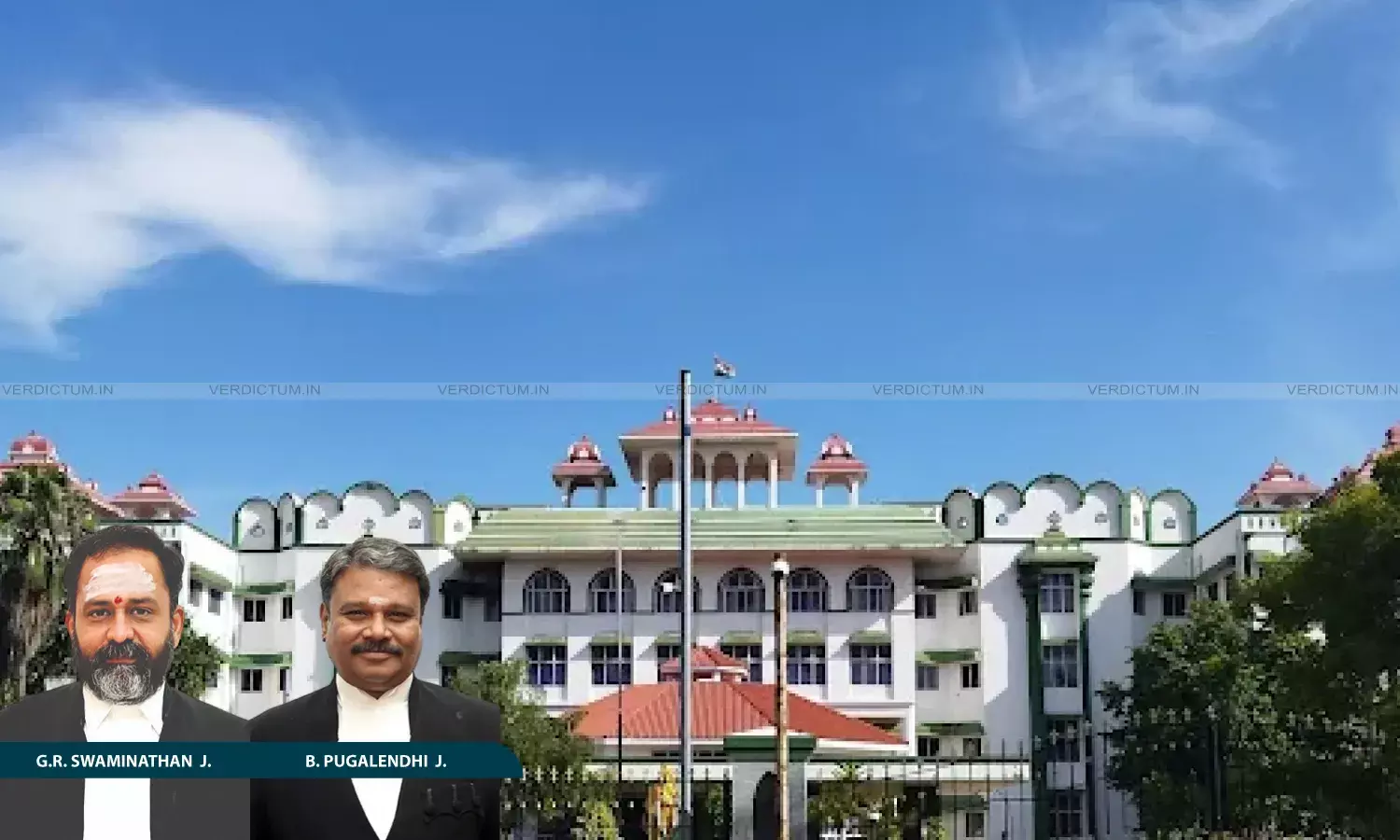
The Madras High Court has observed that Article 25 of the Constitution of India is subject to public health and that religious practices cannot pollute rivers or harm ecology. Expressing serious concern over the large-scale dumping of clothes, slippers, plastic, glass and other ritual offerings into the Tamirabarani River during ceremonies performed for deceased ancestors, the Court emphasised that no one has the right to pollute a water body in the name of religion.
While recognising that the issue concerns the beliefs of millions of Hindus, the Court clarified that religious practices cannot be permitted where they damage the environment or affect the rights of others. It also referred to the fundamental duties under Article 51A(g) and Article 51A(h) of the Constitution of India, calling upon citizens to protect rivers and develop scientific temper.
A Division Bench of Justice G.R. Swaminathan and Justice B. Pugalendhi observed, “…Believers can do what is spiritually beneficial to them provided it has no adverse implication for ecology and does not violate the rights of the other members of the society. Article 25 of the Constitution makes the freedom to practise religion subservient to public health. Tamirabarani has been a perennial river catering to the drinking water needs of crores of people…No one has the right to pollute a water body even in the name of religion. This can be taken as an axiomatic proposition. If statutory backing has to be shown, one can straightaway cite Section 36 of the Tamil Nadu Public Health Act, 1939 which prohibits pollution of water courses. More important is Section 24 of The Water (Prevention And Control Of Pollution) Act, 1974…”.
“We therefore propose to direct the authorities to ensure that there is no further pollution of the river Tamirabarani in the guise of performing rituals for the departed. We are however conscious that the issue concerns the beliefs and sentiments of millions of Hindus. An order passed in a public interest litigation operates in rem and therefore, it is imperative that without hearing the stakeholders, orders prejudicial to their interest should not be passed. Therefore, it would not be appropriate to pass any order without hearing them even though we only propose to enforce a statutory mandate…”.
Advocate Ramasamy appeared for the petitioner and M. Kannan, Govt Advocate appeared for the respondent.
The case arose from a writ petition challenging a reminder notice issued after an eviction order under Section 6 of the Tamil Nadu Land Encroachment Act, 1905. During the hearing, the Court's attention was drawn to the large-scale dumping of ritual offerings into the Tamirabarani River, prompting it to examine the issue of river pollution.
The Court interacted with environmental activist Moorthy, who has been coordinating clean-up efforts along the Tamirabarani River. He informed the Bench that over one tonne of discarded clothes and ritual articles are dumped into the river every day, while waste collected between 7 May and 28 May, 2026 included 86–90 tonnes of clothes, 2.2 tonnes of holy ash, 1,385 kg of plastic waste, 374 kg of sanitary waste, and large quantities of glass bottles, slippers and other refuse.
Taking note of the environmental impact, the Court observed that synthetic fabrics become breeding grounds for bacteria such as E. coli, while discarded clothes also entangle and kill protected turtle species inhabiting the river. It further noted that broken photo frames and glass pose a threat to aquatic life and workers engaged in cleaning operations.
The Court directed the District Collector, Tirunelveli, to issue a public announcement regarding the proposed directions and invited religious organisations and stakeholders to present their views. The matter has been listed for July 16, 2026, when the administration is expected to submit a comprehensive plan to prevent further pollution of the Tamirabarani River.
Cause Title: Sivanupandian v. District Collector & Ors., WP(MD) No. 18560 of 2026.
Appearances:
Petitioner: Ramasamy S, Advocate.
Respondent: M. Kannan, Govt Advocate, M/s. V. R. Shanmuganathan, N. Sharmiya, Advocates.