

Mere Religious Use Or Existence Of Tomb Or Shrine Not Sufficient To Declare Property As Waqf: Madras High Court
The Court held that the mere existence of a religious structure does not automatically confer Waqf character upon a property unless the mandatory statutory requirements under Sections 4 and 5 of the Waqf Act are complied with and there exists proof of permanent dedication recognised under Muslim law.
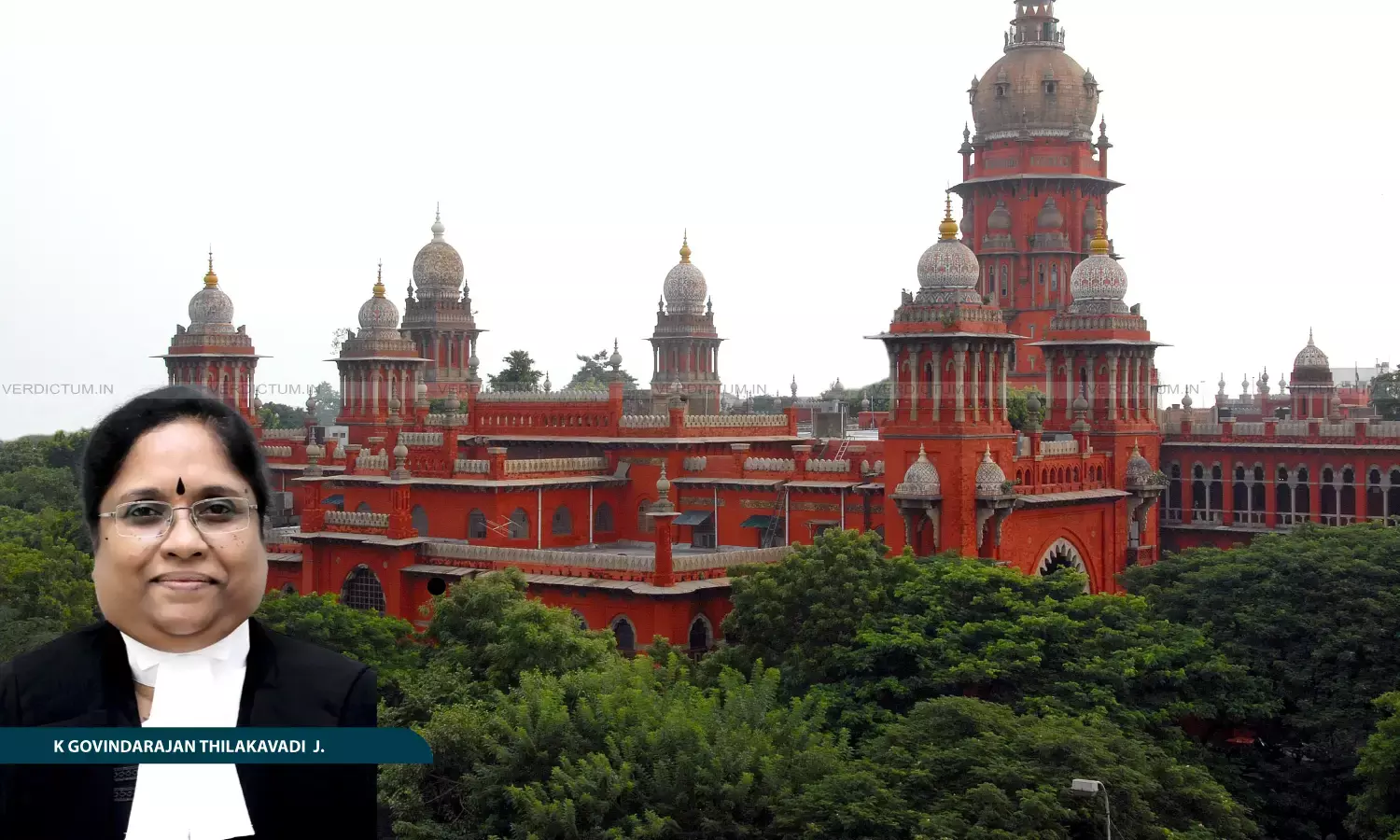
The Madras High Court has held that mere religious use of a property or existence of a tomb or shrine is not by itself sufficient to confer Waqf status unless there exists proof of permanent dedication recognised under Muslim law and the mandatory statutory requirements under the Waqf Act, 1995 are complied with.
The Court observed that a Dargah can be declared as Waqf property only after completion of the statutory survey and notification process contemplated under Sections 4 and 5 of the Waqf Act.
The Court was hearing a statutory appeal filed by the Mutawalli of “Sarkar Syed Habibullah Sha Khadari Arif Rabbani Hazarath Dargah”, challenging the order of the Tamil Nadu Waqf Tribunal which had upheld the appointment of the fifth respondent as Mutawalli by the Tamil Nadu Waqf Board.
A Bench of Justice K. Govindarajan Thilakavadi observed: “... a Dargah may be declared as Waqf only if it satisfies the legal requirements under the Waqf Act, 1995, …Mere religious use or existence of a tomb or shrine is not automatically sufficient. There must be permanent dedication of property by a Muslim for purposes recognised by Muslim Law as pious, religious, or charitable, which is not found in the present case.”
The Court also held, “If a Dargah has never been surveyed, registered or notified as Waqf, the Waqf Board ordinarily cannot assume automatic control merely because it is a Muslim Religious Institution. Jurisdiction depends upon proof that the property is legally Waqf.”
Advocate V. Anusha appeared for the appellant. Advocate C. Shankar appeared for the respondents.
Background
The dispute concerned “Sarkar Syed Habibullah Sha Khadari Arif Rabbani Hazarath Dargah” situated at Kamaraj Road, Triplicane, Chennai. The appellant claimed that the Dargah was nearly 240 years old and had been continuously maintained by his family for over four decades.
According to the appellant, the land on which the Dargah stood belonged to the Public Works Department and was classified as Government poromboke land. The appellant contended that despite the absence of any statutory survey or notification declaring the property as Waqf, the Tamil Nadu Waqf Board appointed the fifth respondent as Mutawalli and directed registration of the Dargah under Section 36(4) of the Waqf Act.
The appellant challenged the action of the Waqf Board before the Tamil Nadu Waqf Tribunal, contending that the property had never been legally declared as Waqf and that the Board lacked jurisdiction to exercise supervisory control over the institution.
The Waqf Board and the fifth respondent, however, contended that the Dargah constituted a public Waqf and that the surrounding lands historically functioned as a burial ground. They further asserted that registration of Waqf was merely a statutory formality and that long-standing religious use itself established the Waqf character of the institution.
The Public Works Department supported the appellant and stated that the land was Government poromboke land leased to the Bharat Scouts and Guides and that the Dargah land had been fraudulently registered without the concurrence of the Department.
Court’s Observation
The High Court undertook an extensive examination of the statutory scheme under the Waqf Act, 1954 and the Waqf Act, 1995, governing declaration and notification of Waqf properties.
The Court observed that under Muslim law, a Waqf may arise through permanent dedication of movable or immovable property by a Muslim for purposes recognised as pious, religious or charitable. In the absence of express dedication, Waqf may, in certain circumstances, be inferred through long public use and conduct.
However, the Court clarified that religious use alone does not automatically convert every Dargah or tomb into Waqf property.
The Bench observed: “Every grave or Dargah is not automatically Waqf property. Existence of a Muslim endowment is required. Courts often distinguish a private family tomb and a Saint shrine maintained as a public religious endowment.”
The High Court held that the statutory procedure prescribed under Sections 4 and 5 of the Waqf Act is mandatory before any property can be recognised as Waqf property.
The Court explained that a preliminary survey must first be conducted by the Survey Commissioner, followed by submission of a report to the State Government, settlement of disputes arising therefrom and eventual publication of the list of Waqfs in the Official Gazette by the Waqf Board.
The Court observed: “A plain reading of the provisions of the above two Acts would reveal that the notification under Section 5 of both the Acts declaring the list of the Waqfs shall only be published after completion of the process as laid down under Section 4 of the above Acts. Therefore, conducting the surveys before declaring a property a Waqf property is a sine qua non.”
The Court noted that, admittedly, no statutory survey had been conducted in respect of the disputed property and that the land had never been notified as Waqf property in the Government Gazette.
The High Court rejected the contention that mere religious usage or the existence of a Dargah automatically established a Waqf character.
The Court further held that relevant evidence to establish Waqf status would include Waqf deeds, revenue records, inam register entries, historical grants, gazette notifications, entries in Waqf survey reports and long-standing management as Waqf.
In the present case, however, the Court found that no such material had been produced by the respondents.
The Bench observed: “There is nothing on record to show that the land in which the Dargah is situate belongs to the Dargah. Therefore, the alleged use of the disputed land is not established to construe it as Waqf by user in the absence of evidence to show that it was so used.”
The Court held that the Waqf Board cannot automatically exercise supervisory jurisdiction merely because an institution is associated with Muslim religious practices.
The Court further held that appointment of a Mutawalli necessarily presupposes the existence of a legally recognised Waqf and that the Board must first establish jurisdictional facts before assuming control over the institution.
The Court also noted that both the appellant and the fifth respondent were independently claiming founder rights over the Dargah and observed that such disputes would have to be resolved before a competent civil court.
Conclusion
The Madras High Court allowed the appeal and set aside the resolution passed by the Tamil Nadu Waqf Board appointing the fifth respondent as Mutawalli of the Dargah.
The Court held that in the absence of a mandatory statutory survey, Gazette notification and proof of permanent dedication under Muslim law, the disputed Dargah property could not presently be treated as Waqf property in accordance with law.
Cause Title: Sarkar Syed Habibullah Sha Kahdari Arif Rabbani Hazarat Dargha v. The Tamil Nadu Waqf Board & Ors.
Appearances
Appellant: Advocate V. Anusha for the Appellant
Respondents: Advocates C. Shankar & N.A. Nassir Hussain, Additional Government Pleader
