Public Library Book Procurement Scam: Madras High Court Orders DVAC FIR, Account Freeze And Action Against Officials
The Court also directed the immediate withdrawal of suspect books from public access, the identification of every person involved in the procurement process and the disclosure of the exact amount spent from the public exchequer.
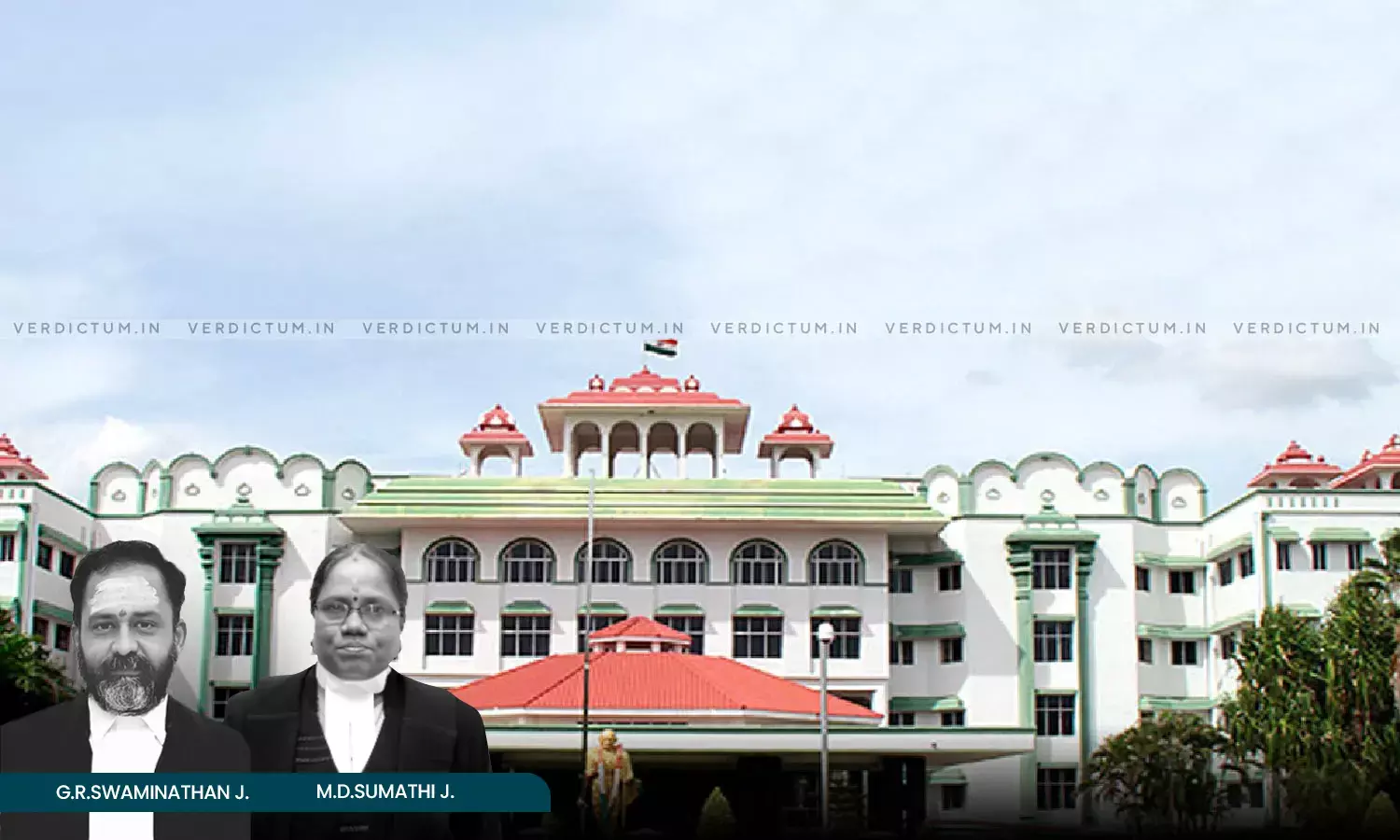
The Madras High Court has directed the Directorate of Vigilance and Anti-Corruption to register an FIR forthwith over alleged fraudulent procurement of books for Tamil Nadu’s public libraries.
The High Court also ordered the immediate freezing of bank accounts connected with a publication and its proprietor and directed the Government to initiate disciplinary action, including suspension, against the officials involved.
The Court was hearing a contempt petition alleging non-compliance with its earlier judgment prescribing safeguards for the procurement of books for public libraries. The petitioner contended that the directions had been breached through the purchase of suspect books from dubious entities.
A Division Bench of Justice G.R. Swaminathan and Justice M.D. Sumathi observed: “Even though the facts tumbled out of the closet last week, no FIR has been registered. The DVAC is said to be conducting a detailed enquiry (DE in short). When we directed registration of a criminal case forthwith, the learned Public Prosecutor intervened to suggest that we could await the conclusion of the enquiry. With respect, we posed a direct question to the learned Public Prosecutor - Would you deny that a crime has been committed ?. The learned PP with his usual fairness answered in the negative. If that be so, we wondered as to what prevented the DVAC from registering an FIR against unknown public servants. Crores of rupees has gone out of the public exchequer. It is too obvious that a crime of this humongous proportion could not have taken place but for the active involvement of government servants. Not only the BNS provisions but also the provisions of the Prevention of Corruption Act stand attracted.”
Senior Counsel K.P.S. Palanivel Rajan appeared for the petitioner. Additional Advocate General B. Saravanan represented the respondents. State Public Prosecutor John Sathyan also appeared.
Background
In its 2024 judgment, the Court had dealt with allegations that nationalised or copyright-expired works were being republished under altered titles and authors’ names and repeatedly procured for public libraries. The Court had described such practices as nothing short of a scam.
The earlier judgment directed that procurement conform to the State’s Transparent Book Procurement Policy. It required a functional website carrying procurement notifications, shortlisted books and objections from the public. It also directed the Government to inquire into earlier unfair practices, identify responsible officials, take appropriate action and publish an action-taken report.
In the present order, the Court recorded that allegations concerning procurement for a public library had triggered widespread public criticism. It noted that the Government had acknowledged serious failure in the system, relieved the Director of Public Libraries of that responsibility, cancelled the existing procurement orders and initiated a DVAC inquiry.
The respondents submitted that the Government and the DVAC were actively dealing with the matter. The Court, however, held that this assurance was insufficient because its binding procurement directions were required to be implemented in letter and spirit.
Court’s Observations
Earlier Directions Could Not Remain On Paper
The Court said that it was intervening because the alleged violations directly implicated the authority of its earlier judgment. It observed that judicial orders would lose respect if they remained unenforced.
The Court stated: “When it has been brought to our notice by the petitioner that our directions have been brazenly and egregiously breached, it would ill-become of us if we keep quiet.”
It noted that the earlier directions reflected the values underlying the Tamil Nadu Public Libraries Act, 1948, and the statutory rules governing the quality and suitability of books purchased for libraries.
Bogus And Falsely Attributed Books Breached Public Duty
The Court observed that public libraries were information platforms established to provide access to knowledge, particularly to people who might otherwise be unable to obtain standard books. Readers were entitled to presume that books placed in public libraries were authentic.
The Bench held: “By stacking bogus books with false content and books by phantom authors, not only the statutory duty cast under the Tamil Nadu Public Libraries Act, 1948 is being breached, the right to receive accurate and quality information is also infringed.”
It said that books containing dubious content and false narratives fell within the prohibition against works of doubtful taste. The Court added that AI-generated and plagiarised works would also fall within that category.
FIR Could Not Await Completion Of Detailed Enquiry
The Court rejected the suggestion that registration of a criminal case should await completion of the DVAC’s detailed enquiry. It reasoned that the admitted circumstances disclosed a crime involving substantial public money and that an FIR could be registered against unknown public servants while responsibility was investigated.
The Court directed: “We also direct the DVAC to forthwith register an FIR.”
It observed that the alleged conduct attracted provisions of the Bharatiya Nyaya Sanhita, 2023, as well as the Prevention of Corruption Act, 1988.
Officials, Expenditure And Suspect Books Must Be Identified
The Court directed the Director of Public Libraries to provide the names and particulars of officials responsible for fraudulent procurements during the preceding years so that they could be impleaded in the contempt proceedings.
The Bench ordered: “The Librarians concerned shall forthwith take inventory of such suspect books and make them unavailable to the reading public.”
It also directed the Government to take immediate disciplinary action, including suspension, against the officials involved. The authorities were required to disclose the exact amount spent on the suspect books, produce copies of all relevant records and file an affidavit setting out the complete sequence of events. Every person involved, from the highest to the lowest level, was required to be identified and named.
Conclusion
The High Court ordered the DVAC to register an FIR forthwith and directed the immediate freezing of the bank accounts identified in the order. It required disciplinary action, including suspension, against involved officials and directed librarians to remove suspect books from public access after preparing an inventory.
The Director of Public Libraries was required to disclose the officials responsible, the complete course of events and the precise expenditure incurred. The contempt petition was listed for further hearing on November 11, 2026, at 2.15 p.m.
Cause Title: Ramasubbu v. K. Gopal and Another
Appearances
Petitioner: K.P.S. Palanivel Rajan, Senior Counsel, for P.M. Vishnu Varthanan, Advocate
Respondents: B. Saravanan, Additional Advocate General, assisted by M. Kannan, Special Government Pleader; John Sathyan, State Public Prosecutor