

Industrialists Like Sridhar Vembu Of Zoho Can Help With Temple Economics: Madras HC Orders Payment Of Living Wage To All Public Temple Staff
The Madras High Court was considering a Petition seeking a direction to the respondents to pay the salaries to Archakas and all other temple employees throughout the State of Tamil Nadu.

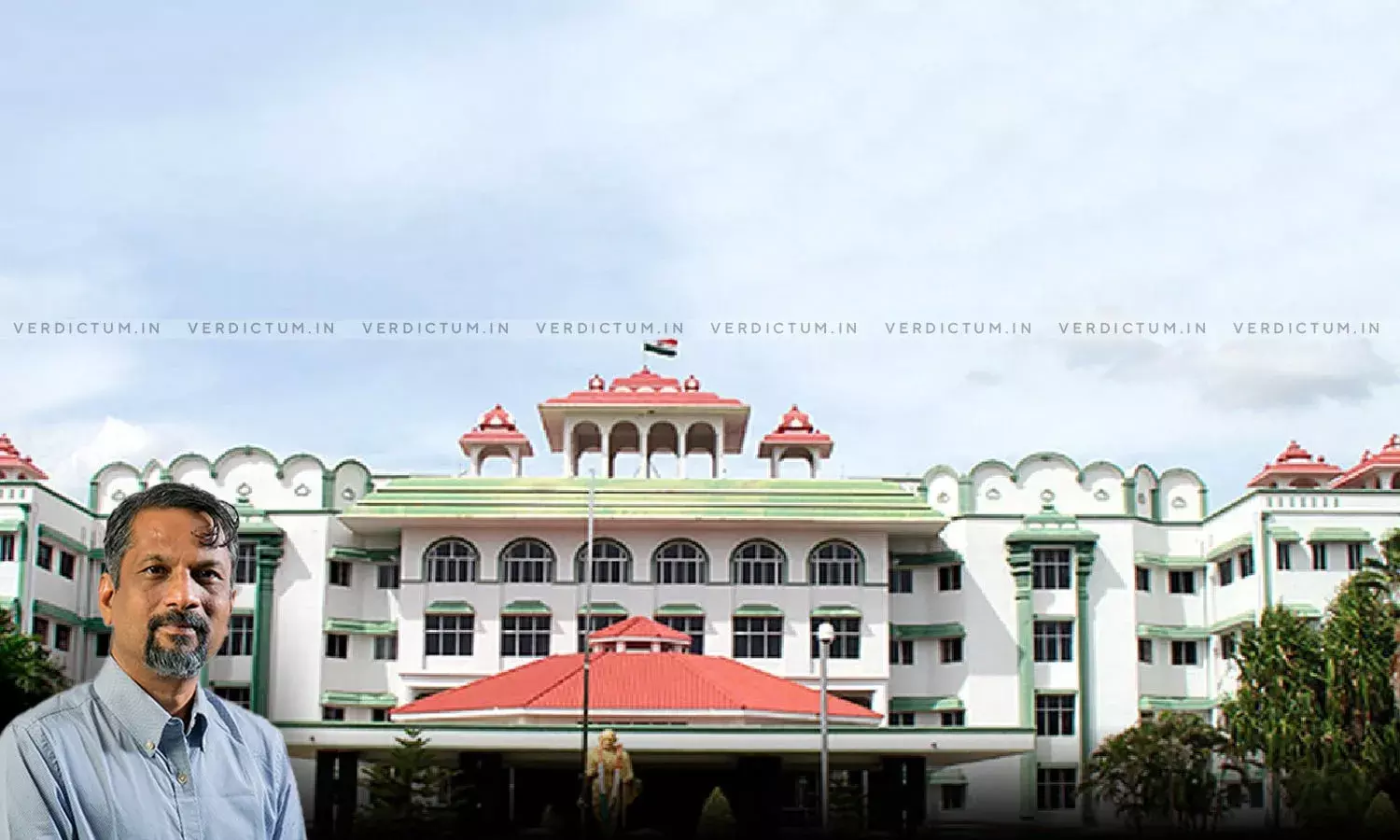
While directing the Tamil Nadu HR&CE Department to ensure that living wage is paid to each of the staff working in the public temples under it, the Madras High Court has highlighted the concept of temple economics and suggested that industrialists such as Sridhar Vembu of Zoho can be associated and called upon to come out with appropriate revenue modules.
The High Court was considering a Petition filed under Article 226 of the Constitution seeking a direction to the respondents to pay the salaries to Archakas and all other temple employees throughout the State of Tamil Nadu, as per the Minimum Wages Act and on par with Government servants, irrespective of the income of the individual temples, in the light of a Direction issued by the Division Bench of the High Court.
The Bench comprising Justice G.R. Swaminathan and Justice P. Murugan held, “India boasts of a huge bureaucracy. The services of the staff of the HR&CE department can be enlisted and harnessed for this purpose. There are several well known industrialists. For instance, Sridhar Vembu of Zoho comes to our mind. His father was a court staff. His is an inspiring story of success. Such persons can be associated and called upon to come out with appropriate revenue modules. There is something called temple economics. It is time to embrace technology. The social media can be deployed effectively to mobilise support for this noble cause. We expect the HR&CE Commissioner to take immediate steps in this regard. It is he who must bell the cat. When binding judicial direction is there to ensure payment of fair wage to the temple staff, the Department and its officials cannot be permitted to keep quiet.”
Advocate K.Subbu Ranga Bharathi represented the Petitioner, while Additional Government Pleader A. Sivasubramanian represented the Respondent.
Factual Background
When the Division Bench of the Madras High Court comprising Justice R.Mahadevan and Justice P.D.Audikesavalu initiated suo motu action with regard to temple managements, they paid particular attention to the salary drawn by the staff. The salary and other service and retirement benefits of all the staff of the temple including that of the archakas and oduvars were ordered to be fixed as per the provisions of the Minimum Wages Act and on par with the Government servant.
Aggrieved by the aforesaid direction, review applications were applications were filed. These were disposed of witht the observation that the minimum wages Act is applicable to employees of the temples also. It was further observed therein that there are certain ways to generate income for paying salary to the temple staff, such as, the ceiling on the expenses fixed by the State can be increased, the surplus funds of other temples and the funds from the common good fund can be utilised, unnecessary expenses at the cost of the temples have to be cut down, and the State, if necessary, should also contribute for the same.
Reasoning
The Bench noted that even though these orders were passed more than three years ago but these were not enforced till date. “Article 226 of the Constitution of India empowers the High Court reach injustice wherever it is found and redress the situation. Our conscience is shocked that thousands of temple staff are paid atrociously poor pay. The amount paid to them would be hardly sufficient to keep the body and soul together”, it observed.
Considering that the lowest National Floor Level Minimum Wage is Rs 176 per day, the Bench stated, “What is drawn by many temple staff in Tamil Nadu is lower than that. That is why, the Hon’ble Division Bench in the aforesaid suo motu writ petition gave a positive direction. Since it has not been complied with, we are constrained to step in to reiterate the said directions.”
The Bench clarified that the HR&CE Department, which has supervisory jurisdiction over the temples, cannot plead lack of resources as there are several ways to raise funds. The Bench suggested that devotees must be motivated to form groups and each group must be in charge of a particular temple.
The Bench thus allowed the petition with a direction to the respondents to ensure that a living wage is paid to each of the staff working in the public temples coming under the purview of the Tamil Nadu HR&CE Department. “We grant two months’ time to the Commissioner of HR&CE to submit an Action-Taken Report”, it ordered while closing the connected miscellaneous petition.
Cause Title: Periyanambi Narasimha Gopalan v. The Secretary to Government (Case No.: WP(MD) No. 30465 of 2026)