

‘Committee Should Have Been Little More Sensitive’: Madras High Court Permits Bangladeshi Woman To Donate Her Kidney To Minor Son
The Madras High Court was considering a Petition seeking the quashing of the impugned order passed by the Authorisation Committee.

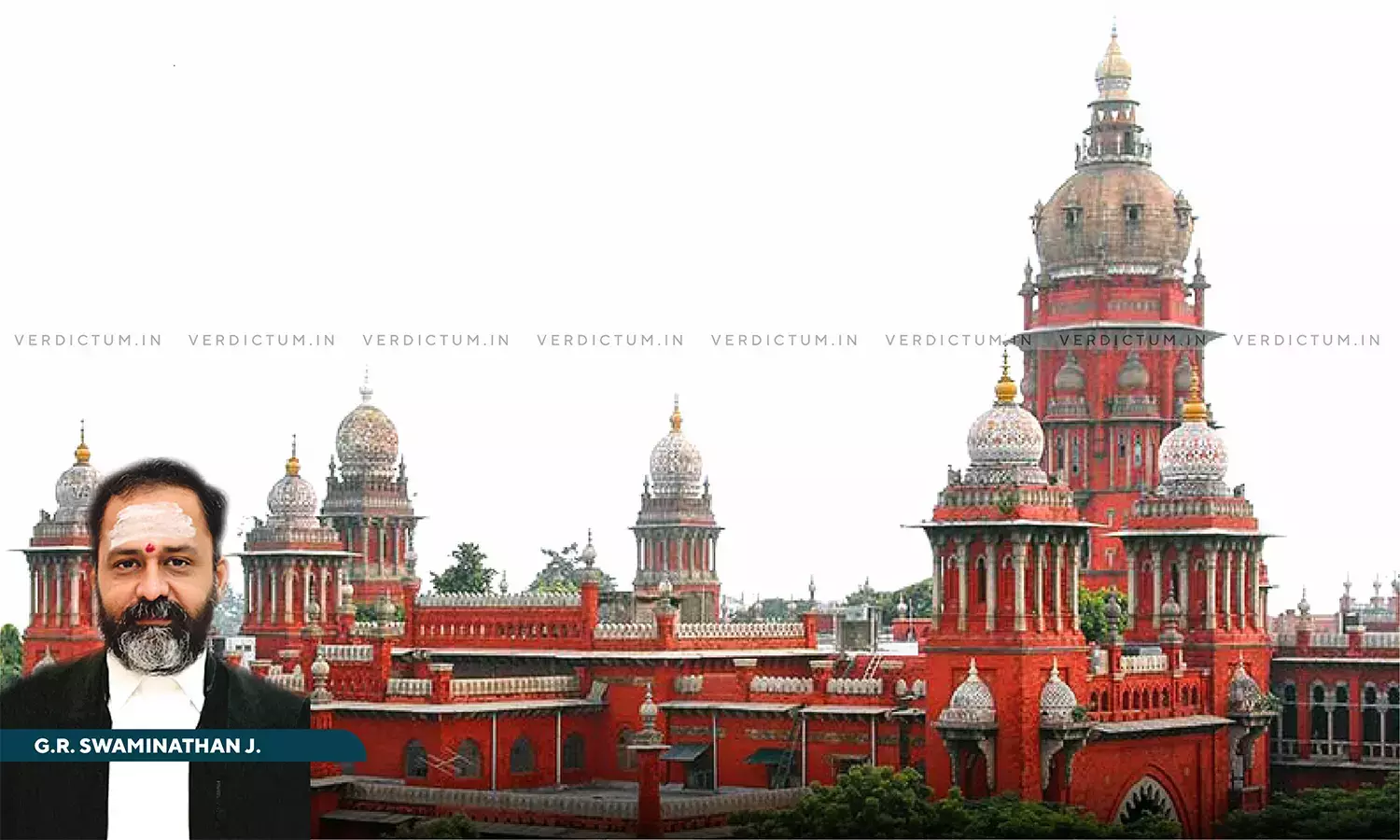
While setting aside an order of the Authorisation Committee refusing to permit a Bangladeshi woman to donate her kidney to her minor son suffering from renal issues, the Madras High Court has held that the committee should have been a little more sensitive when holding that the relationship of the parties was not established, and it had virtually stigmatised the minor boy.
The High Court was considering a Writ Petition filed under Article 226 of the Constitution quashing the impugned order passed by the Authorisation Committee and consequently directing the respondents to permit the transplantation of a kidney from the petitioner mother to her minor son by considering their application.
The Single Bench of Justice G. R. Swaminathan held,“The committee should have been little more sensitive when holding that the relationship of the petitioners 2 & 3 has not been established. They have virtually stigmatised the first petitioner who is a minor child. consequence that would be visited upon the first petitioner ought to have been duly taken note of.”
“The Committee is directed to grant permission to the second petitioner to donate one of her kidney to her son, namely, the first petitioner herein. This shall be done immediately”, it ordered.
Advocate N.Manoharan represented the Petitioner.
Factual Background
The writ petitioners are the mother and father of the first petitioner, who are citizens of Bangladesh. The first petitioner has renal issues and is on dialysis. Since medical facilities in Bangladesh were not found to be adequate, the writ petitioners came to Chennai on medical visas to avail better treatment. The minor boy was admitted to Apollo Hospital, Chennai. The nephrologists diagnosed his condition as “end-stage renal chronic kidney disease”. He advised the first petitioner to undergo kidney transplantation in November 2025 itself. Due to unstable political conditions then prevailing in Bangladesh, the petitioners were unable to obtain the “e-Apostille certificate” from the Ministry of Foreign Affairs. The said certificate was obtained on February 15, 2026.
The second petitioner, who is the mother of the first petitioner, had come forward to donate one of her kidneys. The requisite compatibility tests were undertaken, and it was opined that the second petitioner can very well donate her kidney. However, for doing so, prior approval of the second respondent (Authorisation Committee) was required. Hence, an application was submitted before the committee. The committee conducted an enquiry with the assistance of an interpreter since the petitioners were conversant only in Bangla / Bengali. The applications submitted by the petitioners were rejected on the ground that the spousal relationship between the petitioners was not established. Challenging the same, this writ petition came to be filed.
Reasoning
Referring to the provisions of the Transplantation of Human Organs and Tissues Act, 1994, the Bench explained that the donor can be a near relative or a third party, and when the application claims that the donor is a near relative, the Authorization Committee is required to test the veracity of this claim (Section 9 of the Act).
The Bench noted that the applicants were in dire need of organ transplantation and their applications had to be disposed of expeditiously. As per the Bench, they could at best produce their birth certificates, family ration cards, Aadhar cards, school certificates, etc. “If there is no discrepancy among them and the claim put forth in the application as to the relationship stands probabilised, it should be taken that the claim has been conclusively established. The standard of proof cannot be placed at a high threshold”, it added.
The Bench also noted that the applicants had even given the DNA Report along with the e-Appostile Certificate. Stating that the mother-son / mother-daughter relationship can be said to be the closest of all, the Bench noticed that the birth certificate disclosed the name of the second petitioner as mother and the name of the third petitioner as father.
Thus, holding that the impugned order suffered from misdirection in law and utter non-application of mind, the Bench set aside the same and directed the Committee to grant permission to the second petitioner to donate one of her kidneys to her son. “This shall be done immediately. This Writ Petition stands allowed”, it ordered.
Cause Title: Minor Atonu Saha v. The State of Tamil Nadu (Case No.: WP No. 20140 of 2026)
Appearance
Petitioner: Advocates N.Manoharan, R.Renukadevi, A.Adhishree, S.Shrish