

Temple Promotes Mental Well Being: Madras High Court Dismisses Plea For Removal Of Temple From Land Earmarked For Park With ₹1 Lakh Cost
The petitioner sought a writ of mandamus directing the District Collector and municipal authorities to maintain land in an approved layout at Veeraraghavapuram, Thiruverkadu, as a park and playground.
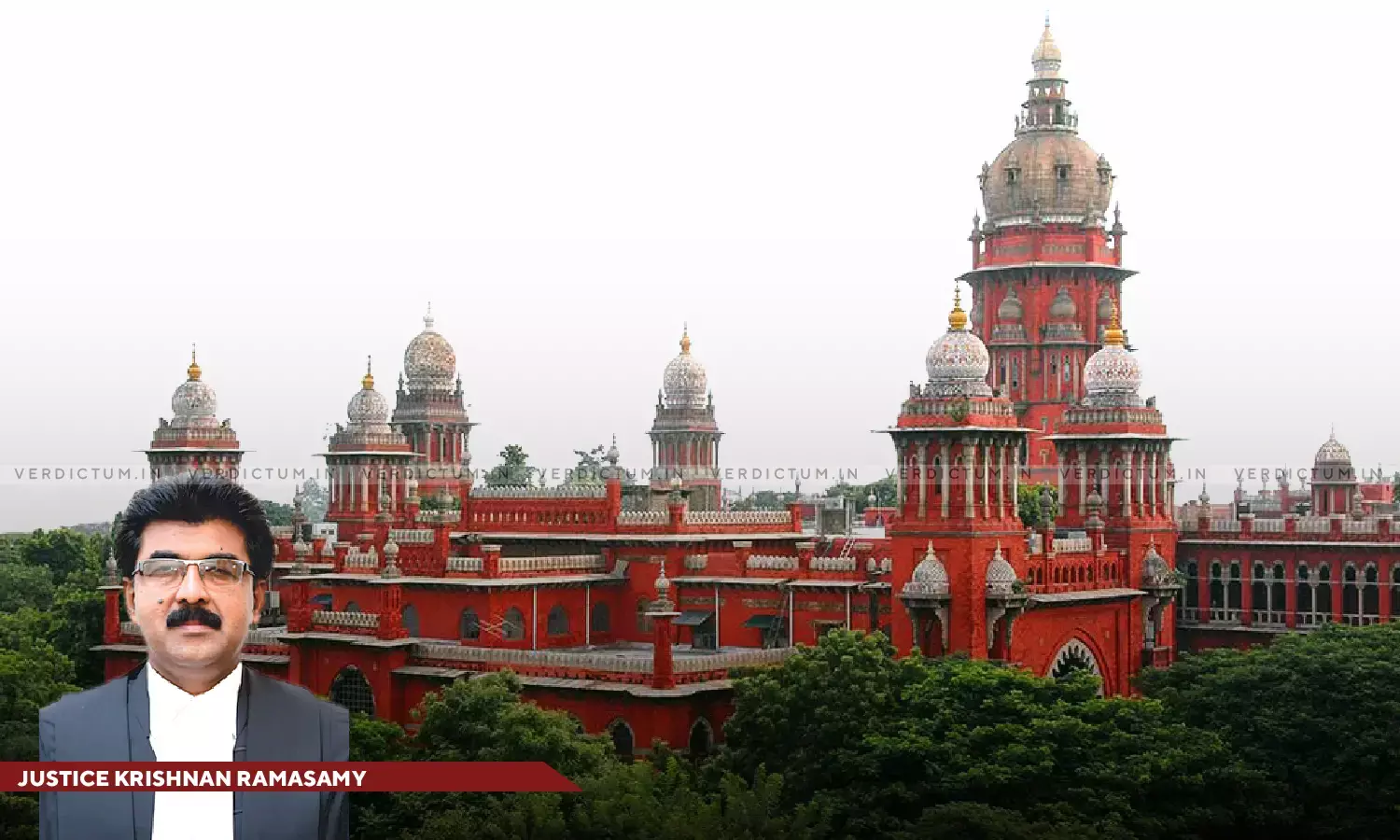
Justice Krishnan Ramasamy, Madras High Court
The Madras High Court has dismissed a writ petition seeking to direct authorities to maintain land earmarked as a park and playground, holding that a temple existing within the land for over five decades “has to be considered as a part and parcel of the park.”
The petitioner sought a writ of mandamus directing the District Collector and municipal authorities to maintain land in an approved layout at Veeraraghavapuram, Thiruverkadu, as a park and playground.
A Bench of Justice Krishnan Ramasamy held, "On the other hand, the construction of Temple and worshipping of Deity is also a way for relaxation, which promotes the mental well-being of majority of residents of the subject layout. Therefore, at any cost, the Temple has to be considered as a part and parcel of the Park and as a place for relaxation, which reduce mental stress of the people".
The Court further held, “...the belief and faith of the general public, those who worship the Deity, cannot be disturbed merely on the ground of alleged encroachment. Further, in this case, with the wishes of majority of residents of the subject layout, the Temple is constructed in a portion of an area, which was earmarked as “park” and the residents therein are worshipping the Deity in that Temple for more than 5 decades. Thus, it would be considered as a place for mental well-being of the majority of people living therein and the same shall be treated as part and parcel of the park.”
Advocate M. Sneha appeared for the Petitioner and Advocate T.K.Saravanan appeared for the respondents.
The petitioner contended that the layout, approved by the Director of Town Planning, had earmarked specific areas for “park” and “playground,” but the authorities had failed to maintain them. It was further alleged that a Hindu temple had been constructed in the earmarked area, amounting to encroachment.
In response, the authorities submitted that the temple had been in existence for more than five decades and occupied only a portion of the total land. They argued that the remaining area could still be maintained as a park and playground.
The Court observed that when the temple has existed for more than 5 decades, objections ought to have been raised earlier, and not after an exorbitant delay. It noted that parks are essential public places for enjoyment, recreation and relaxation and promote physical and mental well-being. At the same time, it held that construction of Temple and worshipping of the Deity is also a way for relaxation, contributing to the mental well-being of residents.
Emphasizing the balance, the Court held that “at any cost, the Temple has to be considered as a part and parcel of the Park and as a place for relaxation, which reduce mental stress of the people.” It further observed that the temple occupied only a limited portion of the total land, and the remaining area could still be used for park purposes.
The Court rejected the allegation of encroachment, holding that the temple was constructed with the wishes of majority residents and for public purpose. It added that disturbing such a structure would affect the “belief and faith of the general public.”
Notably, the Court found, “this petition, which has been filed with malafide intention to create communal riots, appears to be motivated one.”
Accordingly, the writ petition was dismissed, and the petitioner was directed to pay costs of ₹1,00,000 to the Tamil Nadu Legal Services Authority within four weeks, failing which recovery proceedings were ordered.
Cause Title: Jesudass Cornelius v. The District Collector & Ors.
Appearance:
Petitioner: Advocate M.Sneha
Respondents: Advocates T.K.Saravanan, P.Srinivas, B.Manoharan, Siva Shanmugam, K.Karthikey