

Settlement Deed Without Specific Maintenance Condition Cannot Be Cancelled U/S 23 Senior Citizens Act: Madras High Court
The Court observed that Love and affection may be the motive for transferring property, but cannot by itself be treated as the statutory condition requiring the transferee to maintain the senior citizen.
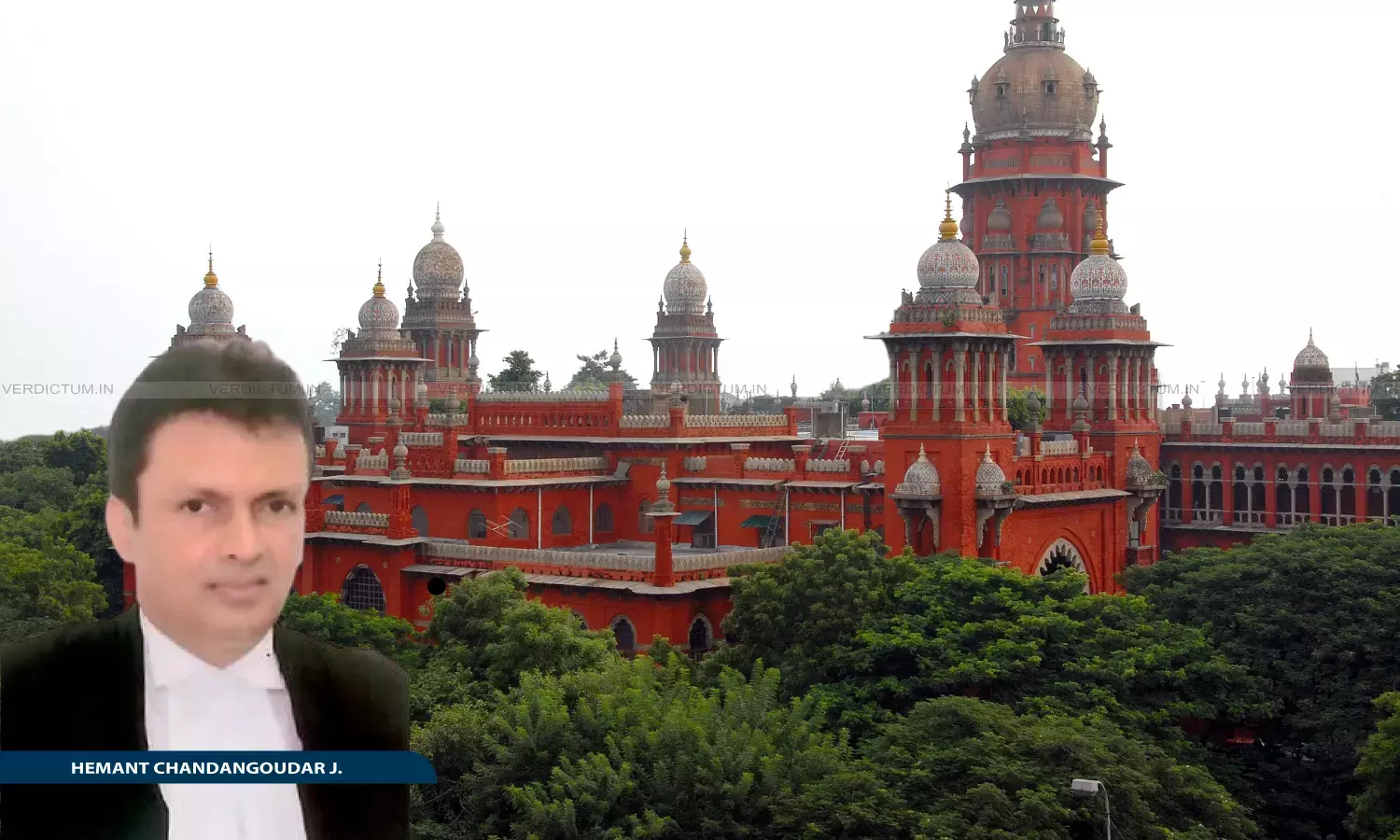
The Madras High Court has held that a settlement deed cannot be cancelled under Section 23(1) of the Maintenance and Welfare of Parents and Senior Citizens Act, 2007 merely because the transferee allegedly failed to care for the transferor, unless the transfer expressly required the transferee to provide basic amenities and meet the transferor’s physical needs.
The Court accordingly rejected an octogenarian father’s plea to cancel a settlement deed and family arrangement executed in favour of his son.
The Court was hearing a writ petition under Article 226 of the Constitution challenging the District Collector’s order affirming the Senior Citizens Tribunal’s rejection of the petitioner’s application under Section 23(1) of the Act.
A Bench of Justice Hemant Chandangoudar, while referring to a previous decision of the Madras High Court in Karuppan v. The District Magistrate (2002), observed: “... the coordinate Bench held that where the settlement deed contains no specific condition requiring the transferee to maintain the transferor, proceedings under Section 23(1) of the Act are not maintainable, and the settlement deed cannot be cancelled merely on the ground that the transferor was not cared for.”
Upon examining the relevant material in the case at hand, the Bench accordingly held: “In the present case, it is not disputed that the Settlement Deed/Family Arrangement does not contain any specific condition requiring the third respondent to provide basic amenities and meet the physical needs of the petitioner. In the absence of such a condition, which is necessary for invoking Section 23(1) of the Act, the order passed by the first respondent confirming the order of the second respondent does not suffer from any illegality or infirmity warranting interference by this Court.”
Advocate S. Elakiya appeared for the petitioner. Special Government Pleader C. Prabakaran appeared for the District Collector and the Senior Citizens Tribunal. Senior Advocate R. Sankaranarayanan appeared for the private respondent.
Background
The petitioner, an octogenarian, had executed a settlement deed and family arrangement conveying properties to his son. He claimed that the documents were executed out of love and affection on the understanding that his son would provide basic amenities and attend to his physical needs.
Alleging that his son had failed to care for him, the petitioner approached the Revenue Divisional Officer acting as the Maintenance and Welfare of Parents and Senior Citizens Tribunal. He sought cancellation of the settlement deed and family arrangement under Section 23(1) of the Maintenance and Welfare of Parents and Senior Citizens Act, 2007.
The Tribunal rejected the application. The District Collector dismissed the petitioner’s statutory appeal and affirmed the Tribunal’s order.
Before the High Court, the petitioner admitted that the documents did not contain a specific clause requiring his son to provide basic amenities or meet his physical needs. He nevertheless contended that the obligation was implicit because the transfer was made out of love and affection and on the understanding that his son would care for him.
The petitioner relied on Urmila Dixit v. Sunil Sharan Dixit (2025) and S. Mala v. District Arbitrator and District Collector (2025). The son contended that an express maintenance condition was essential for invoking Section 23(1) and relied upon S. Sundar Rajan v. District Magistrate-cum-District Collector (2026).
Court’s Observations
The High Court referred to the Full Bench decision in Sasikala v. Revenue Divisional Officer (2022), which held that the power to cancel a transfer under Section 23 could not be invoked unless the transfer document contained a specific condition requiring the transferee to provide basic amenities and meet the transferor’s physical needs.
The Court observed: “A Full Bench of this Court in Sasikala v. Revenue Divisional Officer, 2022 SCC OnLine Mad 4343, held that, in the absence of a specific condition in the transfer document requiring the transferee to provide basic amenities and meet the basic physical needs of the transferor, the power under Section 23 of the Tamil Nadu Maintenance and Welfare of Parents and Senior Citizens Act, 2007 cannot be invoked to cancel the transfer.”
The Court noted that this Full Bench decision had not been considered by the Division Bench in S. Mala (2025), which accepted the theory of an implied maintenance condition.
The Court considered the reasoning in Karuppan v. District Magistrate-cum-District Collector (2025), where a coordinate Bench examined the Supreme Court’s rulings governing Section 23(1).
That decision held that a condition requiring the transferee to provide basic amenities and meet the transferor’s physical needs could not be presumed merely because the property was transferred out of love and affection.
The High Court observed: “It observed that love and affection may be the motive for executing a gift or settlement deed, but it cannot be treated as the statutory condition contemplated under Section 23(1). The Court further held that it is not permissible to rewrite the statutory provision by substituting the words used by the legislature with the concept of an implied condition.”
The Court also noted that Urmila Dixit (2025) did not dispense with an express maintenance obligation. In that case, both the gift deed and an accompanying promissory note expressly recorded the donee’s obligation to maintain the donor.
The Court noted that Karuppan (2025) had considered later Division Bench decisions accepting implied conditions and found them inconsistent with earlier Division Bench rulings and binding Supreme Court judgments.
It observed: “Relying on the principles governing judicial precedents, the coordinate Bench concluded that the earlier decisions and the judgments of the Supreme Court must prevail.”
The Court consequently applied the Full Bench decision in Sasikala (2022) and the coordinate Bench’s analysis in Karuppan (2025), rather than the subsequent line of decisions permitting an implied maintenance condition.
Apart from the absence of an express condition, the High Court noted that the Tribunal had recorded that the petitioner was being maintained by his daughter.
The son had expressed love, affection and respect for his father and acknowledged his duty to maintain him. He also stated that he was willing to care for his father if the latter chose to reside with him.
The Court further noted: “The second respondent has also noted that, although the petitioner alleged that his son had failed to maintain him, he did not seek any relief towards maintenance from his son and instead sought only cancellation of the Settlement Deed and other documents. In these circumstances, the petitioner has also failed to make out a prima facie case that the third respondent has failed to provide him with basic amenities and meet his physical needs.”
Conclusion
The Madras High Court dismissed the writ petition and upheld the orders of the District Collector and the Senior Citizens Tribunal refusing to cancel the settlement deed and family arrangement.
The connected miscellaneous petitions were also dismissed. The Court made no order as to costs.
Cause Title: Dr A. Panner v. The District Collector and Others
Appearances
Petitioner: Advocate S. Elakiya, for D.R. Law Chambers
Respondents: C. Prabakaran, Special Government Pleader; Senior Advocate R. Sankaranarayanan, instructed by Advocate S. Prem Auxilian
