

Magistrate Can Explicitly Name Accused U/S.176(1-A) CrPC: Madhya Pradesh High Court Upholds Enquiry Report In Custodial Death Case
The petitioners had approached the Madhya Pradesh High Court seeking a direction in the nature of certiorari for quashing the impugned judicial enquiry report

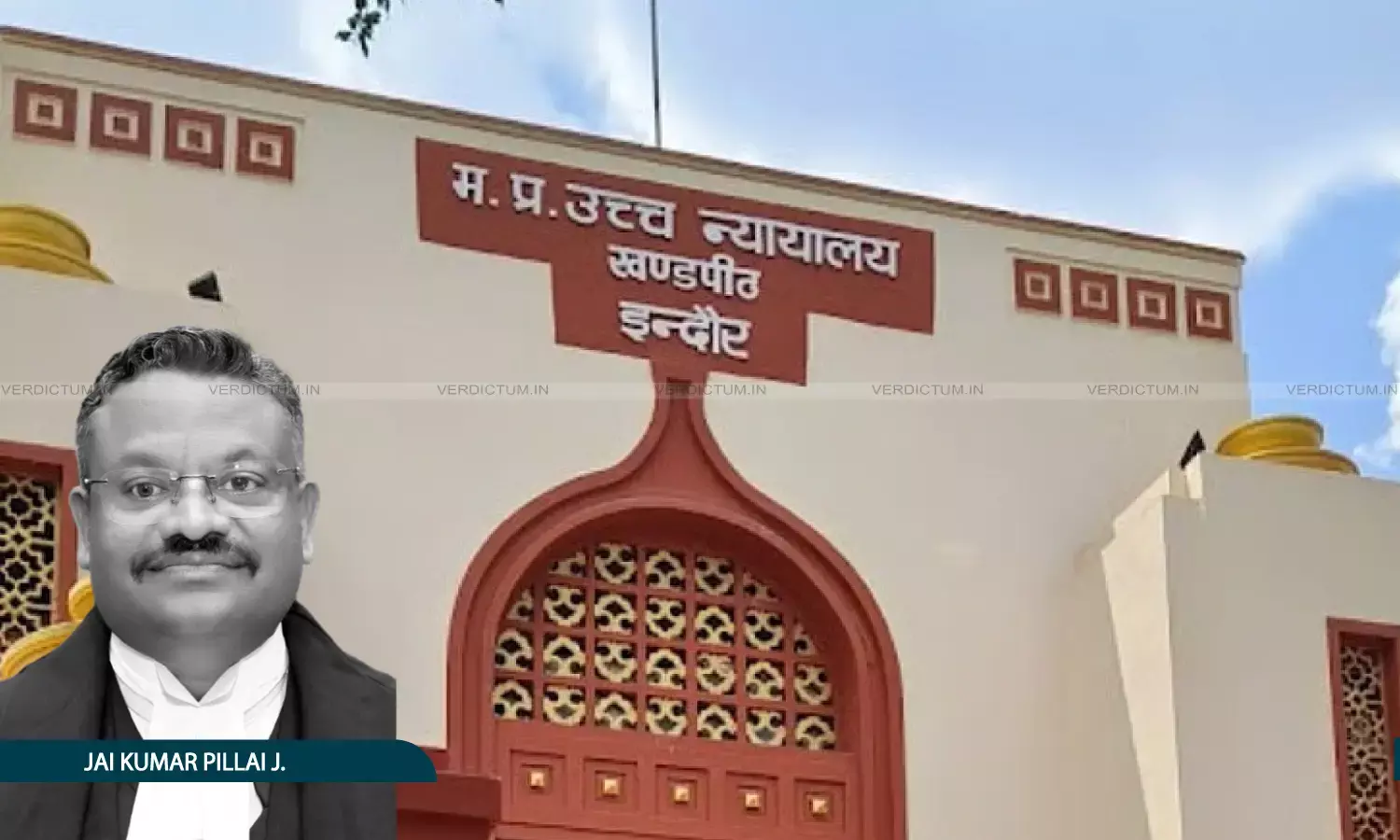
While upholding an enquiry report of a Magistrate holding police officials and doctors responsible in a custodial death case, the Madhya Pradesh High Court has held that the Magistrate is fully empowered under Section 176(1-A) of the Code Of Criminal Proceduere (CrPC) to document the specific circumstances under which the custodial incident took place and explicitly name the accused persons whose actions or omissions culminated in the fatality.
The petitioners had approached the High Court seeking a direction in the nature of certiorari for quashing the impugned judicial enquiry report as well as all subsequent and consequential actions arising from the said enquiry report, specifically the registration of a First Information Report (FIR) against the petitioners for various substantive offences under the Indian Penal Code, 1860.
The Single Bench of Justice Jai Kumar Pillai explained, “In light of the statutory scheme and the afore-quoted precedent, this Court firmly holds that the power exercisable by a Magistrate under Section 176(1-A) of the Cr.P.C. is not strictly confined merely to ascertaining the physiological or medical cause of death. The legislative mandate allows the Magistrate to conduct a comprehensive and holistic enquiry. The Magistrate is fully empowered to examine the complete sequence of events, document the specific circumstances under which the custodial incident took place, and explicitly name the accused persons whose actions or omissions culminated in the fatality. Therefore, the petitioners' contention that the Magistrate exceeded his jurisdiction by naming the perpetrators and detailing the circumstances is legally unsustainable.”
Senior Advocate Ajay Bagadia represented the Petitioner while Government Advocate Ambuj Patel represented the Respondent.
Factual Background
A jail inmate, namely Bheru S/o Shri Bagdiram Ji Maru (since deceased), was found guilty and convicted in 2019 for the commission of offences punishable under Sections 366, 376(2)(n), and 506 of the Indian Penal Code, 1860, read with the provisions of the POCSO Act. To undergo a specialised ITI training course as a trained carpenter, the deceased was transferred to the District Jail, Dhar, where he remained lodged until his untimely demise. During a search operation, a packet of tobacco was recovered from the physical possession of an inmate by a jail warden. The inmate, Arvind, revealed that he had obtained the said contraband tobacco from the deceased Bheru. Acting upon this, Bheru was immediately summoned and allegedly subjected to a severe physical beating by the members of the search team in connection with the recovered tobacco.
Subsequent to the administration of this brutal physical assault, his condition worsened drastically, prompting the jail authorities to shift him to the District Hospital, Dhar, where he was formally declared dead. Following this unnatural custodial death, the Superintendent of Jail, Dhar, formally wrote a letter to the District and Sessions Judge, Dhar, requesting the initiation of an inquest. The JMFC concluded the judicial enquiry, rendering a detailed report directly implicating the Jail Superintendent, subordinate jail staff, and the empanelled doctors for their respective roles in the custodial death, deliberate negligence, and the subsequent destruction of vital evidence. Based on the findings of this judicial enquiry report, coupled with communications from the Director General (Jail), Superintendent of Police (Dhar), and City Superintendent of Police (Dhar), the impugned FIR was registered.
Reasoning
The Bench stated that Clause (1A) of Section 176 was squarely and strictly applicable, as the deceased Bheru died while being detained in the authorised custody of the District Jail, Dhar. The Bench thus refused to accept the primary contention of the petitioners that the JMFC exceeded his jurisdiction by identifying the perpetrators and directing the registration of crimes. “The statute, read with judicial pronouncements, grants ample authority to the Judicial Magistrate to name the persons responsible for a custodial death”, it added.
The Bench further noted that the Magistrate firmly established that the deceased was in the custody of the District Jail, and his unnatural death was the direct result of serious injuries, stress, and shock caused by physical torture. According to the Bench, the Magistrate correctly applied the principles of Section 106 of the Evidence Act, noting that the burden lay entirely on the jail administration to explain the injuries, and specifically named Jail Prahari Onkar Chauhan, Jailer Shyam Verma, Jail Prahari Abdul Razzaq Khan, and Jail Prahari Mukesh Solanki as the individuals who severely beat the deceased.
Throwing light on the allegations pertaining to the empanelled doctors, the Bench noted that the Magistrate recorded a deeply disturbing procedural lapse, which was that despite an official photographer being summoned by the inquest officer to document the autopsy, a deliberately blurred videography CD captured through a mobile phone by a constable was submitted to the Court. This was held to be a calculated move to suppress the visual evidence of the custodial torture, thereby attracting the ingredients of Sections 201 and 218 of the IPC against the medical professionals who were complicit in this cover-up.
The Bench further noticed that the Judicial Magistrate remained entirely cognizant of his jurisdictional limits and, while directing the registration of the FIR, the Magistrate explicitly noted in the report regarding the initiation of administrative or departmental misconduct proceedings against the doctors, he did not possess the mandate to file a direct complaint.
Thus, holding that the enquiry report did not suffer from any legal infirmity, jurisdictional error, or perversity and the JMFC acted well within the statutorily vested powers, the Bench dismissed the writ petitions. Upholding the impugned judicial enquiry report and the consequential registration of the FIR, the Bench ordered, “The investigating agency shall proceed with the investigation impartially, expeditiously, and strictly in accordance with the law, uninfluenced by any observations made in this order, which are confined solely to the disposal of these writ petitions.”
Cause Title: Raja Ram Dangi v. The State of Madhya Pradesh (Neutral Citation: 2026:MPHC-IND:21865)
Appearance
Petitioner: Senior Advocate Ajay Bagadia, Advocate Gajendra Singh Chouhan
Respondent: Government Advocate Ambuj Patel, Advocates Akash Rathi, Vivek Yadav