

Hindu Succession Act | Son Doesn't Get Share In Property During Father's Lifetime; Birthright Doesn't Exist: MP High Court
The Madhya Pradesh High Court was considering the appeal filed by the sons in a property dispute matter.

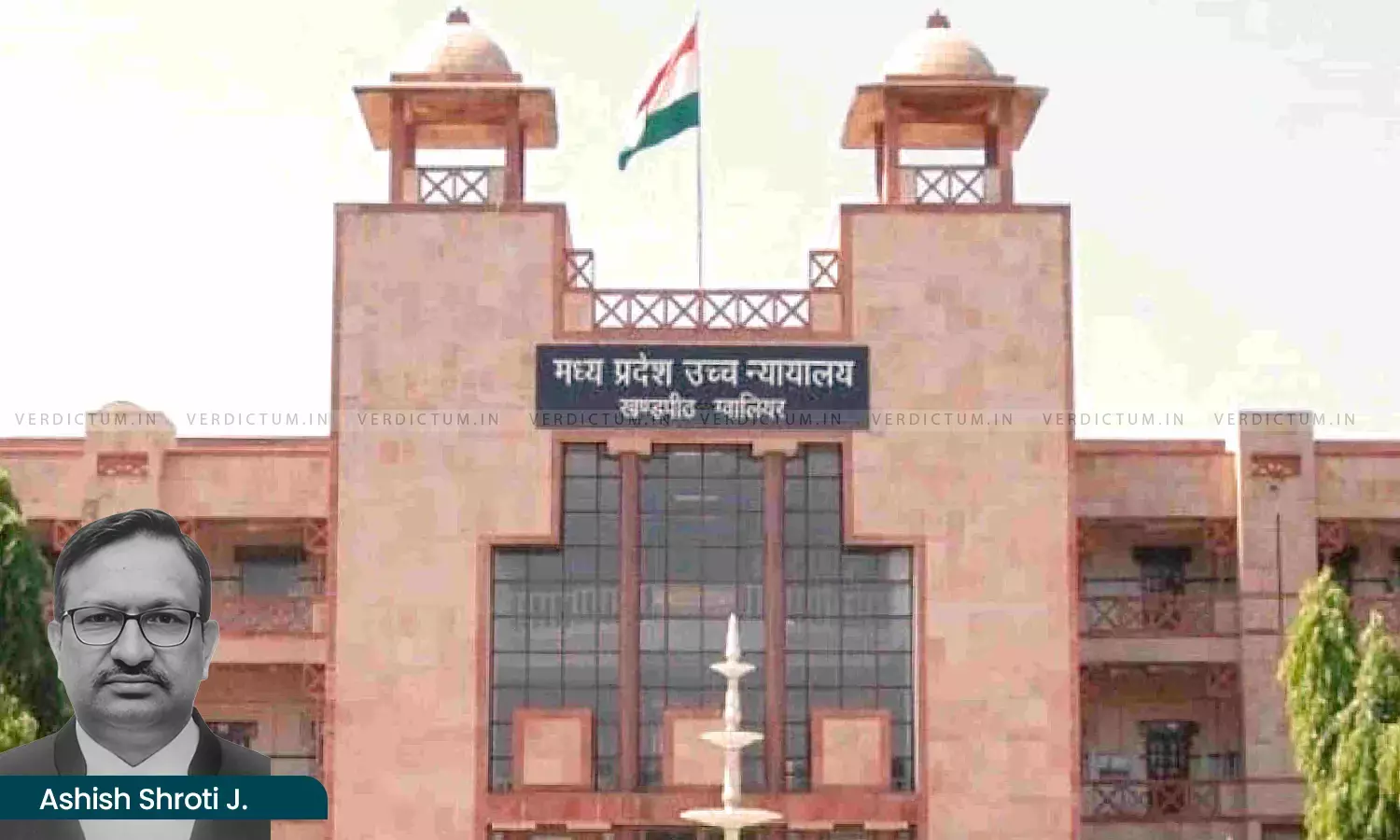
While dismissing the appeal filed by the sons in a property dispute matter, the Madhya Pradesh High Court has held that after coming into force of the Hindu Succession Act, the theory of birth right does not exist. The High Court further held that the son gets share in the property only after death of his father and not during his lifetime.
The appellants/plaintiffs were aggrieved by the judgment passed by the First Additional District Judge dismissing the suit filed for declaration of title and possession and for permanent injunction.
The Single Bench of Justice Ashish Shroti held, “It is thus clear that after coming into force of the Hindu Succession Act, the theory of birth right does not exist, and son gets share in the property only after death of his father. It is only when the coparcener was born prior to coming into force of Hindu Succession Act, the property will devolve by survivorship upon the surviving members of the coparcenary vide Section 6.”
Advocate Ashish Shrivastava represented for the appellant while Government Advocate Rajendra Jain represented the Respondent.
Factual Background
The suit land is the ancestral property of the first defendant. The first plaintiff is the wife of the first defendant while the second and third plaintiffs are his sons. The plaintiffs filed the suit contending that the suit land is recorded in the name of the first defendant and his brothers in revenue records and is their ancestral property. It was alleged that the defendant father threatened them to sell the suit land and not to give them any share therein. The plaintiffs, thus, apprehended that the defendant may sell the suit land which will extinguish their rights in this ancestral property, they filed the suit seeking declaration of their title and possession over the suit land and for decree of permanent injunction on the ground that the property being ancestral, the plaintiffs had right therein since birth.
The Trial Court dismissed the suit and held that after coming into force of Section 8 of the Hindu Succession Act, the concept of birth right in the ancestral property does not exist and the plaintiffs cannot have any right in the suit land during the lifetime of the first defendant. The judgment and decree passed by the Trial Court was affirmed by the First Appellate Court in the appeal filed by the plaintiffs. Challenging the same, the appeal was filed by the plaintiffs.
Reasoning
The Bench noted that the first plaintiff, being the wife of the first defendant no.1, could not come within the category of coparceners. “It is only the sons that is plaintiffs no.1 & 2, who would fall in the said category. Therefore, even if the plaintiffs' contention is accepted, it is only plaintiffs no. 1 & 2 who would get any right in the property”, it added.
The Bench further took into account the fact that the plaintiffs were born after coming into force of the provisions of the Hindu Succession Act, 1956. The Bench referred to the judgment of the Apex Court Uttam vs. Saubhag Singh (2013) wherein it has been held that upon the death of an ancestor after enforcement of the Hindu Succession Act, there is a deemed partition by operation of law immediately before his death, and the property ceased to be joint family property and the successors are merely tenants-in-common, and not joint family members.
The Bench noted that the plaintiffs themselves averred in the plaint that their father got the suit land in partition from his father. “Meaning thereby, the property was received by defendant no.1 and became his self-acquired property on partition. Consequently, during the lifetime of father i.e. defendant no.1, the plaintiffs could not have claimed any share in the property”, it held.
Thus, upholding the judgment of the Appellate Court, the Bench dismissed the appeal.
Cause Title: Prembai and Others v. Ramswaroop and Others (Case No.: Second Appeal No. 264 of 2015)