

Rule 167(7) Of Central Motor Vehicles Rules Is Not Retrospective, Can’t Interdict Registration For Prior Unpaid Challans: Kerala High Court
The Kerala High Court was considering a petition filed by an aggrieved car owner whose vehicle had been blacklisted.

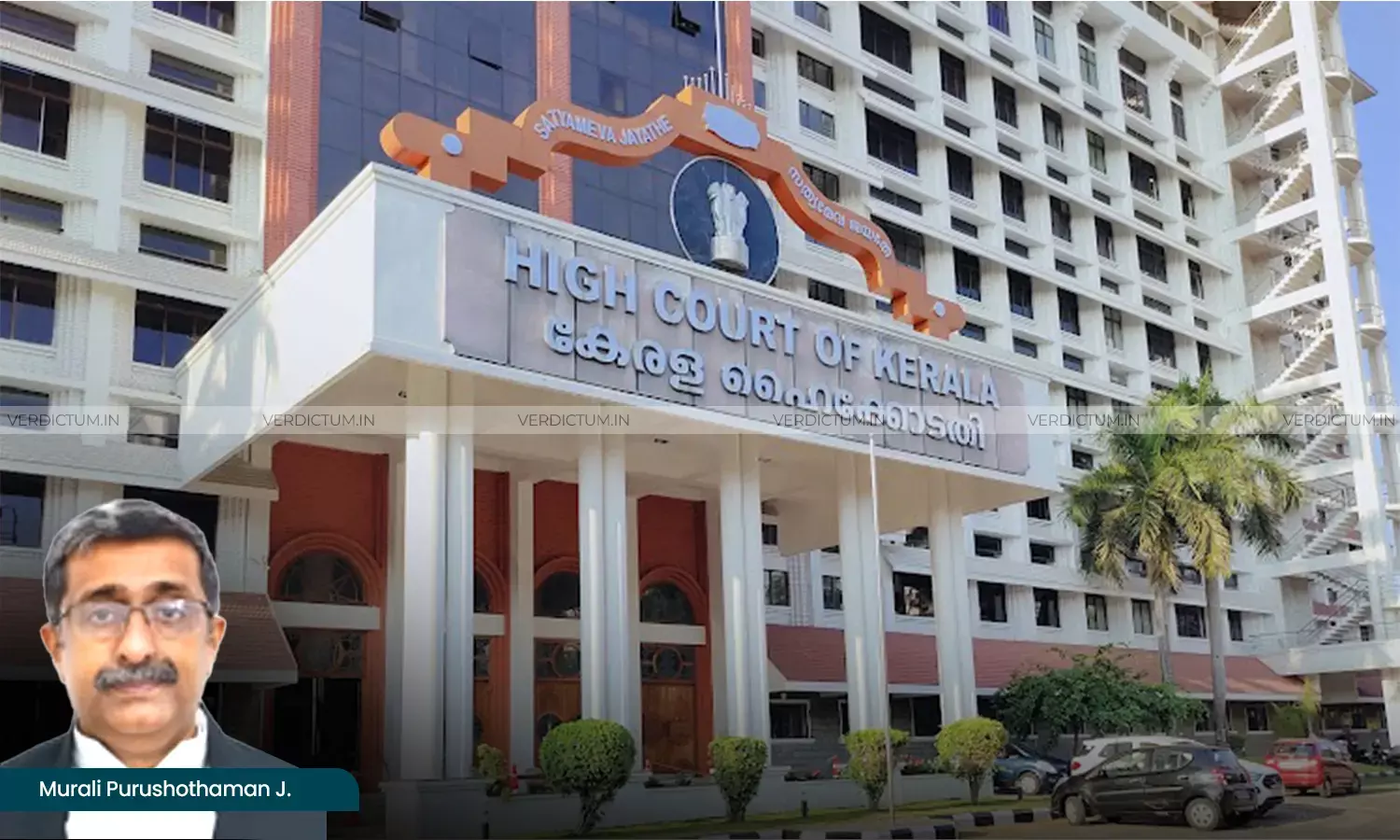
Justice Murali Purushothaman, Kerala High Court
The Kerala High Court has clarified that Rule 167(7) of the Central Motor Vehicles Rules cannot be invoked to interdict the processing of applications for registration of motor vehicles merely on the ground that challans issued before October 1, 2020 remained pending against the applicants.
The High Court was considering a petition filed by an aggrieved car owner whose vehicle had been blacklisted.
The Single Bench of Justice Murali Purushothaman clarified, “Therefore, in the absence of a clear legislative intention to confer retrospective effect on Rule 167(7), the provision cannot be invoked to interdict the processing of applications for registration of motor vehicles merely on the ground that challans issued prior to 01.10.2020 remain pending against the applicants.”
Advocate Vipin Narayan represented the Petitioner while Govt. Pleader Sarath represented the Respondent.
Factual Background
The petition was filed by a registered owner of a motor car which was purchased in 2015 under hypothecation to Bank of Baroda, Perumbavoor Branch. After closing the loan account, when the petitioner approached the Regional Transport Officer for cancellation of the hypothecation entry in the Certificate of Registration, he was informed that the vehicle had been blacklisted on account of challans remaining unpaid for more than 90 days and the application could not be accepted. The petitioner produced the list of challans issued in respect of the vehicle and claimed that the challans pertained to the period prior to coming into force of Rule 167 of the Central Motor Vehicles Rules, 1989, introduced by way of the Central Motor Vehicles (Eleventh Amendment) Rules, 2020.
The petitioner also claimed that he had already paid the compounding fees in respect of the challans and no prosecution or court proceedings were pending in respect of the alleged speed violations pertaining to the period from 2015 to 2019. The petitioner thus approached the High Court with the grievance that the challans did not fall within the purview of Rule 167 of the Central Motor Vehicles Rules, 1989, and the vehicle could not be blacklisted for non-payment of those challans.
Reasoning
The Bench noted that Rule 167 of the Central Motor Vehicles Rules, introduced by way of amendment, came into force with effect from October 1, 2020 and Sub-rule (7) interdicts the registering authority from processing applications in relation to registration of motor vehicles in respect of persons against whom challans are pending.
The Bench further noted that before the amendment, the pendency of a challan did not, by itself, operate as a bar against processing an application for registration of a motor vehicle. “It is trite law that a statutory provision imposing a new restriction must operate prospectively, unless a contrary legislative intention is either expressly stated or arises by necessary implication. Ext.P5 Amendment Rules, published on 25.09.2020, expressly provide that the amendments shall come into force with effect from 01.10.2020. Rule 167(7), insofar as it interdicts the processing of applications in relation to registration of motor vehicles on account of pending challans, introduces a restriction that did not previously exist. Rule 167(7) being substantive law, operates prospectively as retrospectivity is not clearly made out by its language”, it added.
The Bench thus directed the Regional Transport Officer to receive and process the application of the petitioner for cancellation of the entry regarding hypothecation without taking into account the pendency of challans issued prior to October 1, 2020.
Cause Title: T. N Arun Kumar v. Ministry of Road Transport and Highways (Neutral Citation: 2026:KER:77134)
Appearance
Petitioner: Advocates Vipin Narayan, Ashwanth Padman
Respondent: Govt. Pleader Sarath, Central Govt. Standing Counsel Amal Parthasaradhy
Click here to read/download Order