

Kerala High Court Issues Notice To Advocate In Suo Motu Contempt Case Over Broadcasting Court Proceedings On Social Media, Bars Him From Virtual Appearances
The Court referred to Rule 3(9) of the Electronic Audio-Video Linkage Rules (Kerala), 2025 and the Supreme Court’s interim direction restraining extraction, dissemination or uploading of audio-video recordings of judicial proceedings without prior permission.
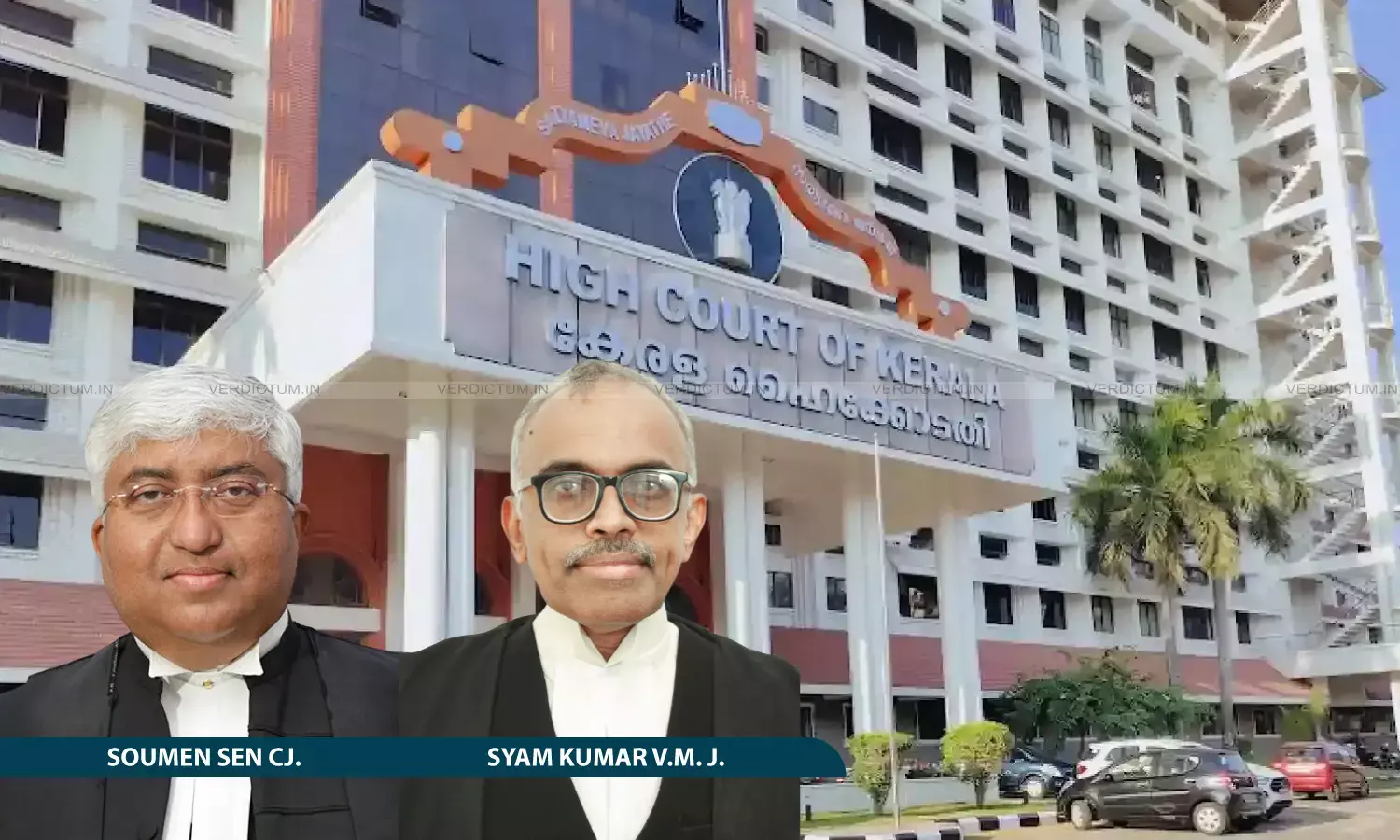
The Kerala High Court has issued notice to an advocate in criminal contempt proceedings over the alleged unauthorised recording and broadcasting of court proceedings on social media, while also barring him from participating in any court proceedings in Kerala through online or virtual mode until further orders.
The Court was hearing suo motu criminal contempt proceedings initiated by the High Court after a Registry report disclosed alleged unauthorised recording and uploading of court proceedings to the YouTube account of the alleged contemnor.
A Bench of Chief Justice Soumen Sen and Justice Syam Kumar V.M. observed: “We have taken serious note of the report submitted by the Registry disclosing unauthorised recording and uploading of court proceedings to the YouTube account of the alleged contemnor. It appears that the alleged contemnor had been unauthorisedly recording and uploading the court proceedings in the YouTube account in spite of repeated warnings in the past and being fully aware that such unauthorised recording and uploading is contrary to Rule 3(9) of the Electronic Audio-Video Linkage Rules (Kerala), 2025.”
Senior Government Pleader O.A. Nuriya appeared for the respondents.
Background
The suo motu proceedings were initiated based on a report submitted by the Registry concerning alleged unauthorised recording and uploading of court proceedings. The order records that the proceedings were allegedly uploaded to YouTube and X without permission.
The Court noted that the alleged contemnor had allegedly continued to record and upload proceedings despite repeated warnings in the past. It also recorded that such recording and uploading was contrary to Rule 3(9) of the Electronic Audio-Video Linkage Rules (Kerala), 2025.
Court's Observations
The Court referred to the legal position under the Electronic Audio-Video Linkage Rules (Kerala), 2025 and specifically extracted Rule 3(9).
The Court noted: “The confidentiality of proceedings conducted under these Rules shall be maintained by all Participants and persons present, and no broadcasting, photographing, publishing, recording, sharing or usage of such proceedings, either wholly or in part, shall be made except with the written permission of the High Court, Court or Forum.”
The Court observed that the provision expressly prohibits broadcasting, photographing, publishing, recording or sharing of proceedings conducted under the Rules, whether wholly or in part, unless written permission is obtained from the High Court, Court or Forum.
The Court recorded that the videos appeared to contain recordings of proceedings of the High Court and had been published on digital platforms without permission.
The Court observed: “The present videos, which appear to contain recordings of proceedings of this Hon'ble Court, have been published through YouTube and X without any such permission being obtained.”
The Court then referred to the Supreme Court’s interim order in Harshita Grover v. Union of India & Ors., which restrained use of audio-video recordings of judicial proceedings on social media or digital platforms without prior permission of the competent authority.
The Court quoted the Supreme Court’s direction: “As an interim measure, it is directed that there shall be no extraction, dissemination, monetisation, posting, re-posting, uploading, transmitting, modification, storing, or hosting of the audio-video recording(s) of the judicial proceedings on social media or any other digital platforms without prior permission of the Secretary General of the Supreme Court of India or the Registrar Generals of the jurisdictional High Courts.”
The Court also referred to the titles under which the two videos had been published and held that they constitute criminal contempt within the meaning of Section 2(c)(i) of the Contempt of Courts Act, 1971.
The Court recorded: “The titles under which the two present videos have been published, namely “You be the judge. Cameras can't lie. Denial of Justice to MSMEs. Watch full video on my YouTube and X” and “Cameras cannot lie. Denial of Justice to MSMEs. You be the judge.”, respectively constitute criminal contempt within the meaning of Section 2(c)(i) of the Contempt of Courts Act, 1971.”
The Court took note of the fact that the alleged contemnor is an Advocate and said that it was not formally issuing a rule of contempt at this stage.
The Court observed: “Considering the fact that the alleged contemnor is an Advocate, we are not formally issuing a rule of contempt at this stage.”
The Department was, however, directed to cause notice to be served on the alleged contemnor within one week.
Conclusion
The Kerala High Court directed notice to be served within one week and made the matter returnable on 7th September 2026.
The Court further directed that the alleged contemnor shall not be allowed to participate in any court proceedings in Kerala through online or virtual mode until further orders. The Department was directed to circulate the order to the Judges of the High Court and District Courts for information, intimate it immediately to the Registrar (Computerisation)-cum-Director (IT) for compliance, and communicate it to the alleged contemnor.
Cause Title: Suo Motu Proceedings Initiated By The High Court v. Adv. Mathews J. Nedumpara
Appearances
Petitioner: Suo Motu Proceedings Initiated By The High Court
Respondents: O.A. Nuriya, Senior Government Pleader
