Revised Petrol-Pump Site Plan Requires Fresh ADM NOC Despite PESO Approval: Kerala High Court
The District Authority must assess traffic, local planning, road safety and fire-safety inputs under Rule 144 of the Petroleum Rules, particularly when a school is situated next to the proposed outlet.
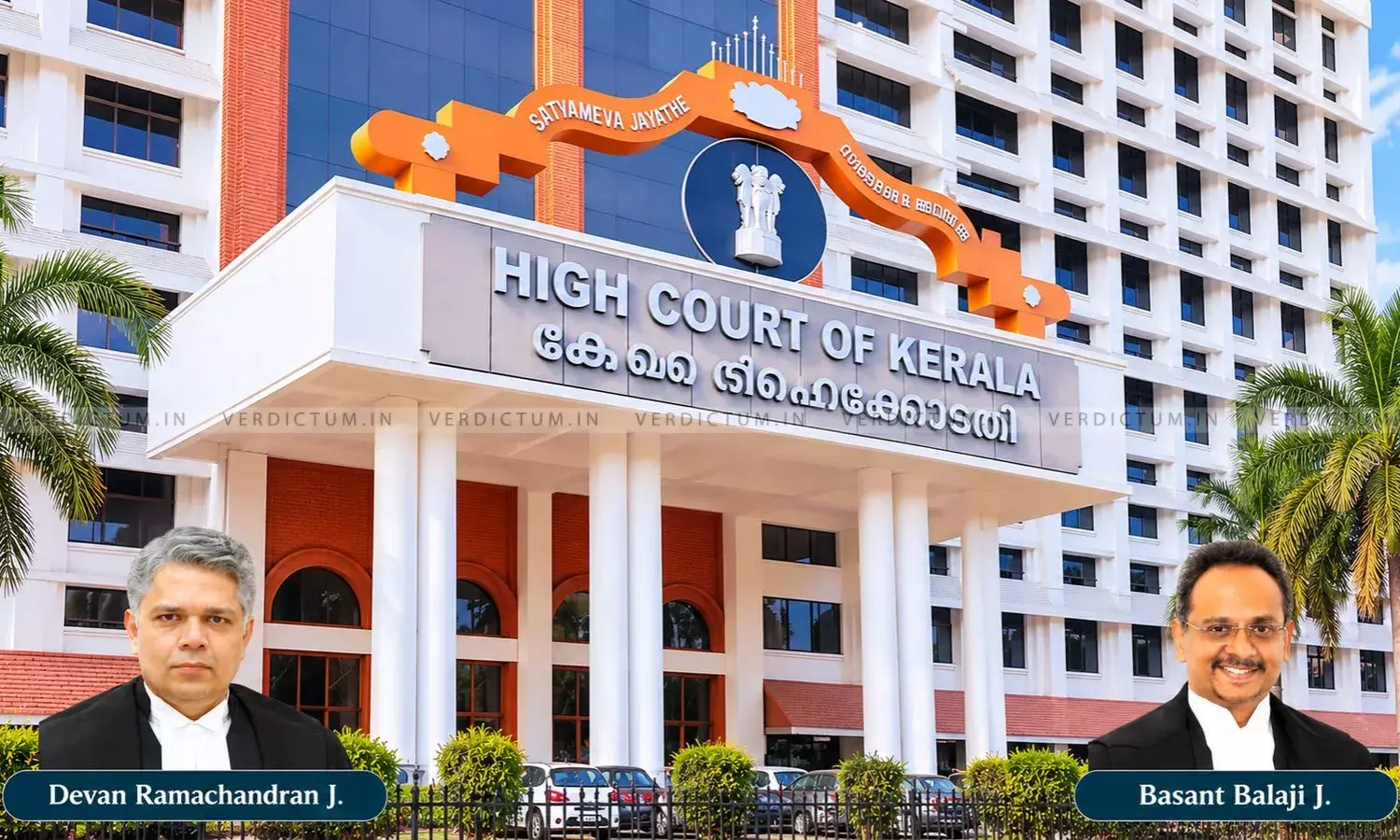
The Kerala High Court has held that a revised site plan for a retail petroleum outlet requires fresh vetting by the Additional District Magistrate and a separate no-objection certificate, even after the Petroleum and Explosives Safety Organisation has approved the plan.
The Court clarified that PESO approval does not replace the independent assessment required from the District Authority under Rule 144 of the Petroleum Rules, 2002.
The Court was hearing two writ appeals filed by the proposed outlet's dealer and Bharat Petroleum Corporation Limited against a Single Judge's judgment directing the Additional District Magistrate to reconsider the grant of an NOC on the basis of a third site plan approved by PESO. The Single Judge had also required consideration of the police authorities' comments.
A Bench of Justice Devan Ramachandran and Justice Basant Balaji observed: “We are, therefore, with little doubt that even the third site plan, which has now obtained the approval of the 'PESO', will require to be vetted by the 'ADM' within the conspectus of Rule 144 of the 'Rules'; and a separate 'NOC'; if found eligible, issued for it. The earlier 'NOC' was not with respect to the site plan now available, but which has lost its moorings on account of the declarations in Ashwin Abraham Cherian (supra).”
Senior Advocate M.R. Hariraj appeared for the dealer. Senior Advocate E.K. Nandakumar appeared for BPCL. Senior Advocate Santosh Mathew appeared for the writ petitioners, while Senior Government Pleader Nazeeba O.H. appeared for the State.
Background
The dealer proposed to establish a retail petroleum outlet under a letter of intent issued by BPCL. Although PESO initially approved the site plan, the Additional District Magistrate refused the statutory NOC under Rule 144 of the Petroleum Rules. Two earlier writ petitions resulted in directions requiring the Authority to reconsider the proposal.
The dealer subsequently modified the site plan and obtained another approval from PESO. The Additional District Magistrate then granted an NOC. The manager of a neighbouring school and residents of the locality challenged that certificate, relying on Ashwin Abraham Cherian v. Hindustan Petroleum Corporation Limited (2026), which had altered the applicable understanding of the mandatory distance requirements.
During the writ proceedings, the dealer submitted a third site plan that repositioned the fuel-dispensing unit to comply with the distance requirements. PESO approved this revised plan. The Single Judge directed the Additional District Magistrate to reconsider the NOC with reference to the new plan and the police authorities' comments.
In appeal, the dealer and BPCL argued that the change merely shifted the fuel-dispensing unit within the same property and did not require another NOC. Alternatively, they contended that the Authority should not reopen matters already examined while issuing the earlier certificate. The writ petitioners submitted that Rule 144 required an assessment of the installations, traffic conditions and risks to the neighbouring school and residents.
Court's Observations
Rule 144 NOC Is Not A Mechanical Formality
The Court held that the District Authority's assessment under Rule 144 served a substantive safety purpose. The Additional District Magistrate, being familiar with the area, was required to examine the ground realities and reconcile the competing interests before permitting the storage and sale of petroleum.
The Court observed: “There is a serious and important purpose behind Rule 144 of the 'Rules' because it is the District Authority — who is in charge of the area in question — who can understand and incisively assess ground realities, as also its necessities and requirements.”
The Court noted that Rule 144(7) required inputs from the police regarding traffic density and its impact; from the local authority regarding planning conformity and the presence of schools and hospitals; from the concerned road authority regarding access, alignment and safety; and from the Fire Department concerning emergency accessibility and preparedness.
Since a school was located immediately next to the proposed outlet, the Court said that the District Administration had a responsibility to protect the children and other residents. It clarified that this did not mean that the proposal must be prohibited, but that the relevant inputs had to be carefully evaluated.
PESO Approval Did Not Replace Fresh ADM Vetting
The Court rejected the contention that the third site plan did not require fresh approval because the Additional District Magistrate had already approved the site. It found that the earlier NOC was connected not only to the second site plan but also to the proposed fixtures and installations, including the position of the fuel-dispensing unit and compliance with the safety distances applicable at that time.
The Court observed: “The rigour of Rule 144 cannot be diluted or watered down, lest it may create catastrophic and cataclysmic consequences in future, on account of events which cannot be anticipated, particularly in the case of a highly inflammatory product like petroleum.”
The third site plan altered the position of the fuel-dispensing unit after the decision in Ashwin Abraham Cherian had clarified the distance requirements. The Court therefore held that the earlier NOC could not govern the revised layout merely because PESO had approved it.
ADM To Use Existing Inputs And Decide Within Six Weeks
The Court addressed the appellants' concern that the direction could lead to a wholly new and prolonged inquiry. It found that the Additional District Magistrate had already obtained inputs from the relevant authorities, including the police, before issuing the earlier NOC.
The Court consequently directed: “All that we, consequently, require to do is to clarify that the 'ADM' will consider issuance of 'NOC' to the 'RPO' based on the third site plan — which has obtained the approval of the 'PESO' on 02.03.2026 — strictly in conformity with Rule 144 of the 'Rules', after assessing the inputs he has already received and those on his files, while he had issued the 'NOC' dated 06.10.2025.”
It fixed six weeks from the receipt of a copy of the judgment for compliance.
Conclusion
The Court disposed of the appeals by clarifying that the Additional District Magistrate must consider the grant of a fresh NOC for the third site plan strictly under Rule 144 of the Petroleum Rules. The Authority was directed to assess the official inputs already available on its files and complete the exercise within six weeks of receiving the judgment.
Cause Title: Naseef Meethale Paingol v. Sreekandhan R. and Others, C/w Territory Manager (Retail), Bharat Petroleum Corporation Limited v. Sreekandhan R. and Others (Neutral Citation: 2026:KER:86683)
Appearances
Petitioners: Senior Advocate M.R. Hariraj; Advocates Akhila S., Alina Anna Kose, Karthika Ganesh, Vishnu Prasad N.K., Sandhra Maria Sebastian, Jayalakshmi G. Nair, Sheron Williams, Arun Thampi M.K., Binsal P.A. and Mukhendhu Marshan A.; Senior Advocate Santosh Mathew; Advocate K.M. Jamaludheen
Respondents: Senior Advocate E.K. Nandakumar; Advocates M.Gopikrishnan Nambiar, K. John Mathai, Joson Manavalan, Kuryan Thomas, Paulose C. Abraham, Raja Kannan and Shilpi M. Lal; Senior Government Pleader Nazeeba O.H.