Licensing Authority Can Require Pharmacies To Undertake Not To Display Misleading Discount Boards While Seeking Drug Licence: Kerala High Court
The Court upheld a circular issued by the Drugs Controller requiring applicants for drug licences to undertake that they would not display misleading or vague discount boards regarding the price of drugs, holding that the licensing authority possesses incidental powers to impose such conditions to prevent the public from being misled.
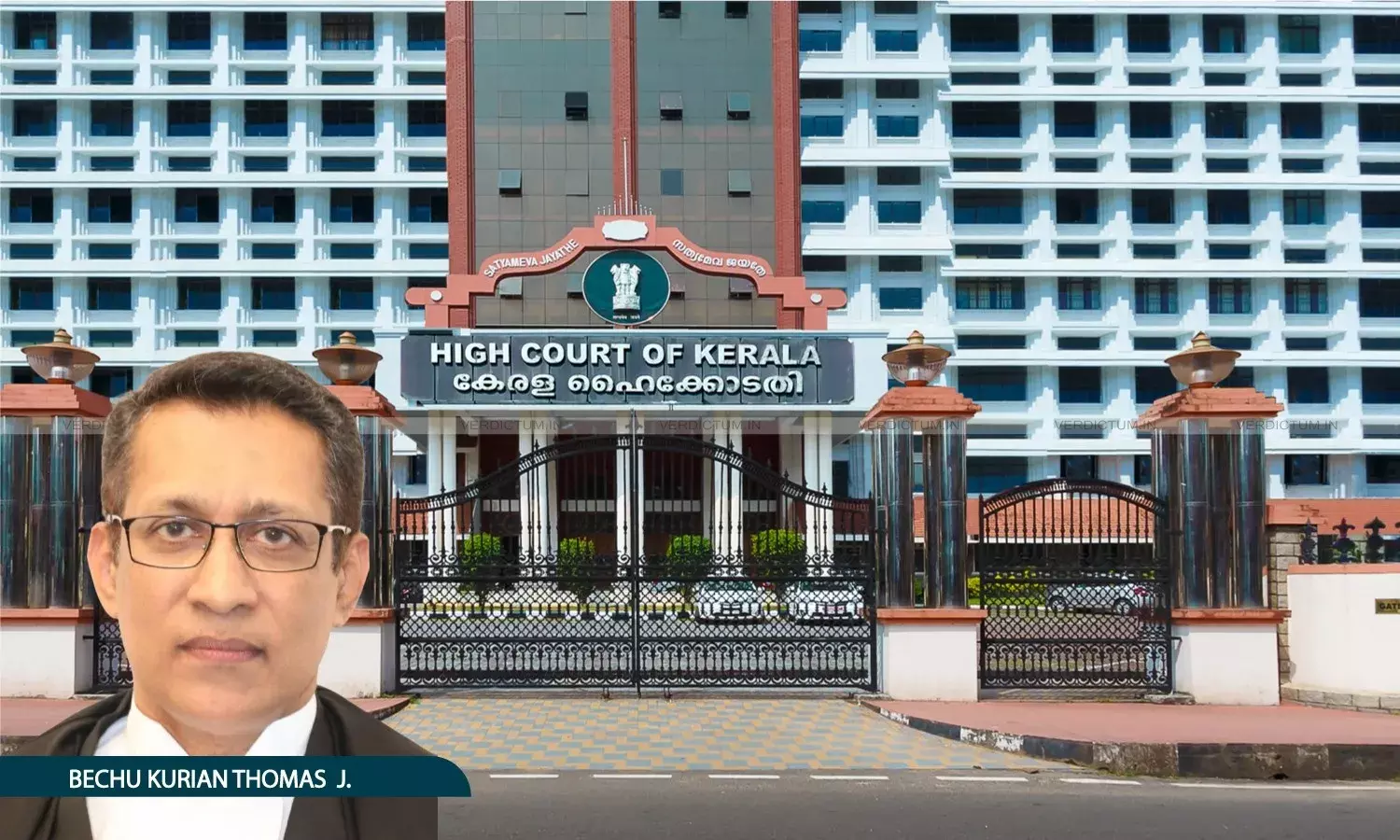
The Kerala High Court has held that the licensing authority under the Drugs and Cosmetics Act can require applicants seeking a grant or renewal of drug licences to furnish an undertaking that they will not display misleading discount boards regarding the price of medicines.
The Court observed that such a condition is intended to prevent consumers from being misled and does not amount to an impermissible restriction on the right to carry on business.
The Court was hearing a batch of writ petitions challenging a circular dated 04.09.2024 issued by the Drugs Controller requiring applicants for drug licences to incorporate specific undertakings in affidavits submitted along with licence applications. While two writ petitions sought to quash the circular, another petition sought its implementation.
A Bench of Justice Bechu Kurian Thomas observed: "When a power is conferred upon an authority, it has all the incidental powers thereto. The purpose for exhibiting boards containing statements regarding discounts is to enable the public to be informed of the existence of such discounts. However, as there is a possibility of misleading advertisements, causing prejudice to the innocent customers, the licensing authority found it appropriate to stipulate certain words to be incorporated in the affidavit to be submitted as a condition for the grant of licence."
Senior Government Pleader V.S. Sreejith appeared for the State, while Advocate Karthika Maria appeared for the opposite party.
Background
The dispute arose from a circular issued by the Office of the Drugs Controller directing that applicants seeking a grant or renewal of drug licences must undertake that they would not exhibit discount boards in their pharmacies and would incorporate specified language in the affidavit submitted along with the application.
The pharmacy owners contended that there was no prohibition under the Drugs and Cosmetics Act, 1940, the Drugs Rules, 1945, or the Drugs (Prices Control) Order, 2013 against selling medicines below the Maximum Retail Price (MRP) or informing customers about such discounts. They argued that the circular unlawfully interfered with their right to conduct business and advertise discounts offered to consumers.
The State authorities, on the other hand, maintained that they had never prohibited pharmacies from offering discounts. According to the Drugs Controller, the concern was only with misleading discount boards that projected exaggerated discount percentages and induced customers into believing that substantial concessions were being offered. The authorities contended that the circular was intended to prevent consumers from being misled while preserving the ability of retailers to offer genuine discounts.
Court's Observations
The Court first examined the statutory framework governing drug pricing and noted that while the law prohibited the sale of medicines above the Maximum Retail Price, there was no restriction on a retailer selling medicines below the MRP. The Bench found that the petitioners' contention that the authorities were compelling them to stop offering discounts was factually incorrect.
The Court observed: "The contention of the petitioners that respondents are attempting to compel the petitioners to sell medicines, without providing any discount, is not legally tenable or factually correct, since nowhere has the respondents insisted that the petitioners should refuse discounts to customers. The action of the respondents is aimed only at preventing misleading display boards or advertisements relating to discounts."
Addressing the challenge to the licensing condition, the Court held that although statutory authorities must act within the bounds of law, the conferral of a statutory power carries with it incidental powers necessary for effective implementation.
The Bench observed: "Since the licensing authority has all the powers to ensure that the licensee carries on the business without misleading the public, the insistence on the addition of certain words in the affidavit to be filed while applying for license or for renewal, cannot be said to be a restriction on their right to conduct business."
The Court further emphasised that constitutional freedoms cannot be invoked as a shield for business practices that may prejudice consumers. The Bench recognised the regulatory role of authorities entrusted with supervising sensitive sectors such as the pharmaceutical industry and held that reasonable regulatory directives intended to protect the public interest ought not to be lightly interfered with.
The Court observed: "Courts have often held that the right, liberty and freedom conferred under the Constitution of India ought not to become a weapon at the hands of private businesses to indulge in any type of conduct, under the shield of those rights."
The Court also acknowledged that regulatory authorities must be afforded a degree of operational flexibility while discharging their statutory functions.
The Bench observed: "The regulatory authority will have a ‘play in the joints’, to step in to regulate and prevent the myriad illegalities by issuing directions, in public interest."
Referring to the role of the Drugs Controller, the Court held that conditions incorporated in licence applications for the benefit of consumers could not be invalidated merely because they imposed obligations on licence holders.
The Court observed: "The Drugs Controller has a significant role in the matter of drug licensing. Hence, his wisdom in requiring incorporation of a condition in the agreement/affidavit for the public benefit cannot be said to be a ground for interference by this Court."
The Court also took note of the revised undertaking proposed by the Department, which required licensees to undertake that they would not display discount boards containing misleading or vague claims regarding the price of drugs. According to the Court, such a stipulation neither prejudiced the petitioners nor curtailed any legitimate business activity.
The Bench observed: "The above stipulation and undertaking cannot prejudice any right of the petitioners and on the other hand, is an obligation of the retailers and dealers of every drug."
Finally, the Court concluded: "Taking note of the above circumstances, this Court is of the view that the power of the licensing authority to stipulate certain conditions while submitting applications for the grant of a licence cannot be said to be arbitrary or warranting an interference by this Court."
Conclusion
Holding that the licensing authority was empowered to require licence applicants to undertake that they would not display misleading or vague discount boards and that such a stipulation neither prohibited discounts nor infringed the right to carry on business, the Kerala High Court dismissed the writ petitions challenging the circular.
The Court further held that the authorities would be at liberty to take appropriate action if the stipulations contained in the circular, or in the revised undertaking proposed by the Department, were not complied with.
Cause Title: M/s Pharmadude Pharmacy & Connected Cases v. State of Kerala & Ors. (Neutral Citation: 2026:KER:44187)
Appearances
Petitioners: Advocates Karthika Maria, Arun Thomas, Anil Sebastian Pulickel, Veena Raveendran, Kurian Antony Mathew, Mathew Nevin Thomas, Joe S. Adhikaram, Leah Rachel Ninan, Navya Seby, Shyni William, Anjaly Elias and Shinto Mathew Abraham, M.A. Vaheeda Babu, Babu Karukapadath, P.K. Abdul Rahiman, Arya Raghunath, Karukapadath Wazim Babu, P. Lakshmi, Aysha E.M., Abuasil A.K., Manu Krishna S.K. and Haniya Nafiza V.S., Anil Kumar M. Sivaraman and Lakshmisree P.S.
Respondents: V.S. Sreejith, Senior Government Pleader; Laya Mary Joseph, Government Pleader; P. Ushakumari.