Becoming A Nun Does Not Extinguish Christian Woman's Inheritance Rights: Kerala High Court
The Court also held that co-owners living away from ancestral property did not lose their entitlement to solatium.
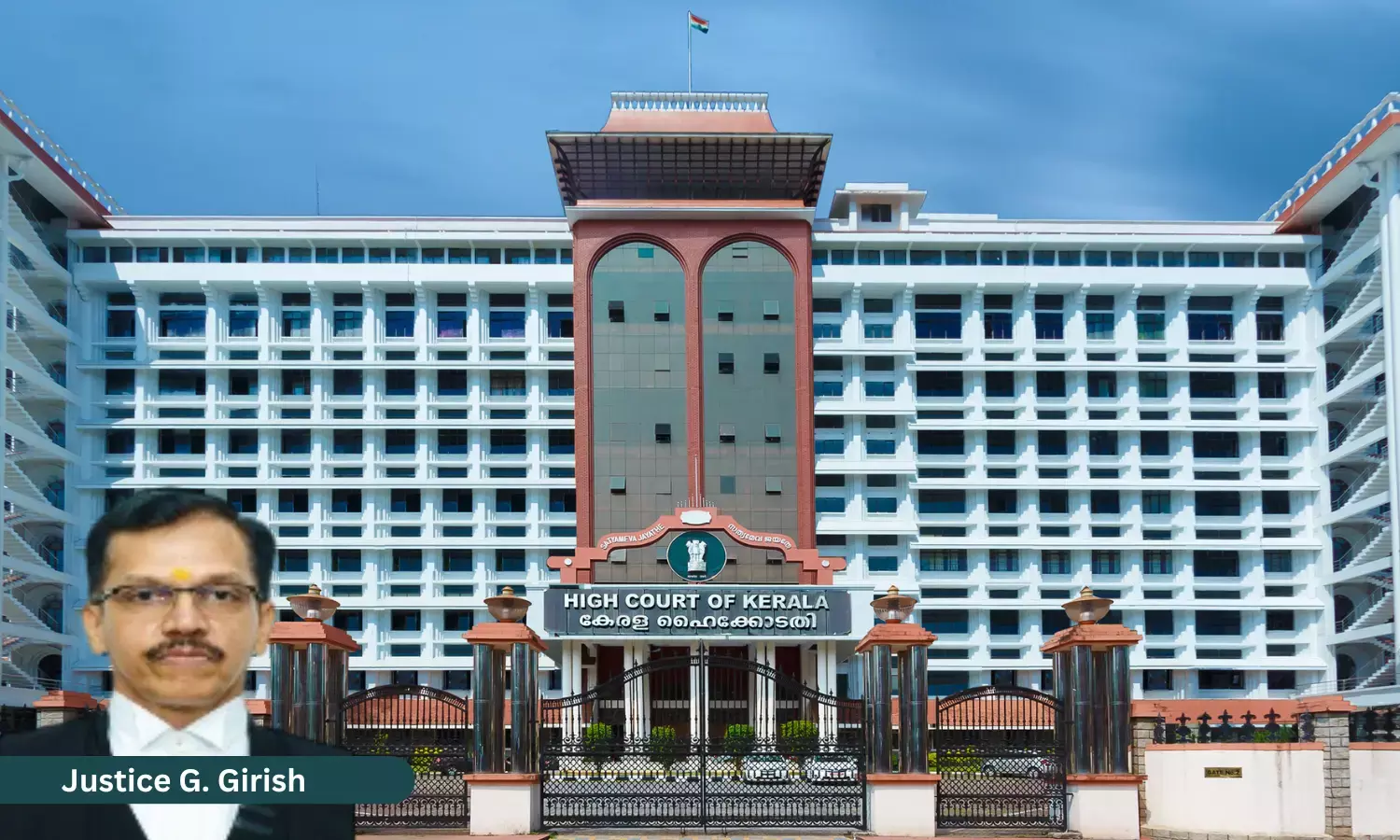
Justice G. Girish, Kerala High Court
The Kerala High Court has held that a Christian woman does not lose her inheritance rights merely because she becomes a nun or enters a religious order.
The High Court clarified that the Indian Succession Act, 1925, makes no exception concerning the inheritance or succession rights of a Christian priest or nun and upheld the equal distribution of land-acquisition compensation among the legal heirs.
The Court was hearing a writ petition challenging a decision of the Land Acquisition, Rehabilitation and Resettlement Authority, functioning as the Additional District Court-IV, Kozhikode, directing equal distribution of the compensation deposited for land that had belonged to the petitioner's father.
A Bench of Justice G. Girish observed: “As regards the disqualification attributed to the 6th respondent to have a share of the compensation in view of her becoming a nun, it has to be stated that the law is well settled with the decision of the Hon’ble Supreme Court in Molly Joseph v. George Sebastian [1997 (1) KLT 1 (SC)] that the law enacted by the Legislature would prevail and override any personal law, usage or custom. The Indian Succession Act, 1925 does not make any departure in the matter of inheritance or succession of a Christian priest or nun”.
The Bench further added: “The proposition of law in the above regard is followed by a Division Bench of this Court in M.S.G.R Xavier Chullikkal and Others v. C.G.Raphel and Others [2017 (3) KHC 193] wherein it has been held that the mere fact that one has entered into a religious order and renounced his worldly pleasures would not automatically result in the deprivation of property acquired by way of intestate or testamentary succession.”
Advocate T.R.S. Kumar appeared for the petitioner. Government Pleader Sreehari Indukaladharan and Advocate George Sebastian appeared for the respondents.
Background
The petitioner challenged the apportionment of compensation awarded for the compulsory acquisition of ancestral land that had belonged to his father. The Special Tahsildar had deposited the total award, including solatium under Section 30 of the Right to Fair Compensation and Transparency in Land Acquisition, Rehabilitation and Resettlement Act, 2013, before the reference authority.
The petitioner contended that his siblings were not entitled to solatium because they had not undergone the pain and suffering associated with the acquisition. He further contended that one brother had relinquished his rights through a written family settlement and that one sister had suffered a “civil death” upon becoming a nun.
The Land Acquisition, Rehabilitation and Resettlement Authority rejected all three contentions and directed that the deposited amount be released equally among the petitioner and his siblings. The petitioner challenged that decision before the High Court.
Court's Observations
Becoming A Nun Did Not Extinguish Succession Rights
The Court relied on Molly Joseph v. George Sebastian (1997) to hold that legislation prevails over contrary personal law, usage or custom. It further applied M.S.G.R. Xavier Chullikkal v. C.G. Raphel (2017), in which a Division Bench had held that joining a religious order and renouncing worldly pleasures did not automatically deprive a person of property acquired through intestate or testamentary succession.
The Court further referred to the same principle followed in Mariyam @ Beatrice v. Fr. Joseph Mattam (Died) (2024) and applied it to the compensation dispute. The Court concluded: “Therefore, the contention of the petitioner against the entitlement of the 6th respondent to have a share of the compensation amount is totally unfounded.”
Co-Owners Remained Entitled To Solatium
The Court explained that solatium is a statutory addition to market value intended to address the non-pecuniary consequences of compulsory acquisition, including the distress of losing a home or ancestral property. It rejected the petitioner's contention that only he had suffered because he lived near and managed the acquired property.
The Court held that the siblings' relocation from their parental home did not establish that they had lost their emotional connection with the ancestral property. Addressing the petitioner's management of the land, the Court observed: “This is especially so, since the management and looking after of the property by the petitioner as a co-owner of the property could only be termed as an act done as a representative of all the co-owners of that property.”
The Court consequently held that caring for the property on behalf of the co-owners did not confer an exclusive or special right to the solatium.
Unregistered Family Arrangement Could Not Extinguish Property Rights
The Court found that the written agreement relied upon by the petitioner purported to extinguish his brother's rights over the family property. Since the document itself sought to create that legal consequence, the Court held that it required compulsory registration under Section 17 read with Section 49 of the Registration Act, 1908.
The Court distinguished such a document from a later memorandum that merely preserves an already completed family arrangement. The Court explained: “Of course, it is true that, after the making of a family arrangement, if a mere memorandum is prepared for the purpose of record, such a memorandum does not require registration since that document by itself does not create or extinguish any rights in immovable properties.”
The Court held that the unregistered agreement before it could not be acted upon in legal proceedings and therefore did not disqualify the co-owner from receiving his compensation share.
Conclusion
The High Court upheld the direction to distribute the deposited land-acquisition compensation equally among the petitioner and his siblings. It held that becoming a nun did not extinguish the sister's inheritance rights, that the other co-owners remained entitled to solatium and that the unregistered family arrangement did not deprive the brother of his share. The Court dismissed the writ petition as devoid of merit.
Cause Title: Jose A.M. v. District Collector and Others (Neutral Citation: 2026:KER:86555)
Appearances
Petitioner: T.R.S. Kumar, K.M. Fathima Risa, Aswathy V.S., Vidhya Sugunan, Krishnaja Suresh R., Anitha Paul, Anjana Sasikumar, Sariga Ramachandran M., Riya Simon and Aleen P. Shams, Advocates
Respondents: Sreehari Indukaladharan, Government Pleader; George Sebastian, Aditya T.P. and Nikhita Mariam Cibu, Advocates