

Right To Posthumous Bodily Integrity Exemplified Through Will: Kerala HC Rejects Family’s Objections To Use Of Body For Anatomical Purposes
The children of the deceased woman approached the Kerala High Court, challenging the judgment of the Single Judge.

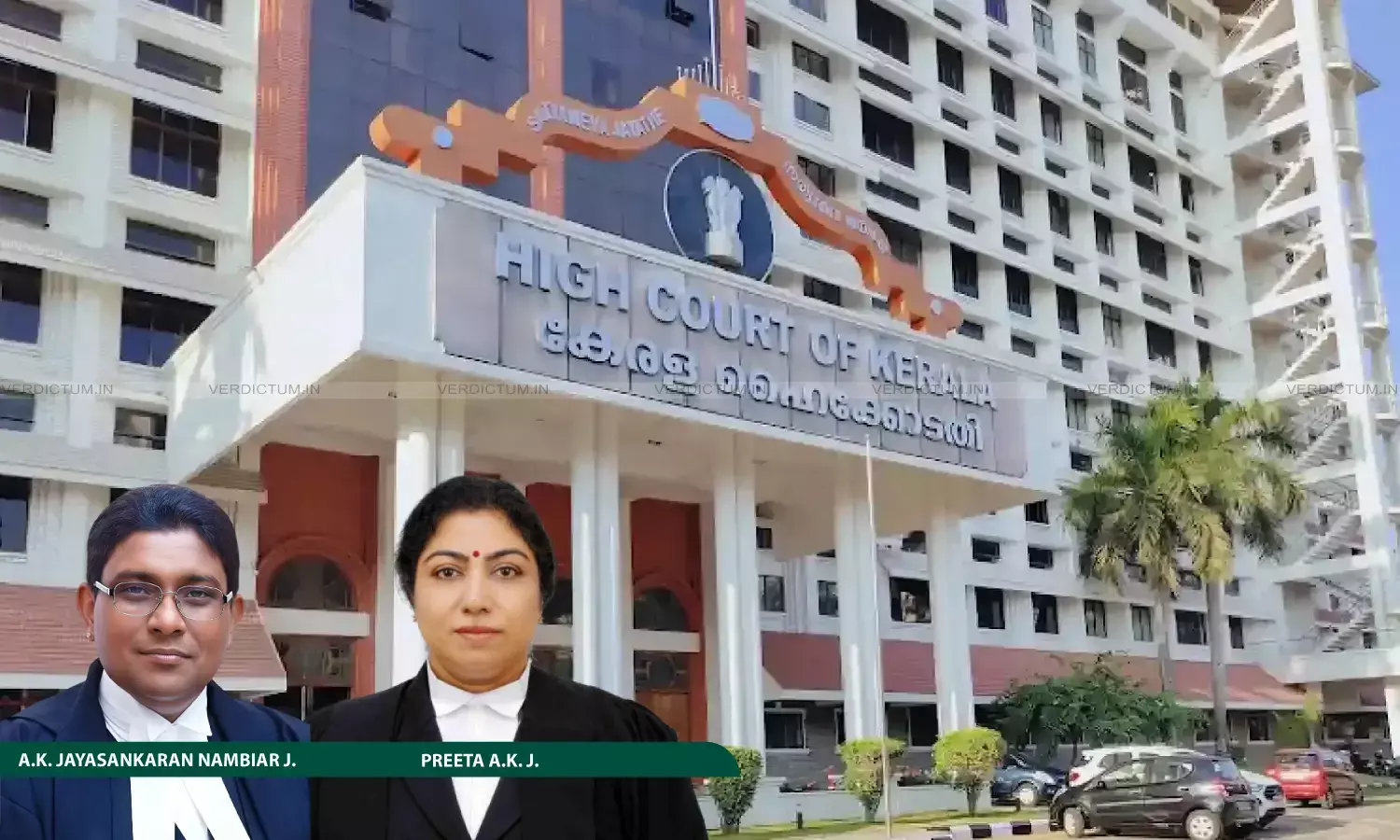
Justice A.K. Jayasankaran Nambiar, Justice Preeta A.K., Kerala High Court
The Kerala High Court had upheld the dismissal of the challenge of the family members of a deceased woman, against the proposed use of her body for anatomical purposes, in light of the consent letter given by her. The High Court further held that the law strives to honour the wishes of the deceased, and the facet of the right to posthumous bodily integrity is exemplified through the unconditional recognition of “will” in law.
The appellants approached the High Court challenging the judgment of the Single Judge whereby a challenge against the retention and proposed use of the body of their deceased mother for anatomical purposes was dismissed.
The Division Bench of Justice A.K. Jayasankaran Nambiar and Justice Preeta A.K. held, “That the law strives to honour the wishes of the deceased and to protect her interests is exemplified through the unconditional recognition of “will“ in law. This facet of the right to posthumous bodily integrity can also be seen in legislations like Transplantation of Human Organs Act, 1994, the Kerala Anatomy Act etc. Section 4A of the latter Act deals with instances where the deadbody of a person who has expressed an unequivocal request during her life-time for using the body after death for conducting anatomical dissection, can be so used subject to the conditions in Section 4A.
“In the instant case, Ext.R5(a) is a consent letter given by the deceased mother which is under Section 4A of the Kerala Anatomy Act. In so far as the appellants have not challenged the genuineness of Ext.R5(a), we find no illegality in the act of donation of the body of the deceased by respondents 5 to 7 to the Government Medical College, Kalamassery as the same has been done to honour the wishes of the deceased as expressed in Ext.R5(a)”, it added.
Advocate Haroon Ashraf represented the Petitioner, while Senior Government Pleader B. Unnikrishna Kaimal represented the Respondent.
Factual Background
The appellants and private respondents are the children of one late Mary, wife of John, who died on February 23, 2026. The fifth respondent is the son-in-law of the said Mary. It was alleged that the respondents, without informing the appellants or obtaining their consent, took custody of the dead body of the deceased on the date of death, transported the dead body to Government Medical College Hospital, Kalamassery and represented before the hospital authorities that the body was being donated for medical purposes. Acting upon such representation, the hospital authorities received the body and shifted it to the mortuary. The appellants, who are also the legal heirs, approached the statutory authorities and sought the release of the body to perform the last rites and burial in accordance with their religious customs. It was their case that they had not given consent for donating the body.
The appellants sought a writ of mandamus to direct the Official respondents to forthwith release the dead body of the petitioners’ mother to the petitioners to enable them to conduct the last rites and burial in accordance with their religious customs. The contesting respondents filed a counter affidavit contending that the appellants and the eighth respondent were not on good terms with the deceased mother and father, and that during their lifetime, they were looked after by their eldest daughter and her husband, the fifth respondent. As per the Single Judge, the contention of the petitioner was devoid of merit.
Arguments
It was the case of the appellant that being the legal heirs of the deceased, they had not consented to hand over the body for anatomical use, and they had a right to claim that the deceased should have a burial in accordance with their religious rites.
Reasoning
The Bench noted that the right claimed by the appellants was a reflection of two competing rights – the right to posthumous bodily integrity of the deceased and the right of the family to get closure of the loss of their near and dear ones. The Bench explained that the fact that corpses are legally protected is not determinative of whether only the living are rights holders.
The Bench further held that the law also strives to honour a deceased's wishes and to protect his interests which is exemplified through the unconditional recognition of “will“ in law. Considering that a consent letter was given by the deceased mother as per Section 4A of the Kerala Anatomy Act, and the same was not challenged, the Bench found no illegality in the act of donation of the body of the deceased by the respondents to the Government Medical College, Kalamassery.
Concurring with the view taken by the Single Judge in the impugned judgment, the Bench dismissed the Writ Appeal.
Cause Title: Greeny Tomy V. State of Kerala (Neutral Citation: 2026:KER:36320)
Appearance
Petitioner: Advocates Haroon Ashraf, K.T. Saju, Mohammad Ishaaq, Amjath T.H.
Respondent: Senior Government Pleader B. Unnikrishna Kaimal