

Writ Of Quo Warranto Not Maintainable Against KTDC Posts Lacking ‘Public Office’ Character: Kerala High Court Rejects 33-Year Delayed Challenge To Managers’ Appointments
The challenge was initiated ten years after the petitioner’s retirement and thirty-three years after the respondents were first inducted as trainees.

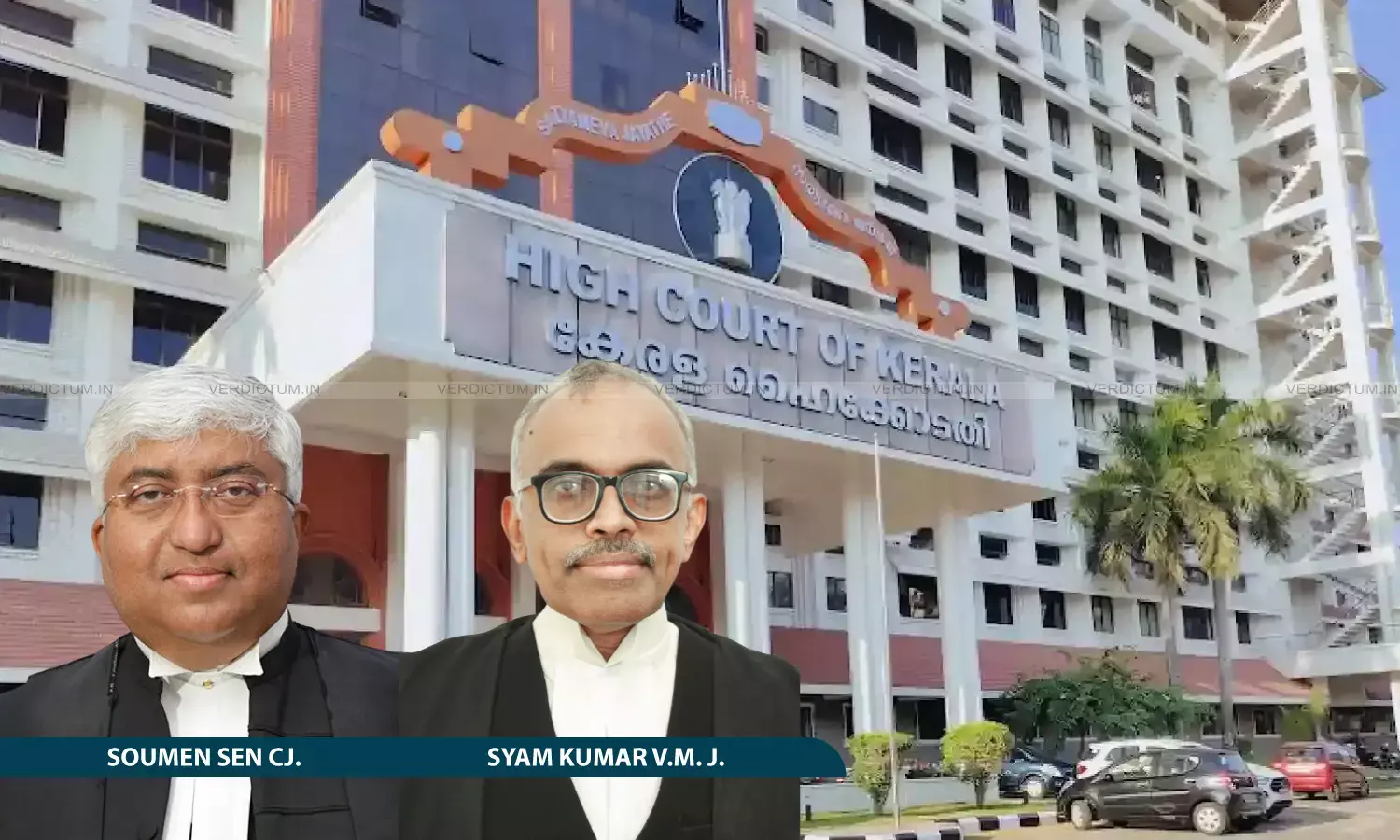
The Kerala High Court dismissed a writ of quo warranto challenging the appointments of two senior managers at the Kerala Tourism Development Corporation (KTDC), observing that a service matter cannot be litigated under the guise of public interest after an inordinate delay. The Court held that the petitioner, a retired supervisor, failed to establish that the posts held by the respondents constituted a "public office" or that the appointments violated any statutory rules.
The Court noted that while a writ of quo warranto is an exception to the rule against Public Interest Litigation (PIL) in service matters, it is only available when an independent substantive public office is usurped. In the present matter, the challenge was initiated ten years after the petitioner’s retirement and thirty-three years after the respondents were first inducted as trainees.
Chief Justice Soumen Sen and Justice Syam Kumar V.M. observed, “…Since the office of the Executive Trainee in KTDC is neither a public office nor does it involve the exercise or delegation of any sovereign power, the fundamental threshold condition required for the maintainability of the writ of quo warranto is not satisfied in the present case. The office of the Executive Trainee in KTDC being a post under a commercial corporation dealing with tourism related activities does not involve any delegation of sovereign functions nor it is held by the tenure and authority prescribed by any statute conferring sovereign power”.
Advocate R. Sanjith appeared for the petitioner and Senior Advocate Elvin Peter P.J. appeared for the respondent.
In the matter, G. Sasidharan, a former supervisor at KTDC, alleged that K.T. Santhosh Kumar and Jaibee Kollarmalil (Respondents 6 and 7) did not possess the requisite qualifications, specifically a pre-degree and a Diploma in Hotel Management, at the time of their initial recruitment as Executive Trainees in 1991.
The petitioner relied on a 2024 Finance Inspection Department report which labelled the appointments illegal due to improper scrutiny of applications.
The matter was first heard by a Single Judge who directed the petitioner to disclose his credentials before referring it to a Division Bench. A previous Bench headed by former Chief Justice Nitin Jamdar had granted the petitioner an opportunity to file an additional affidavit to prove that the posts were "public posts", warning that failure to do so would entail dismissal.
Now, the Court found that KTDC, as a commercial entity incorporated under the Companies Act, does not delegate sovereign power to its managers. Furthermore, the respondents had been consistently exonerated in three independent inquiries by the Vigilance Bureau and the Lok Ayukta.
“…It is to be noted that the said post is contractual in nature and is not of a permanent one. It has also to be noted that the said respondents are not exercising any sovereign or governmental functions and do not fall under the term “public office” as interpreted in the above definitions and findings. Due to this reason, the writ of quo warranto would not lie against them”, the Bench noted.
The Court declined to interfere, noting that it would be unjust and disproportionate to oust employees who have served for over three decades with unblemished records.
Cause Title: G. Sasidharan v. State of Kerala & Others (Neutral Citation: 2026:KER:30901)
Appearances:
Petitioner: R. Sanjith and C.S. Sindhu Krishnah, Advocates.
Respondents: Elvin Peter P.J., Sr. Adv., M. Gopikrishnan Nambiar, Aravinda Kumar Babu T.K., K.R.Ganesh, Gouri Balagopal, Sreelekshmi A.S., Anamika M.J., M.Fathahudeen, Sandra Sunny, Arun Kumar M.A, Farah Jyothi Pradeep, K. John Mathai, Joson Manavalan, Kuryan Thomas, Paulose C. Abraham, Raja Kannan, Jai Mohan, P. A. Ahamed, Advocates.
Click here to read/download the Judgment