

Director Of Institution Is "Employee" Under PoSH Act If Management Vests With Governing Body; Can Be Probed For Sexual Harassment By ICC: Kerala High Court
The Court held that where the control, administration and management of an institution vests with the governing body and executive committee, the Director cannot claim the status of “employer” under the PoSH Act and complaints against him are maintainable before the Internal Complaints Committee (ICC).
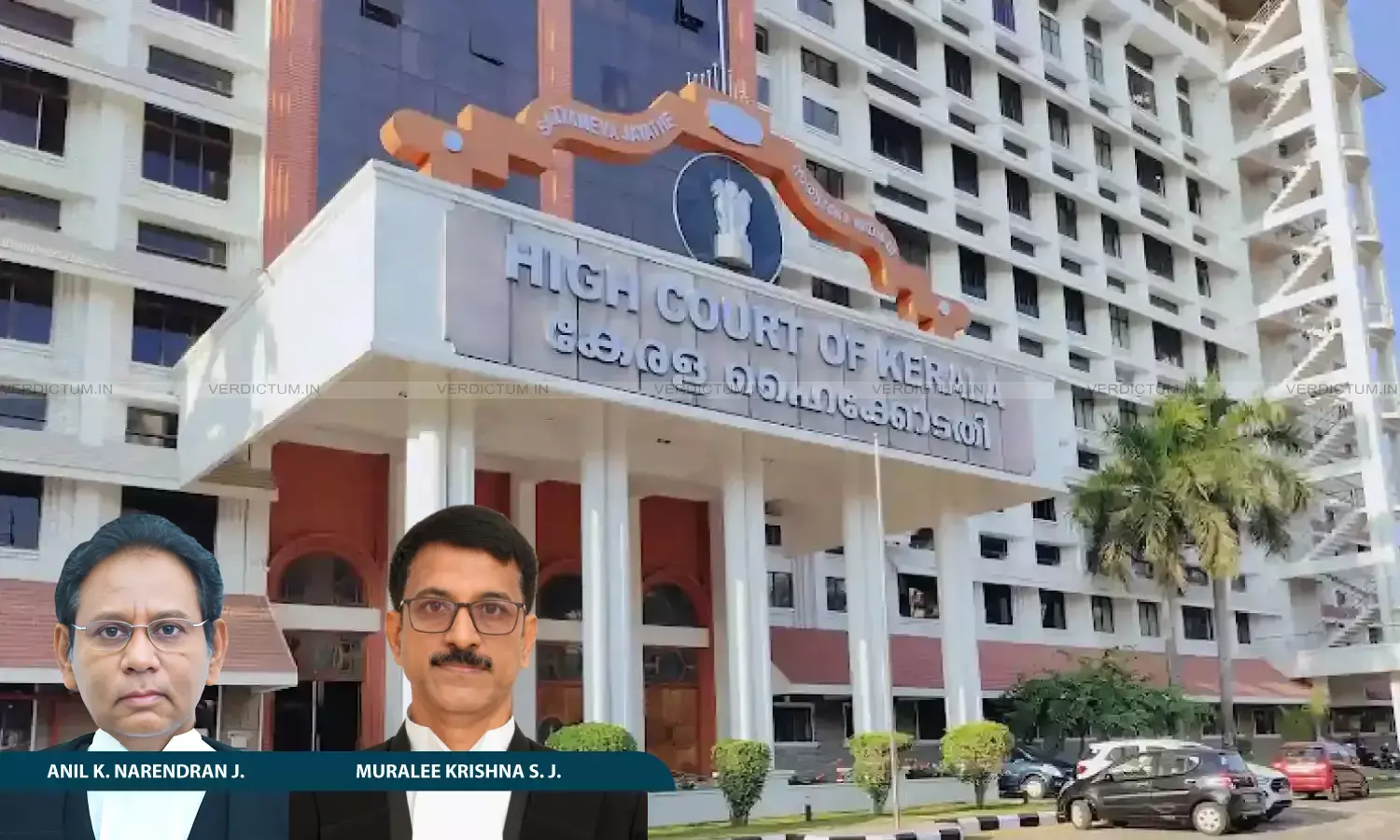
Justice Anil K. Narendran, Justice Muralee Krishna S., Kerala High Court
The Kerala High Court has upheld the jurisdiction of the Internal Complaints Committee (ICC) to enquire into a sexual harassment complaint filed against the Director of the Integrated Rural Technology Centre (IRTC), holding that the Director was only an “employee” under the Sexual Harassment of Women at Workplace (Prevention, Prohibition and Redressal) Act, 2013 and not the “employer” of the institution.
The Court observed that under the statutory scheme of the PoSH Act, the Local Committee (LC) acquires jurisdiction only where no ICC has been constituted or where the complaint is against the employer himself.
The Court was hearing a writ appeal filed by the Director of IRTC challenging the dismissal of his writ petition seeking quashing of a notice issued by the ICC in connection with a complaint of sexual harassment lodged by a woman employee of the institution. The appellant contended that as Director and head of the institution, he would fall within the definition of “employer” under Section 2(g) of the PoSH Act and therefore only the Local Committee could enquire into the complaint.
A Division Bench of Justice Anil K. Narendran and Justice Muralee Krishna S. observed: “Though the appellant contends that he will fall under the definition of employer under Section 2(g) of the PoSH Act, a combined reading of Clauses 7, 18 and 23.2 of Ext.R3(a) Memorandum of Association of IRTC would make it clear that the control, administration and management of the affairs of IRTC is vested with the general body and the executive committee and not with the Director. The overall management of the affairs of IRTC mentioned in Clause 23.2.2 by the Director is subject to the control and supervision of the executive committee and the general body. Clause 23.2.1 makes it clear that the Director is also appointed by the executive committee of IRTC.
“In such circumstances, the appellant can only be treated as an employee in IRTC, and therefore, the ICC constituted has the authority to receive and enquire about the complaint raised against the appellant”, the Bench added.
Advocate C.V. Manuvilsan appeared for the appellant. Advocate Thomas Abraham appeared for the respondents.
Background
The appellant, a retired Senior Principal Scientist associated with IRTC as its Director, was issued notice by the ICC following a complaint of sexual harassment lodged by a woman employee of the institution.
Contending that he was the “Head of Institution” and therefore the “employer” under Section 2(g)(ii) of the PoSH Act, the appellant approached the District Collector, asserting that the complaint ought to be placed before the Local Committee constituted under Section 6 of the Act.
The appellant also alleged a conflict of interest against the Presiding Officer of the ICC, contending that there existed personal animosity arising from the withholding of salary and other disputes. It was further alleged that the complaint itself was intended to harass him.
The learned Single Judge dismissed the writ petition, holding that the ICC could not be said to lack jurisdiction. Challenging that finding, the appellant approached the Division Bench.
Court’s Observation
The High Court undertook a detailed examination of the statutory framework under the PoSH Act, particularly Sections 2(f), 2(g), 4, 6 and 9.
The Court first examined the definition of “employee” under Section 2(f), which includes persons employed at a workplace for any work, whether directly or otherwise, and irrespective of designation.
The Bench then analysed the definition of “employer” under Section 2(g)(ii), which includes a person responsible for the management, supervision and control of the workplace.
The Court observed that the answer to the controversy depended upon whether the Director exercised ultimate control over the institution or functioned subject to the authority of other governing bodies.
For this purpose, the Court closely examined Clauses 7, 18 and 23.2 of the Memorandum of Association of IRTC. Referring to Clause 7, the Court noted that the “control, administration and management” of the affairs of IRTC vested in the General Body.
The Court further noted from Clause 18 that the Executive Committee was responsible for the efficient running of the affairs of the Society and possessed powers relating to recruitment, control and discipline over employees.
The Bench then examined Clause 23.2 governing the role of the Director and observed that the Director was appointed by the Executive Committee itself and functioned under its supervision and control.
The Court observed: “The overall management of the affairs of IRTC mentioned in Clause 23.2.2 by the Director is subject to the control and supervision of the executive committee and the general body.”
The Court therefore concluded that the Director did not possess ultimate managerial or policy-making authority to qualify as “employer” under the PoSH Act.
The Bench observed: “The appellant can only be treated as an employee in IRTC, and therefore, the ICC constituted has the authority to receive and enquire about the complaint raised against the appellant.”
The Bench further addressed the apprehension of bias arising from the complainant allegedly being a member of the ICC. Recording the submission of IRTC, the Court noted that the complainant would not participate in the ICC while adjudicating the complaint against the appellant.
The Court ultimately held that there was no perversity or patent illegality in the judgment of the Single Judge warranting interference in appellate jurisdiction.
Conclusion
The Kerala High Court held that the Director of IRTC was an employee and not the employer under the PoSH Act since ultimate management and control vested with the General Body and Executive Committee.
The Court further held that the ICC had jurisdiction to enquire into the complaint of sexual harassment filed against the appellant and that the Local Committee had no role in the matter.
Accordingly, the writ of appeal was dismissed.
Cause Title: Prof. (Dr.) J. Sundaresan Pillai v. Dr K.K. Seethalakshmi (Neutral Citation: 2026:KER:33013)
Appearances
Appellant: C.V. Manuvilsan, O.A. Anju, Alana Mohammed Ali Cholassery
Respondents: Thomas Abraham, Merciamma Mathew, Aswin P. John, R. Ananthapadmanaban, Paul Baby, Swathy A.P., Thara Elizabeth Thomas, Fousiya R, Senior Government Pleader Nisha Bose
